
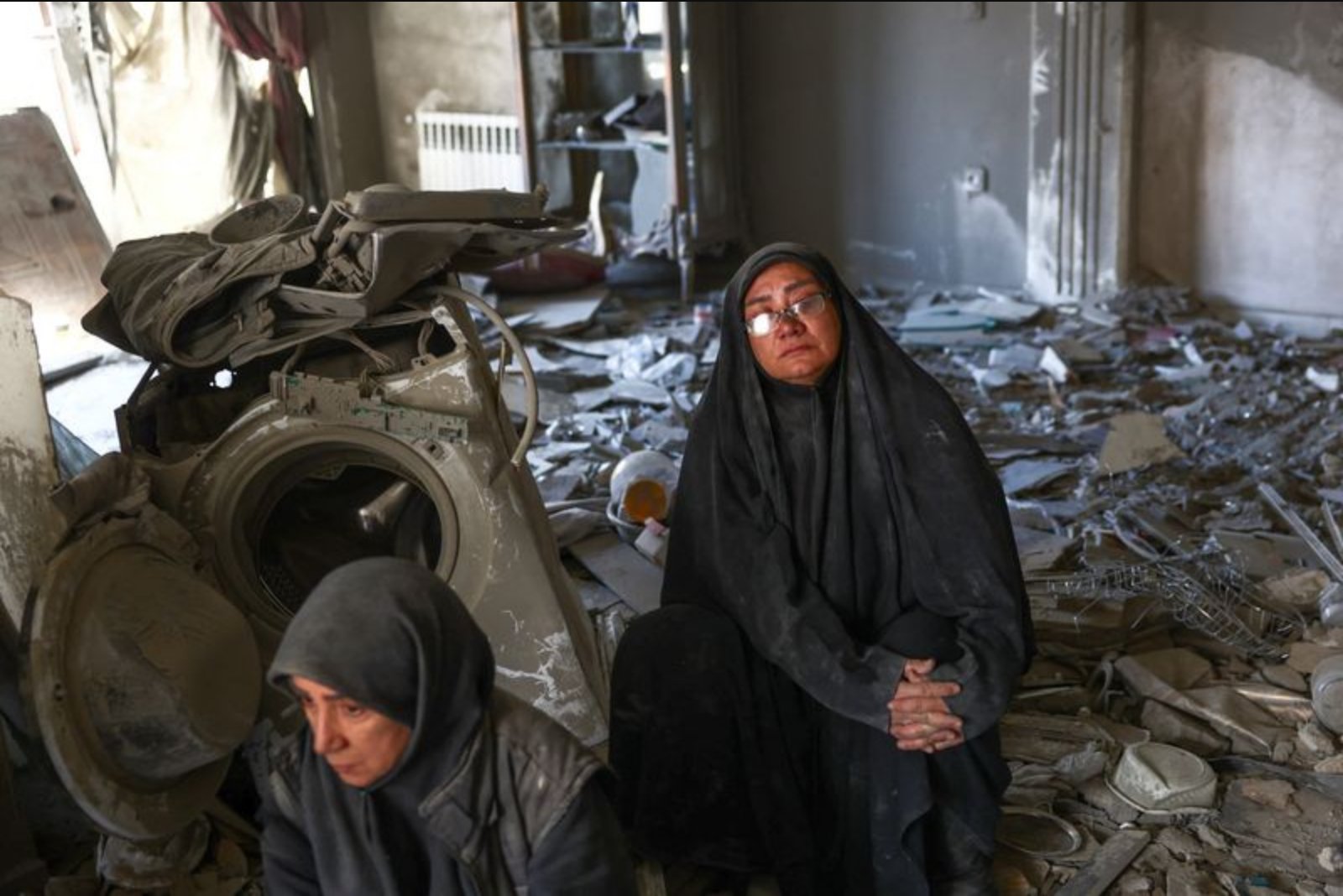
The recent spread of strikes across infrastructure in the Middle East and public threats to hit oil facilities, power plants and desalination works have raised legal questions about when attacks on civilian-sustaining sites amount to international crimes. International humanitarian law contains explicit protections for objects that are essential to civilian survival, and experts say attacks that deprive populations of food, water, fuel or medical services can meet the threshold for war crimes if certain legal tests are satisfied.
At the core of the legal framework are the 1949 Geneva Conventions and their additional protocols, which set limits on conduct in armed conflict. The conventions bar operations expected to leave the civilian population without sufficient food or water so as to cause starvation or force them to move. They also expressly prohibit assaults on "objects indispensable to the survival of the civilian population, such as foodstuffs, agricultural areas for the production of foodstuffs, crops, livestock, drinking water installations and supplies and irrigation works..."
These protections are designed to prevent belligerents from using deprivation of basic needs as a tactic of war. In practice, they require a careful legal assessment of both the nature of the object and the foreseeable consequences of an attack on civilian life. Where civilian infrastructure is damaged or destroyed, prosecutors and judges must determine whether the attack was expected to cause widespread shortages of essentials such as water, food or fuel and whether civilian movement or health would be forced as a result.
International criminal jurisprudence has already cited strikes on infrastructure in recent cases. The International Criminal Court has referenced attacks on electricity and fuel installations in the arrest warrants it issued related to the conflict in Ukraine. In July 2024 the court accused Sergei Shoigu, the former Russian defence minister, and leading Russian general Valery Gerasimov of war crimes for targeting Ukraine’s power grid during winter months - allegations that Russia has denied, stating it launched a special military operation in Ukraine in February 2022 in self defense.
Similarly, in its arrest warrant for the Israeli prime minister, ICC judges "considered that there are reasonable grounds to believe that both individuals intentionally and knowingly deprived the civilian population in Gaza of objects indispensable to their survival, including food, water, and medicine and medical supplies, as well as fuel and electricity." The judges found the cutting off of electricity and reduced fuel supplies "had a severe impact on the availability of water in Gaza and the ability of hospitals to provide medical care." They concluded these conditions "resulted in the death of civilians, including children, due to malnutrition and dehydration." Israel has rejected the allegations and said its strikes target militants in Gaza and Lebanon in self defense in response to an existential threat.
Distinguishing civilian objects from legitimate military objectives is a central legal test. The Geneva Conventions and additional protocols require parties to an armed conflict to make that distinction and forbid attacks on civilian objects. The Rome Statute of the ICC, which functions as a court of last resort for its state parties, also codifies the prohibition on attacks directed at civilian infrastructure.
That said, the conventions acknowledge that certain infrastructure ordinarily serving civilians can become lawful military targets if by "their nature, location, purpose or use [they] make an effective contribution to military action" and if attacking them would offer a "definite military advantage." Those two inquiries - contribution to military action and expected military advantage - are fact-specific and must be assessed against evidence about how an object is used at the time of attack.
Even when legal criteria point toward criminality, bringing cases to an international court poses significant practical and political obstacles. A prosecution related to the present Middle East hostilities is unlikely to reach the ICC in the near term because none of the Gulf states, Israel or Iran are parties to the Rome Statute. The ICC operates as a court of last resort for its members - the statute currently applies to 125 countries - and it does not include major powers such as Russia, the United States and China.
Further, the U.N. Security Council has the authority to refer situations to The Hague, but political divisions among its members make such referrals improbable in contentious regional conflicts. Without either state acceptance of ICC jurisdiction, a Security Council referral, or a clear path through national courts, a case involving alleged attacks on civilian-sustaining infrastructure will face long delays.
National authorities retain the option to gather evidence and prosecute alleged war crimes under universal jurisdiction laws, which allow some states to try suspects for core international crimes regardless of where they occurred. However, according to available information there are currently no publicly announced universal-jurisdiction prosecutions tied to these recent attacks on infrastructure in the Middle East.
The legal line between an unlawful strike on civilian life-support systems and a legitimate operation against a military objective depends on detailed, case-by-case findings about the object's role, the expected civilian harm, and the attacker’s intent. While treaty text and ICC precedent establish the thresholds, geopolitical realities and limits of jurisdiction mean legal accountability is not assured in the short term for alleged assaults on oil, electricity, desalination and other civilian installations.
Summary
International humanitarian law prohibits attacks on objects indispensable to civilian survival. Recent strikes and threats against power, fuel and water infrastructure in the Middle East could amount to war crimes if they were expected to deprive civilians of basic necessities. The Geneva Conventions and the Rome Statute provide the legal standards, and the ICC has previously cited infrastructure attacks in its warrants, but jurisdictional and political barriers make near-term prosecutions unlikely.
Key points
- Legal protections: The 1949 Geneva Conventions forbid actions expected to cause civilian starvation or force movement and name objects "indispensable to the survival of the civilian population." - Impacted sectors: utilities, agriculture, water supply.
- ICC precedent: The court has cited attacks on power and fuel plants in arrest warrants related to Ukraine and has raised similar concerns in its warrant concerning Gaza and Israel. - Impacted sectors: energy, healthcare.
- Jurisdictional limits: The Rome Statute applies to 125 states but not to countries such as Russia, the United States or China; Israel, Iran and Gulf states are not ICC members, reducing the immediate prospect of court action. - Impacted sectors: legal services, international relations.
Risks and uncertainties
- Limited immediate accountability - Prosecutions through the ICC are unlikely soon because key states involved are not parties to the statute and Security Council referral prospects are hampered by political division. - Affects: international law enforcement and geopolitical risk assessments.
- Complex target assessments - Determining whether civilian infrastructure qualifies as a military objective requires specific evidence of its use and the attacker’s intent, creating uncertainty for evidence collection and legal determinations. - Affects: compliance teams in defense and utilities sectors.
- Domestic prosecution variability - While universal jurisdiction offers a potential avenue, there are currently no public national prosecutions related to recent infrastructure attacks, leaving legal outcomes uncertain. - Affects: cross-border legal risk and multinational companies operating critical infrastructure.