
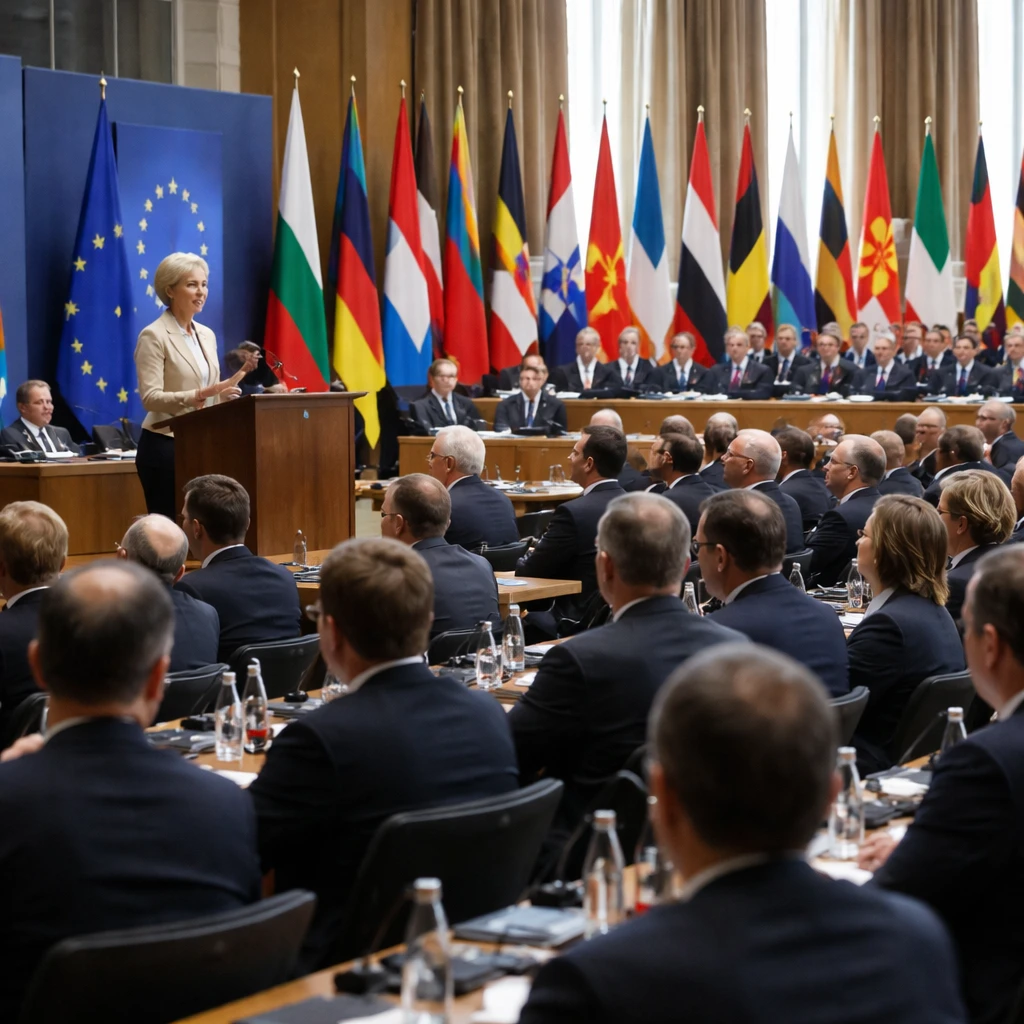
European Commission President Ursula von der Leyen told a gathering of the EU’s ambassadors on Monday that the bloc must adjust how it defends its interests, arguing that the rules-based international system can no longer be the sole instrument for protecting European priorities.
Addressing officials at the conference, von der Leyen said the EU should evaluate whether its current institutions and procedures reinforce or undermine its standing as a geopolitical actor. Her remarks focused on the need for a candid internal review of doctrine and decision-making in the face of evolving threats.
"We will always defend and uphold the rules-based system that we helped to build with our allies, but we can no longer rely on it as the only way to defend our interests or assume its rules will shelter us from the complex threats that we face," von der Leyen said, stressing that adherence to rules remains important even as other tools are needed.
She pressed for reflection on whether the EU’s doctrine, institutions and processes have kept up with the current pace of change. Von der Leyen suggested that systems designed for a postwar era characterized by relative stability and multilateralism may be ill-suited to today’s challenges and therefore require scrutiny.
The Commission President also pointed to the EU’s culture of seeking consensus and compromise, noting that such approaches, while well-intentioned, should be examined to determine whether they help the bloc act credibly on the world stage.
Her comments framed an internal question for EU policymakers: does the existing architecture help project the Union’s influence, or does it act as a restraint in a more volatile geopolitical environment? Von der Leyen’s call was for urgent reflection rather than for specific policy announcements.
Key takeaways
- The EU can no longer depend solely on the rules-based system as its only means of defending interests, von der Leyen said.
- She called for an evaluation of whether EU doctrine, institutions and decision-making processes have kept pace with rapid change.
- The statement raises questions for sectors tied to foreign policy, defense and trade that may be affected by any shifts in how the EU projects influence.