
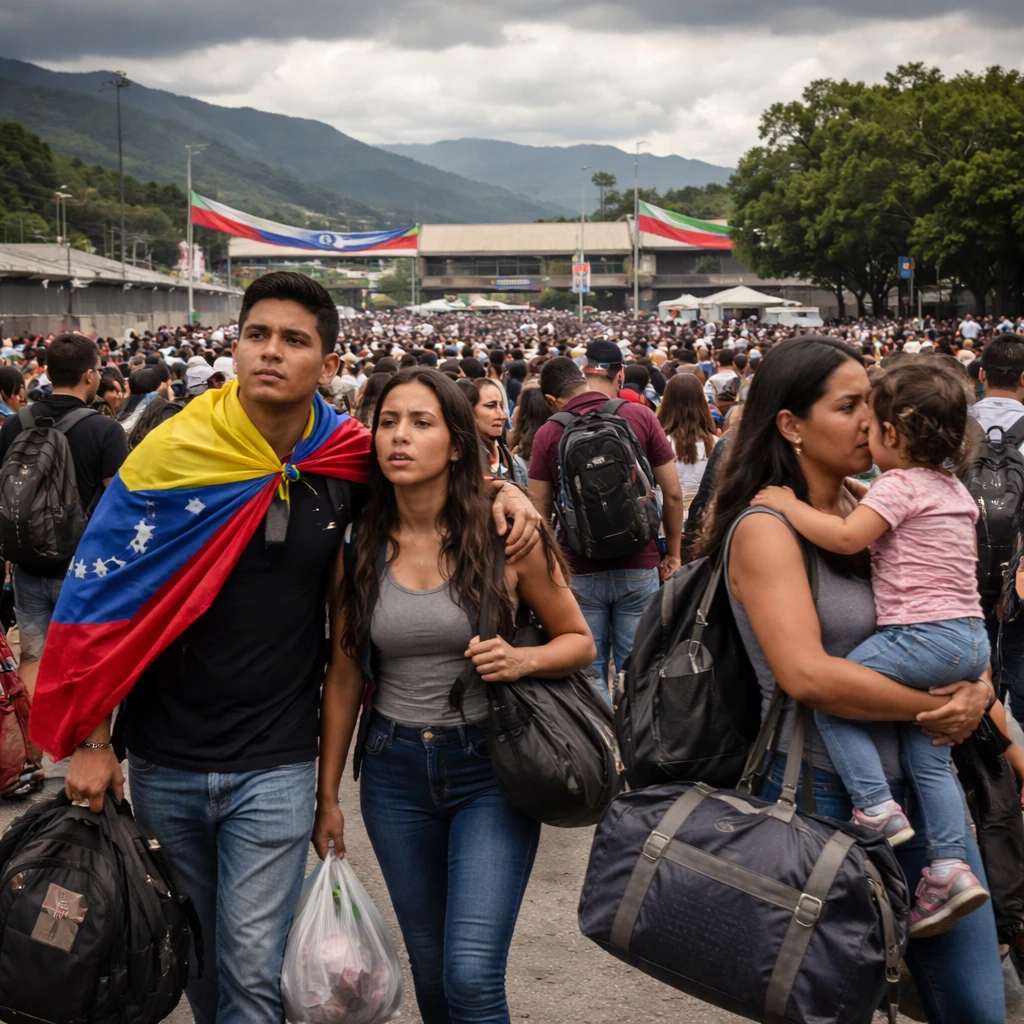
Since 2014, approximately one-quarter of Venezuela’s population, roughly 8 million people, have dispersed throughout Latin America, the Caribbean, Spain, and the United States, driven by the fallout from economic mismanagement in the country’s oil-reliant economy. This massive migration, representing one of the largest in recent Latin American history, has reshaped population structures across the Americas.
Currently, some Venezuelans residing abroad are debating whether to plan their futures back in Venezuela as U.S. efforts to remove President Nicolás Maduro stimulate cautious optimism about upcoming democratic elections and potential economic recovery. However, uncertainty persists, especially given former Vice President Delcy Rodríguez's consolidation of political control, which fuels apprehensions regarding ongoing governmental repression and economic volatility.
Juan Carlos Viloria, a physician active in migrant advocacy in Colombia — the Latin American country hosting the region’s largest Venezuelan migrant population — expressed desire to contribute to rebuilding Venezuela, stating, "I want to return to my country, I want to help rebuild." He also observed that some individuals in Colombian border communities are temporarily entering Colombia for work while awaiting stabilization in Venezuela, indicating nuanced cross-border mobility linked to economic needs.
The diversity within the Venezuelan migrant community is reflected in interviews conducted with about a dozen individuals, ranging from day laborers and entrepreneurs to engineers, across countries including Colombia, Peru, Chile, Mexico, and Panama — each experiencing significant Venezuelan inflows. Nicole Carrasco, who relocated to Chile in 2019 following her father’s arrest, highlighted persistent concerns regarding political prisoners and family members affected by repressive measures, emphasizing that major changes in Venezuela’s political landscape have yet to materialize. Nevertheless, she expressed a personal yearning to return to visit relatives and enjoy traditional Venezuelan cuisine.
Opposition figure and Nobel Peace Prize laureate María Corina Machado, whose political candidate was widely recognized as the legitimate victor in the disputed 2024 elections allegedly manipulated by Maduro’s administration, has publicly advocated for an expedited transfer of power to facilitate Venezuelans’ safe return.
Among Venezuelans currently traveling back to their homeland with mixed emotions is Luis Diaz, passing through Panama en route from Mexico. He remarked, "I don’t know whether it’s good or bad. Now they’ve done what they’ve done, something different is going to start." Similarly, Omar Alvarez, also in transit through Panama, voiced confidence that collaborative efforts among Venezuelans abroad could promote national recovery. "All of us outside Venezuela, I think we can come together and recover our country by working together, like we have always done in every country we’ve arrived in," he stated, expressing optimism that such unity could revive Venezuela’s economy.
The continued southward flow of Venezuelan migrants has notably influenced host countries’ demographics and economies, particularly affecting sectors such as labor markets, public services, and regional trade networks. The decisions by migrants either to integrate permanently or return home could have significant ramifications for these countries as well as for Venezuela’s reconstruction trajectory.