
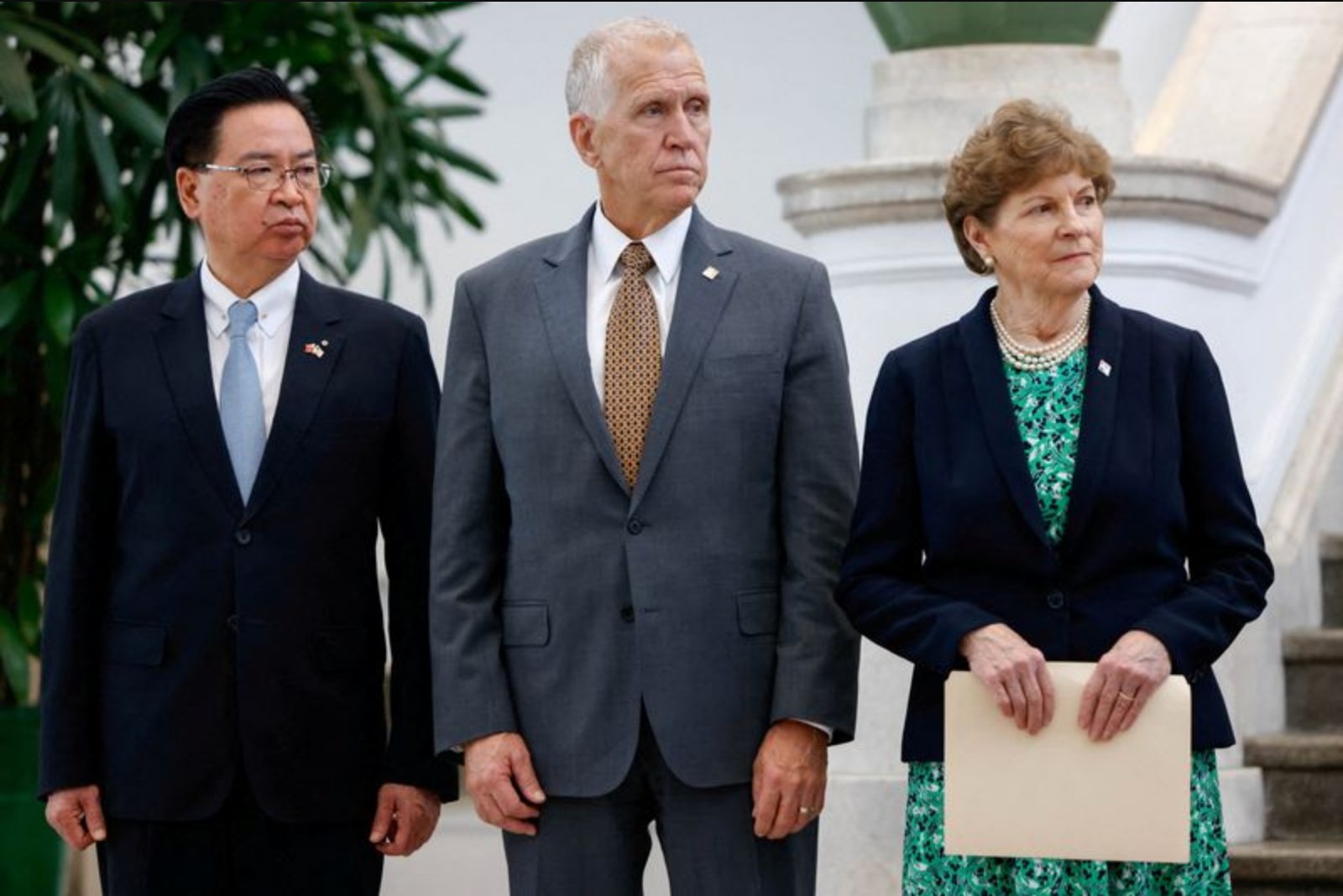
TAIPEI, March 31 - U.S. Senator Thom Tillis said on Tuesday that Taiwan should take the example of Hong Kong seriously and avoid naivety about China's intentions, remarks delivered during a visit by a bipartisan group of U.S. senators focused in part on stalled defence spending.
Tillis, a Republican, spoke to reporters while on an official visit to Taiwan by U.S. lawmakers who discussed Taipei’s proposed defence budget increase. The administration in Washington has backed President Lai Ching-te’s plan for an additional $40 billion in defence spending, but the measure is currently ensnared in the opposition-controlled legislature.
President Lai has argued the funds are necessary to strengthen Taiwan’s defences against China, which regards the island as its own territory. Taiwan’s opposition parties have said they support strengthening defence capabilities in principle, but they have also stated they will not approve what they describe as "blank cheques".
Hong Kong cited as a cautionary example
Tillis urged that differing views should be openly shared and debated in Taiwan, but added that the developments in Hong Kong serve as a direct warning about mainland intentions. He referenced the former British colony’s return to Chinese sovereignty in 1997 under a framework that provided a degree of autonomy, and the later imposition by Beijing of a sweeping national security law in 2020. Critics say that law curtailed freedoms in Hong Kong, while Beijing has asserted it was necessary to stabilise the city after months of sometimes violent unrest.
Tillis said: "And I think my biggest worry for Taiwan is that they underestimate the intentions of China, which I think were made very, very clear by what happened to Hong Kong. And so, yes, we would love peace, but please don’t be naive." He added: "You have a perfect example right in front of you of the intentions of China. And let’s make sure what happened to Hong Kong doesn’t happen here to Taiwan."
Diplomatic moves and high-level meetings
Tillis and other members of the delegation, including Democrat Jeanne Shaheen, the ranking member of the Senate Foreign Relations Committee, met with President Lai on Monday. That same day, Beijing announced it had invited Cheng Li-wun, chairwoman of Taiwan’s largest opposition party, the Kuomintang, to visit the mainland; Cheng accepted the invitation.
Cheng has described the upcoming trip, which is scheduled to begin next week, as a peace mission. In response to Cheng’s planned visit, Taiwan’s government reiterated concerns about Beijing’s long-term aims. The Mainland Affairs Council, which handles Taiwan’s policy toward China, said: "While we may have ideals about peace, we should not harbour illusions." The council also stated that China's ambitions to "annex" the island have never changed.
Context for Taiwanese decision-makers
The senators’ discussions and the concurrent diplomatic exchanges underscore political tensions shaping Taiwan’s internal debate over defence spending and cross-strait relations. The standoff in the legislature leaves the $40 billion proposal unresolved while officials and political actors weigh security needs, diplomatic signals and domestic political constraints.