
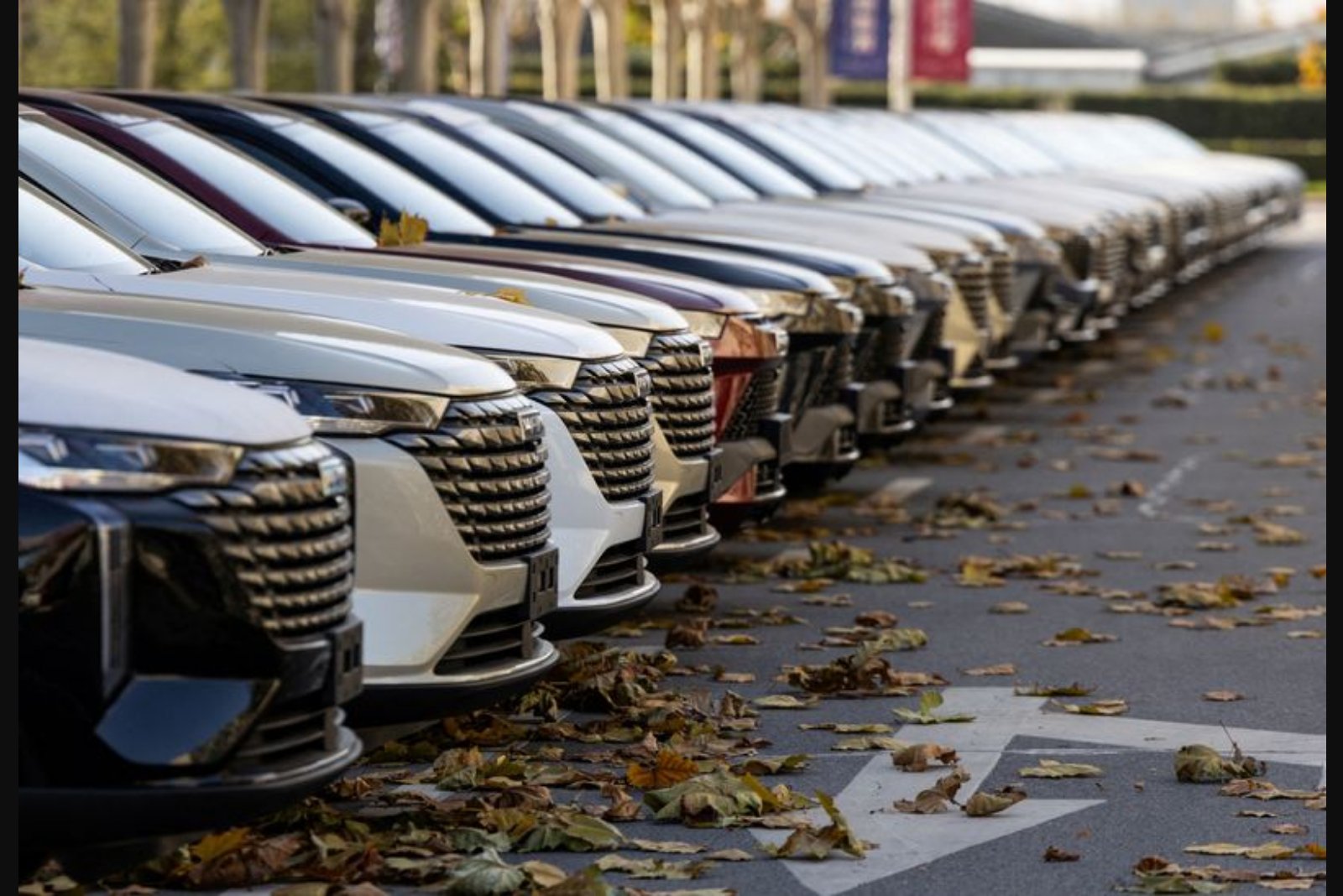
Republican Senator Bernie Moreno announced plans to file legislation next month designed to broaden U.S. restrictions on Chinese automakers and urged allied nations to adopt equivalent standards. Moreno said the measure would extend beyond current import limits to prevent any Chinese automobile from entering the U.S. market in any form - whether as hardware, software, or through partnerships.
The Biden administration issued a sweeping regulation that is set to effectively bar all Chinese automakers from selling passenger vehicles in the United States starting January 2025. The administration framed the regulation as a national security step, citing concerns over vehicles' capacity to gather sensitive data on American owners.
The administration's regulation enjoys substantial backing from U.S. automakers and other industry groups. Earlier this month, major auto trade associations formally urged the U.S. government to keep Chinese carmakers out of the U.S. market, according to a letter referenced in media reports, a position expressed in advance of a planned summit between President Donald Trump and Chinese President Xi Jinping in May.
At an Automotive Forum event held ahead of the New York Auto Show, Moreno described his proposed legislation as more comprehensive than the existing import ban. He said the bill would "seal off the U.S. so there's never a scenario where a Chinese automobile will enter our market, that's hardware, that's software, that's partnerships."
Moreno added: "There ill not be a Chinese automobile here. And what I'm hoping is that Latin America, Mexico, Canada and Europe, adopt our same standards now." He drew a parallel to U.S. rules barring the Chinese telecommunications company Huawei from certain U.S. infrastructure, saying: "We don't allow Huawei to come into our telecommunications infrastructure. We're not going to allow Chinese automakers into this market."
Using a metaphor to describe his intent, Moreno said: "We're going to prevent the cancer from coming into our market, and we're going to need the other countries to do chemotherapy."
The Chinese Embassy in Washington did not immediately respond to a request for comment on Moreno's proposal.
The legislative push comes as President Trump is expected to travel to China in May. The visit takes place while the two countries, described as the world's two biggest economies, aim to preserve a measure of stability in their relations following a recent period of tensions that included U.S. tariffs and concerns about China's control over rare earths exports.
Separately, in January President Trump indicated openness to Chinese automakers building vehicles in the United States. Speaking at the Detroit Economic Club, he said: "If they want to come in and build a plant and hire you and hire your friends and your neighbors, that's great, I love that."
Context and implications
- The Biden administration's regulation is set to take effect in January 2025 and is framed as a national security measure related to data collection by vehicles.
- Senator Moreno's forthcoming bill seeks to prohibit not only imports but also other channels by which Chinese automakers might access the U.S. market, and he has called on other countries to adopt similar standards.
- Major U.S. auto trade groups have urged the government to bar Chinese carmakers from the U.S., and a high-level U.S.-China meeting is scheduled in May.