
World March 24, 2026

U.S. Officials Say No Decision Yet on How to Carry Out Order to Resume Nuclear Tests

Senior State Department official tells Senate committee the administration is still determining whether testing would be underground or otherwise, while denying talks on atmospheric detonations

By Priya Menon
U.S. Officials Say No Decision Yet on How to Carry Out Order to Resume Nuclear Tests

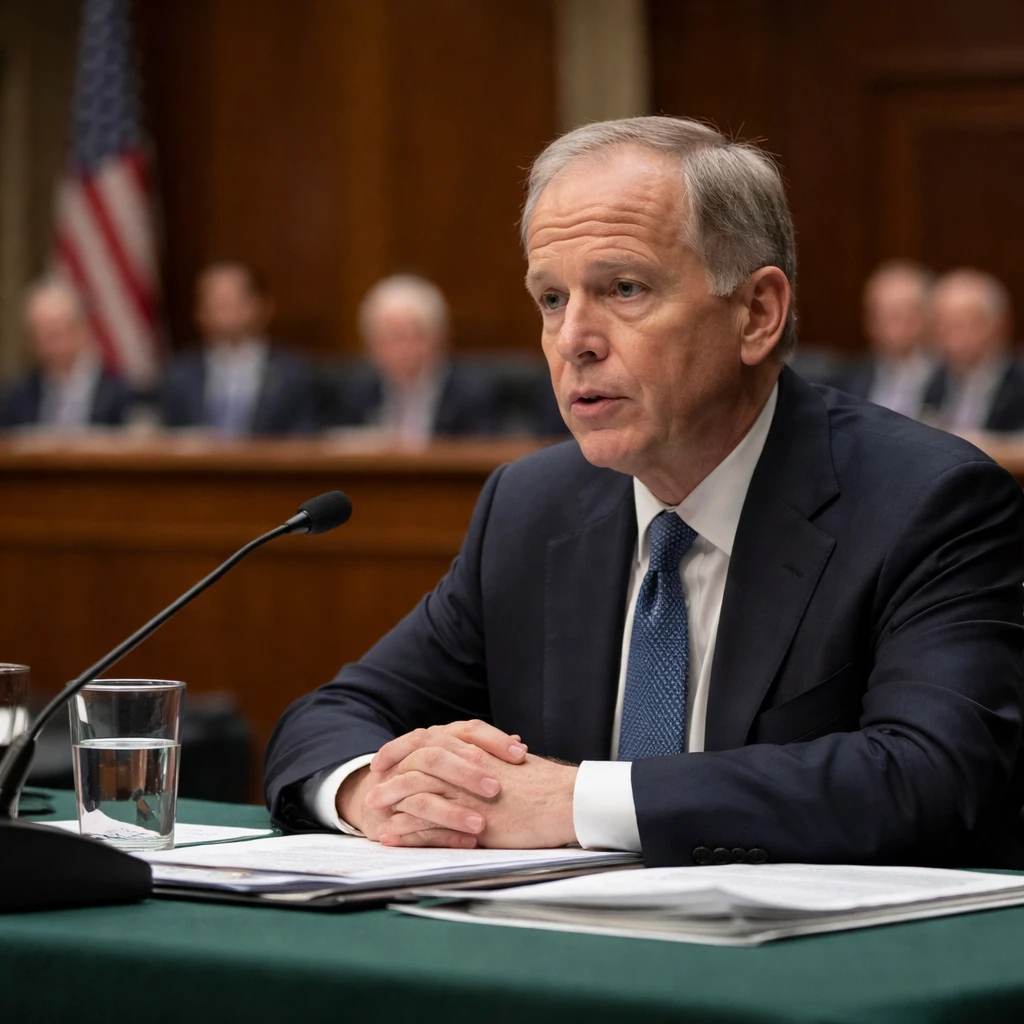
A senior State Department arms control official told the Senate Foreign Relations Committee that the United States has not settled on how to implement President Trump's October directive to resume nuclear weapons testing. No talks have taken place regarding a return to atmospheric testing; underground explosive tests remain a possibility, though no decisions have been made on the scope or format of any testing program. The official reiterated U.S. allegations that Russia and China have conducted underground explosive tests, allegations those governments deny and which some experts have disputed.

Key Points

  • Senior State Department official Thomas DiNanno told the Senate Foreign Relations Committee the U.S. is still assessing how to implement President Trump's order to resume nuclear weapons testing.
  • No discussions have occurred about conducting atmospheric nuclear tests; the United States last conducted atmospheric testing in 1962, while the last U.S. underground explosive test was in 1992. (Sectors impacted: defense contractors, government procurement, national security policy.)
  • DiNanno reiterated U.S. allegations that Russia and China have carried out underground explosive nuclear tests, allegations both countries deny and which some experts have contested. (Sectors impacted: defense, geopolitical risk assessments, arms control monitoring services.)

A senior State Department official told senators on Tuesday that the United States remains in the assessment phase on implementing President Donald Trump’s October instruction to resume nuclear weapons testing.

Undersecretary of State for Arms Control and International Security Thomas DiNanno informed the Senate Foreign Relations Committee that the U.S. has not held discussions about conducting atmospheric nuclear tests. He noted that the last atmospheric nuclear weapons test carried out by the United States occurred in 1962.

When asked whether underground explosive testing might be reconsidered, DiNanno did not rule it out. The last explosive underground test by the United States took place in 1992. On the prospect of a renewed testing program, he said:

"We’ve made no decision specifically on how or what any testing program would look like."

DiNanno’s remarks followed a question from senators on how the presidential directive to resume testing was being executed. He reiterated U.S. charges that both Russia and China have carried out explosive underground nuclear tests. The official acknowledged that Moscow and Beijing deny those charges and that some experts have challenged the U.S. assertions.


The testimony made clear that while a presidential directive exists, specific plans, formats and modalities for any future U.S. tests have not been finalized. DiNanno communicated two distinct limits so far: discussions on atmospheric testing have not taken place, and no conclusive decisions have been reached about the nature of a testing program.

This position highlights continuing uncertainty within U.S. policy circles about the operational shape of any move to resume testing and underscores ongoing disputes over whether other nuclear-armed states have themselves conducted similar underground explosive tests.

As the assessment process continues, the Senate hearing provided lawmakers with an updated official account but did not yield firm policy choices or timelines.

Risks

  • Operational uncertainty - No decision has been made on the form, scope or timelines for any testing program, leaving defense and procurement planners without firm guidance. (Impacted sectors: defense manufacturing, government contracting)
  • Strategic disadvantage contention - U.S. officials argue that not testing places the United States at an 'intolerable disadvantage,' a claim that reflects strategic uncertainty and could influence defense policy and budgets. (Impacted sectors: defense budgeting, military readiness assessments)
  • Credibility and verification disputes - U.S. charges about Russian and Chinese underground explosive tests are denied by those countries and disputed by some experts, creating contested intelligence and verification environments that affect arms control monitoring and diplomatic negotiations. (Impacted sectors: arms control verification, geopolitical risk analysis)

More from World

Ghana’s President Warns U.S. Actions in New York Could Normalize Erasure of Black History Mar 24, 2026 Thousands of 82nd Airborne Troops Expected to Head to Middle East, Officials Say Mar 24, 2026 U.N. Rights Report: Gangs Extend Control Across Haiti as Security Operations Intensify Mar 24, 2026 Two Decades of Mouse Cloning Reveal Cumulative Genetic Damage and a Hard Biological Limit Mar 24, 2026 US Citizen Detained Among Three Over Arson at Czech Defence Maker, Police Say Mar 24, 2026