
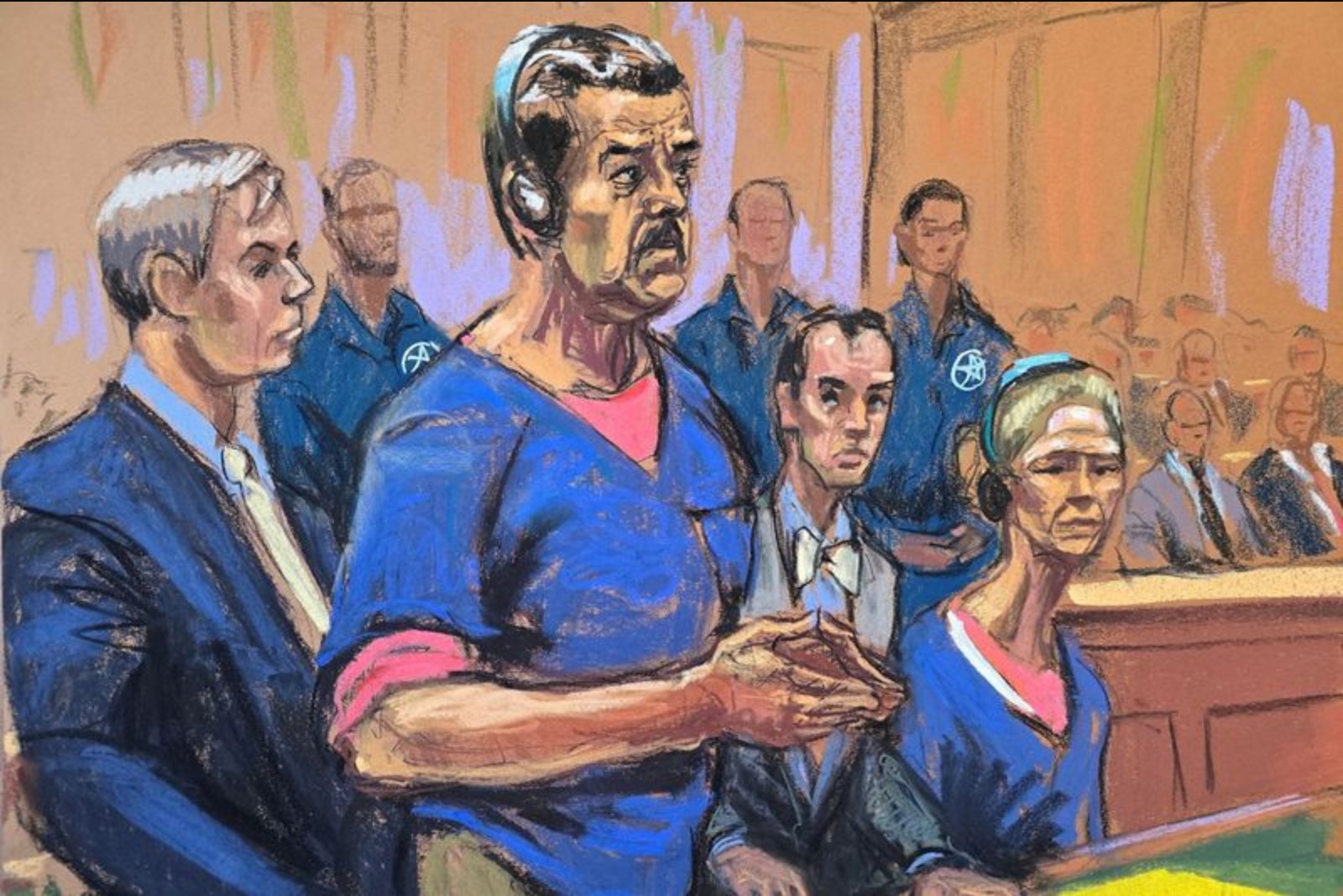
Nicolás Maduro, the one-time leader of Venezuela, will return to a federal courtroom this week to face criminal accusations that include violations of a narcoterrorism law that has seldom been successfully prosecuted at trial. The statute, enacted in 2006 to address drug trafficking linked to activities the United States deems terrorism, carries a heavier mandatory minimum penalty than ordinary drug charges and has a mixed historical record at the trial level.
Maduro, 63, who led Venezuela from 2013 through his capture in Caracas by U.S. special forces on January 3, entered a plea of not guilty to all U.S. charges against him on January 5. The government alleges that he led a conspiracy in which Venezuelan officials assisted in moving cocaine through Venezuela in cooperation with traffickers including the Revolutionary Armed Forces of Colombia (FARC), an organization the U.S. designated as a terrorist group from 1997 to 2021. Maduro and other indicted officials have consistently denied wrongdoing, characterizing the U.S. case as part of an imperialist plot against Venezuela.
The narcoterrorism statute at issue has a limited track record in U.S. federal courts. A Reuters review of federal records shows the law has resulted in just four trial convictions, and two of those were later vacated due to witness credibility problems. The uneven outcomes underscore a central legal hurdle for prosecutors: convincing a jury that cooperating witnesses can reliably link alleged drug operations to activities the United States recognizes as terrorism and that the defendant knew of and intended that connection.
Alamdar Hamdani, a partner at Bracewell and a former U.S. Attorney in Houston, summarized that challenge in terms of the evidence prosecutors must bring forward. "The lesson of these two cases is not that the narcoterrorism statute is unworkable," he said. "It is that the statute’s most demanding element - proving the defendant’s knowledge of the terrorism nexus - requires a quality of evidence and a standard of prosecutorial diligence that leaves no room for institutional gaps, name-spelling errors, or uncritical acceptance of what your witnesses tell you."
Prosecutors have not yet identified the witnesses they plan to call in the Maduro proceedings. One of the former Venezuelan generals indicted alongside Maduro has told Reuters he is willing to cooperate with the U.S. case, although public statements indicate complexities and conditions tied to any cooperation.
Scope and history of the narcoterrorism statute
Congress created the narcoterrorism statute roughly two decades ago to target drug traffickers who fund activities the United States considers terrorism. Since its creation, 83 people, including Maduro, have been charged under the law. Of those, 31 defendants pleaded guilty to narcoterrorism or related lesser counts, eight remain awaiting trial, and dozens are not in U.S. custody. The narcoterrorism charge carries a 20-year mandatory minimum sentence - double the floor for a typical drug trafficking conviction - and both narcoterrorism and ordinary drug trafficking counts can carry life sentences in certain circumstances.
Legally, the statute defines terrorism as premeditated, politically motivated violence against non-combatants. That definition, legal experts note, is broad enough to encompass a range of activities that prosecutors may argue are linked to narcotics proceeds. "If you take the legal definition of terrorism and terrorist activity, you can paint a pretty broad brush with the kind of activity we’re talking about," said Shane Stansbury, a professor at Duke University School of Law and a former federal prosecutor.
To secure a narcoterrorism conviction, prosecutors must prove beyond a reasonable doubt that the defendant knew the drug trafficking conduct produced financial benefits for an entity that the United States characterized as engaging in terrorist activities, even if that knowledge was not the defendant’s primary motivation. Artie McConnell, a former federal prosecutor and partner at BakerHostetler, emphasized that the law does not require the terrorism nexus to be the defendant’s motive; knowledge that the trafficking benefited a terrorist-designated group can be sufficient for the government’s theory.
Prior trials and witness credibility issues
The statute’s sparse trial record includes several notable cases in which convictions were undermined by questions about cooperating witnesses. In the first narcoterrorism trial in 2008, a defendant alleged to have ties to the Taliban was convicted of assisting an undercover Drug Enforcement Administration informant in purchasing opium and heroin. That narcoterrorism count was later dismissed in 2021 after an appeals court found the defense counsel had not adequately challenged the only witness connecting the defendant to the Taliban.
Other trials have produced similarly mixed outcomes. In 2011 a jury deadlocked in the trial of an accused Afghan trafficker; he was convicted at a second trial in 2012, but the narcoterrorism charge was vacated in 2015 after prosecutors acknowledged a U.S. government agency had treated the cooperating witness who linked him to the Taliban as a "fabricator."
By contrast, a 2015 narcoterrorism conviction of a Colombian defendant accused of trying to ship cocaine for the FARC and attempting to acquire weapons for the group has been upheld. A fourth trial involving narcoterrorism allegations resulted in a guilty verdict earlier this week, adding another trial-level success to the statute’s limited history.
Potential witnesses in the Maduro case
Legal observers have pointed to two former Venezuelan generals indicted alongside Maduro in 2020 - Cliver Alcalá and Hugo Carvajal - as possible cooperating witnesses who could play central roles in the government’s proof. Both men pleaded guilty to charges tied to their alleged dealings with the FARC, but at the times of their pleas neither agreed to cooperate with prosecutors.
In a telephone interview from federal prison in Cumberland, Maryland, Alcalá said he is willing to cooperate now. Alcalá told Reuters that prosecutors had previously conditioned cooperation on his admission of participation in drug trafficking, which he denies. "I cannot, in order to reduce my sentence, declare myself to be a drug trafficker when I am not," he said.
Alcalá, 64, who retired from Venezuela’s military shortly after Maduro took office in 2013 and later became a critic of Maduro’s government, is serving a nearly 22-year sentence after pleading guilty in 2023 to providing material support to the FARC. In court he admitted supplying the group with weapons - a conduct he says he carried out under orders from former Venezuelan President Hugo Chavez - while denying he helped traffickers move cocaine. When asked whether the accusations against Maduro were accurate, Alcalá said he believed there was "some basis" to the charges and that Maduro had ties to a drug trafficker jailed in Caracas, though he did not provide specifics.
Hugo Carvajal’s sentencing is scheduled for April 16. His lawyer declined to comment publicly on whether Carvajal would cooperate with prosecutors in the Maduro matter.
Procedural status and commentary from parties
Maduro also faces separate counts, including a conspiracy to import cocaine into the United States. Those charges are independent of the narcoterrorism count and, in prior cases involving reversals, defendants were often subject to additional counts that were not overturned.
Maduro’s attorney, Barry Pollack, did not respond to requests for comment on the narcoterrorism law’s trial history or potential witnesses. A spokesman for the Manhattan U.S. Attorney’s Office declined to comment on which witnesses prosecutors might call or on other trial strategy questions.
The upcoming proceedings will test how prosecutors marshal cooperating witnesses and documentary evidence to prove the narcoterrorism statute’s most exacting requirement - that the defendant knew the drug trafficking benefited groups engaged in terrorist activity as defined by U.S. law. Legal specialists say that meeting this burden of proof will require rigorous attention to the reliability and corroboration of witness testimony.