
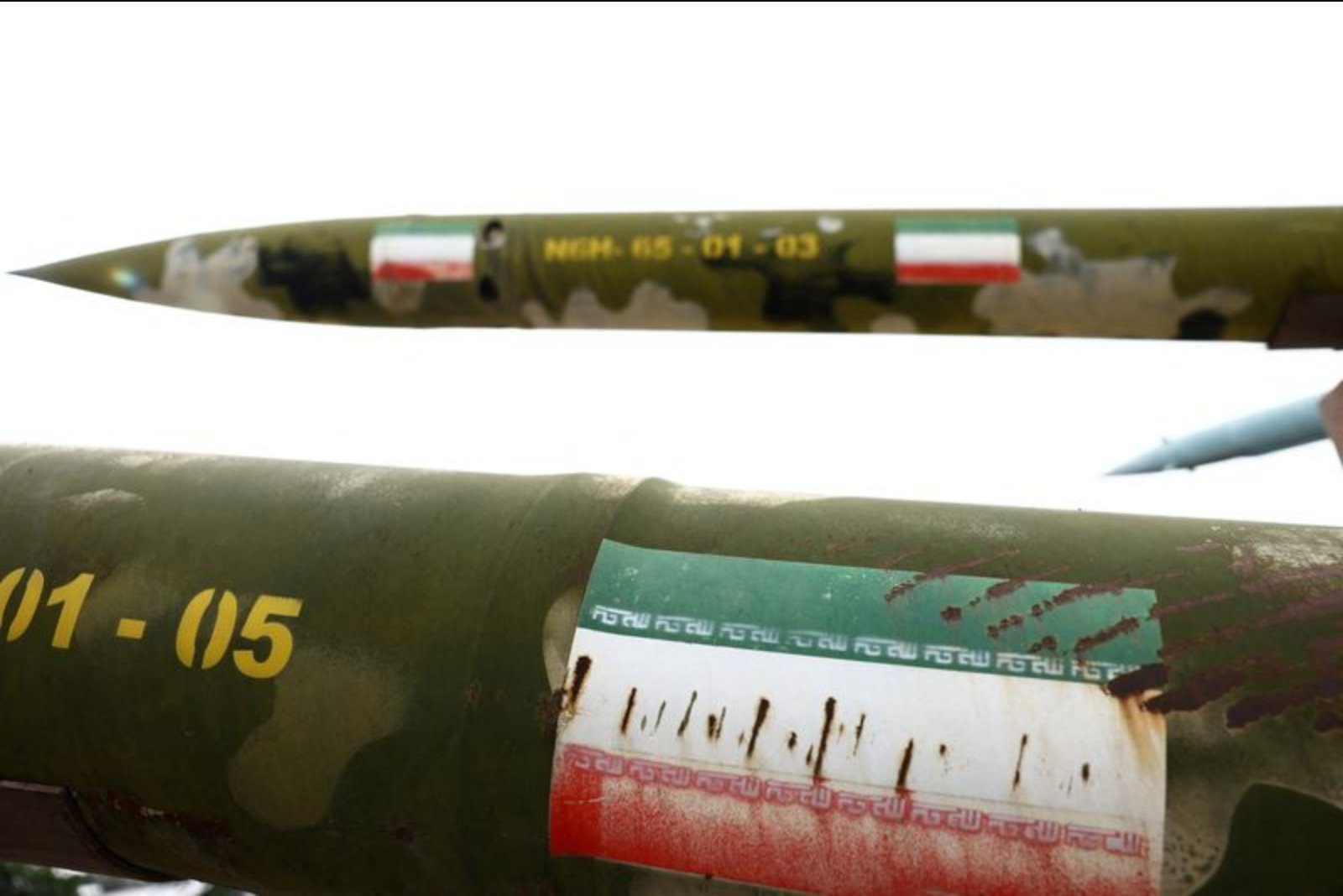
U.S. intelligence assessments indicate that American and allied strikes have definitively eliminated only about one-third of Iran’s extensive missile holdings as the campaign against Tehran approaches the one-month mark, five people familiar with the intelligence told officials. Those same sources said the condition of roughly another third of the missiles is ambiguous, with indications that strikes probably damaged, destroyed or buried weapons inside underground tunnels and bunkers, according to four of the people.
The individuals who provided the assessment spoke on condition of anonymity because of the sensitivity of the information. One source said a similar degree of certainty applies to Iran’s drone arsenal, with intelligence showing about a third have been confirmed destroyed.
The picture the U.S. has formed, as described by the sources, is that while a large share of Iranian missiles are either no longer serviceable or have been rendered inaccessible by being entombed underground, Tehran still possesses a meaningful remaining inventory. Further, the intelligence suggests there is a possibility that some weapons that were buried or damaged could be recovered once active hostilities subside.
That assessment runs counter to public statements from President Donald Trump, who on Thursday said Iran had "very few rockets left." In the same remarks the president acknowledged the danger posed by remaining Iranian missiles and drones to any future U.S. operations to protect the economically critical Strait of Hormuz. He also is weighing whether to escalate the conflict by deploying U.S. troops to Iranian shores along the Strait.
"The problem with the straits is this: let’s say we do a great job. We say we got 99% (of their missiles). 1% is unacceptable, because 1% is a missile going into the hull of a ship that cost a billion dollars," the president said at a televised Cabinet meeting.
The Pentagon and the White House did not immediately respond to requests for comment on the intelligence assessments.
Democratic Representative Seth Moulton, a Marine Corps veteran who served four tours in Iraq, declined to comment directly on the intelligence but pushed back on the president’s depiction of the state of Iran’s arsenal. "If Iran is smart they’ve retained some of their capability - they’re not using everything that they have. And they’re laying in wait," Moulton said.
Campaign goals and operational claims
The administration has publicly framed its military objectives as degrading Iran’s military forces by sinking its navy, destroying missile and drone capabilities and preventing Tehran from obtaining a nuclear weapon. U.S. Central Command says its operation - officially named "Epic Fury" - is on schedule or even ahead of the timelines laid out before the strikes began on February 28.
Central Command has said U.S. strikes have struck more than 10,000 Iranian military targets as of Wednesday and has reported that 92 percent of Iran’s large naval vessels have been sunk. The U.S. military has released imagery purporting to show attacks on facilities that produce Iranian weaponry, emphasizing an effort to target both stockpiles and the industrial base that manufactures missiles and drones.
Despite these public statements, Central Command has declined to quantify precisely what proportion of Iran’s missile or drone capability has been eliminated.
One source highlighted the difficulty in arriving at a firm number, noting that a substantial fraction of Iran’s missiles may have been stored in underground bunkers before the conflict began. The United States has not disclosed an official estimate of Iran’s pre-war missile stockpile, but public estimates cited range from 2,500 by Israel’s military to about 6,000 according to some analysts.
Iran’s continuing strikes and displays of capability
Even with the intensive pace of U.S. strikes, Iran has continued to conduct offensive operations. On Thursday, Iran launched 15 ballistic missiles at the United Arab Emirates and another 11 unmanned aerial vehicles, according to the UAE’s Defense Ministry. Iran has also demonstrated new operational reach, including the use of long-range missiles last week to target the U.S.-UK military base Diego Garcia in the Indian Ocean.
Nicole Grajewski, an expert on Iran’s missile forces and the Islamic Revolutionary Guard Corps at Sciences Po in Paris, said the Trump administration may have overstated the degradations achieved by U.S. strikes. She noted Iran’s ability to carry out strikes from the Bid Kaneh military facility even after it has been heavily bombed. "The fact that they’ve managed to sustain this, I think, indicates the U.S. was overstating the success of its operation," she said, adding her view that Iran still retains roughly 30 percent of its missile capability.
Grajewski further said Iran maintains more than a dozen large underground facilities that have been used to store launchers and missiles. "The big question is: have these facilities collapsed?" she asked, highlighting a key uncertainty in the campaign’s assessments.
Underground storage complicates assessment
One senior U.S. official expressed skepticism about the precision of any tally of Iran’s missiles, stressing the challenge of determining how many weapons sit underground and what degree of access remains to those sites. "I don’t know if we’ll ever have an accurate number," the official said.
Defense Secretary Pete Hegseth acknowledged the challenge posed by Iran’s use of subterranean infrastructure in remarks on March 19. "Iran is a vast country. And just like Hamas and their tunnels (in Gaza), they’ve poured any aid, any economic development, humanitarian aid, into tunnels and rockets," he said. Hegseth added that U.S. forces were methodically targeting such sites, saying: "But we are hunting them down methodically, ruthlessly and overwhelmingly, like no other military in the world can do, and the results speak for themselves," without offering a numerical breakdown of missiles or drones destroyed.
What the intelligence means
The combined reporting from multiple officials paints a picture of significant but incomplete success in degrading Iran’s conventional strike capabilities. Confirmed destruction of about a third of missiles and some drones indicates substantial attrition. At the same time, the existence of weapons that are damaged, buried or otherwise difficult to account for suggests Iran may retain the ability to reconstitute parts of its arsenal after the conflict, and that clear operational risks persist for military forces and for commercial shipping in nearby waters.
Officials and analysts quoted in the assessment emphasized the limits of current knowledge and the practical difficulties of destroying an adversary’s full inventory when a large portion can be stored below ground or hidden inside hardened facilities.
As the campaign continues, questions about the precise scale of Iran’s remaining missile and drone forces will remain central to assessments of ongoing operational risk and to decisions about whether further escalation is advisable.