
Overview
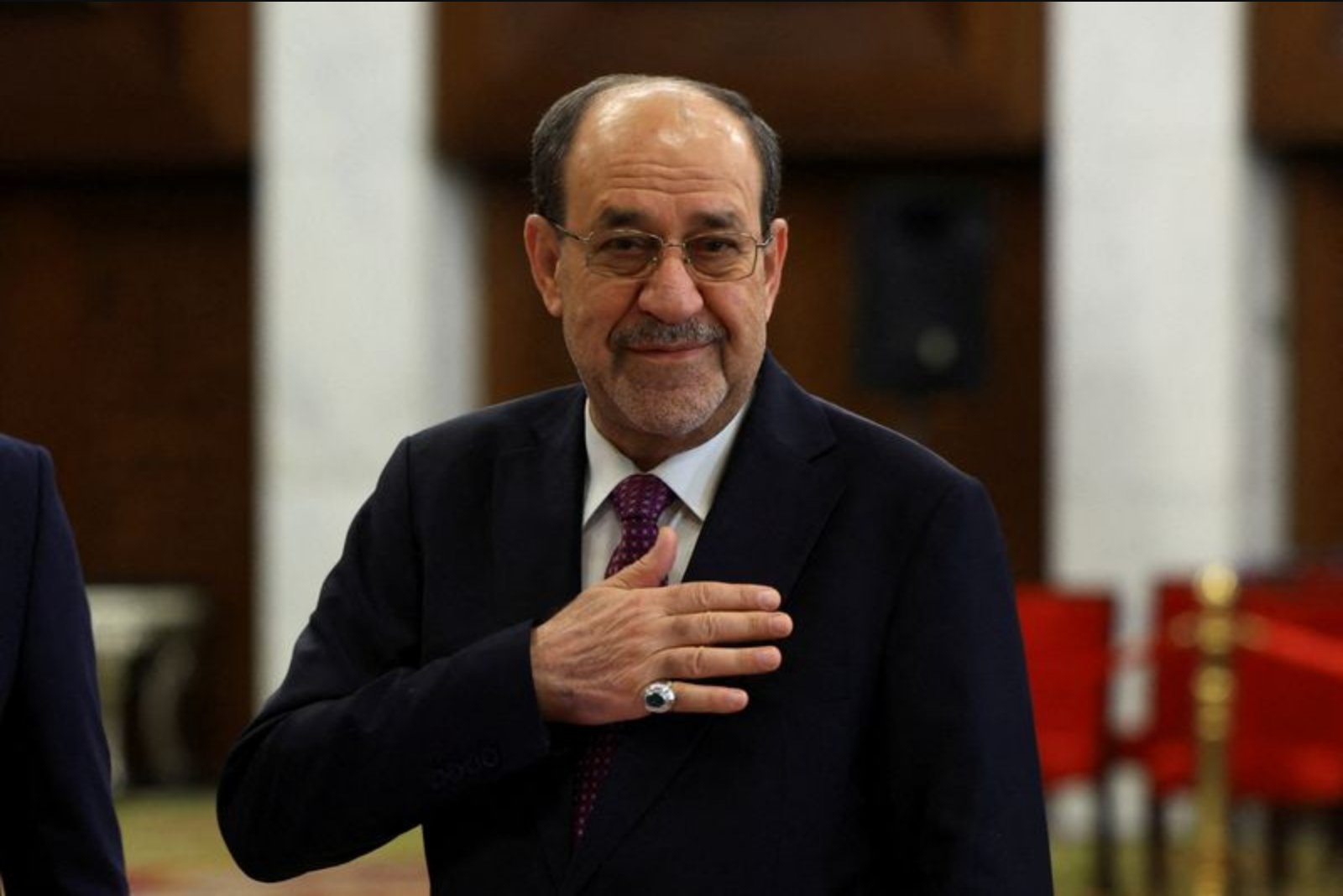
Former Iraqi prime minister Nouri al-Maliki has resurfaced as a leading contender to return to the premiership after Iraq’s principal Shi’ite political alliance - which commands a parliamentary majority - selected him as its nominee. The move has prompted a sharp reaction from U.S. President Donald Trump, who issued a public warning that Washington would withdraw assistance to Iraq, a major oil producer and longstanding U.S. partner, if Baghdad were to install the Iran-backed Maliki once more.
U.S. Intervention and Washington’s Warning
In a direct intervention in Iraq’s internal political debate, President Trump wrote that "Last time Maliki was in power, the Country descended into poverty and total chaos. That should not be allowed to happen again," and described Maliki’s record as reflecting "insane policies and ideologies." The presidential statement is the latest example of an effort by Washington to limit the political space for Iran-aligned figures in Iraq, a country that has long navigated a precarious relationship between its two closest external patrons.
Political Surprise in Baghdad
The decision by the dominant Shi’ite alliance to designate Maliki as its candidate came as an unexpected development for many inside Iraq, where memories of his earlier administration remain divisive. Maliki was Iraq’s first elected prime minister following the 2003 U.S.-led overthrow of Saddam Hussein and led the government for two consecutive terms. His prior tenure, from 2006 to 2014, was associated with intense sectarian conflict, confrontations with Sunni and Kurdish leaders, and a deterioration in public services amid allegations of corruption.
Accusations of Sectarianism and Security Failures
Critics have long accused Maliki of pursuing policies that favoured the Shi’ite majority and marginalised Sunnis, a pattern they say contributed to alienation that helped fuel the advance of ultra-violent Islamic State militants as Iraqi security forces faltered. Sunni leaders and others point to episodes such as the removal of effective commanders on sectarian grounds and policies that resulted in inadequate service delivery to Sunni regions.
Those grievances culminated in intense criticism from a wide range of actors - including the United States, Iran, Sunni political figures and Iraq’s highest Shi’ite clerical authority - and contributed to Maliki being pressured to step down in 2014 as IS made rapid territorial gains. A parliamentary panel in 2015 even urged that Maliki and numerous senior officials face trial over the fall of Mosul to Islamic State.
How Maliki Rebuilt His Position
Despite the controversies and calls for accountability, Maliki, now in his mid-70s, has remained a force in Iraqi politics. He leads the State of Law coalition and has retained strong relations with powerful Iran-backed factions. Analysts cited in accounts of his comeback say he quietly rebuilt influence through strategic relationships with armed militias, elements within the security services and the judiciary, leveraging political skill to reassert relevance on the national stage.
Roots, Exile and Return
Born in 1950 in Janaja, a small southern village on the Euphrates, Maliki came from a politically active family. His grandfather reportedly composed poetry opposing the British presence in Iraq and his father was a committed Arab nationalist. In 1979 he was briefly detained and subsequently fled Iraq, escaping the security forces of Saddam Hussein. During the following decade his family suffered land confiscation and the loss of dozens of relatives. Maliki spent roughly 25 years in exile, mainly in Syria and Iran, sentenced to death under Saddam for his role in the outlawed Dawa Party.
He returned after Saddam’s fall and emerged as a compromise candidate to lead a fragile coalition in 2006. Within months of taking office he signed the execution order for Saddam Hussein, a moment that signified the culmination of his long opposition to the former dictator. But his subsequent pursuit of political dominance for Shi’ite interests would later be cited by critics as a factor in deepening divisions within the country.
Contested Record on Sectarian Violence
Questions about Maliki’s readiness to set aside sectarian considerations and to mount an effective, impartial campaign against violence surfaced during his time in office. A leaked internal U.S. government communication highlighted concerns raised by commanders in the field, pointing to the non-delivery of state services to Sunni areas and the removal of effective military leaders based on sectarian calculations. Those assessments fed wider doubts about whether his administration had contributed to domestic fragmentation.
Maliki has rejected characterisations of a sectarian agenda. In remarks made in 2014 he told reporters that he was not targeting Anbar province because it was Sunni, pointing instead to his record of confronting both Sunni extremist groups and Shi’ite militias. "I am not fighting in Anbar because they are Sunnis, as I have also fought Shi’ite militias. Al Qaeda and militias are one - they both kill people and blow them up," he said.
Implications and the Tightrope Iraq Walks
The nomination of Maliki places Iraqi political dynamics under renewed strain as Baghdad seeks to maintain a balance between Washington and Tehran. President Trump’s explicit threat to withhold U.S. support if Maliki is appointed underscores the high stakes: U.S. backing is tied to security cooperation and broader political engagement with a country that is a major oil producer. The debate over Maliki’s potential return highlights how internal political choices can reverberate through Iraq’s international relationships and its domestic security environment.
Reporting in this piece is based on the available public record and statements attributed to the individuals noted.