
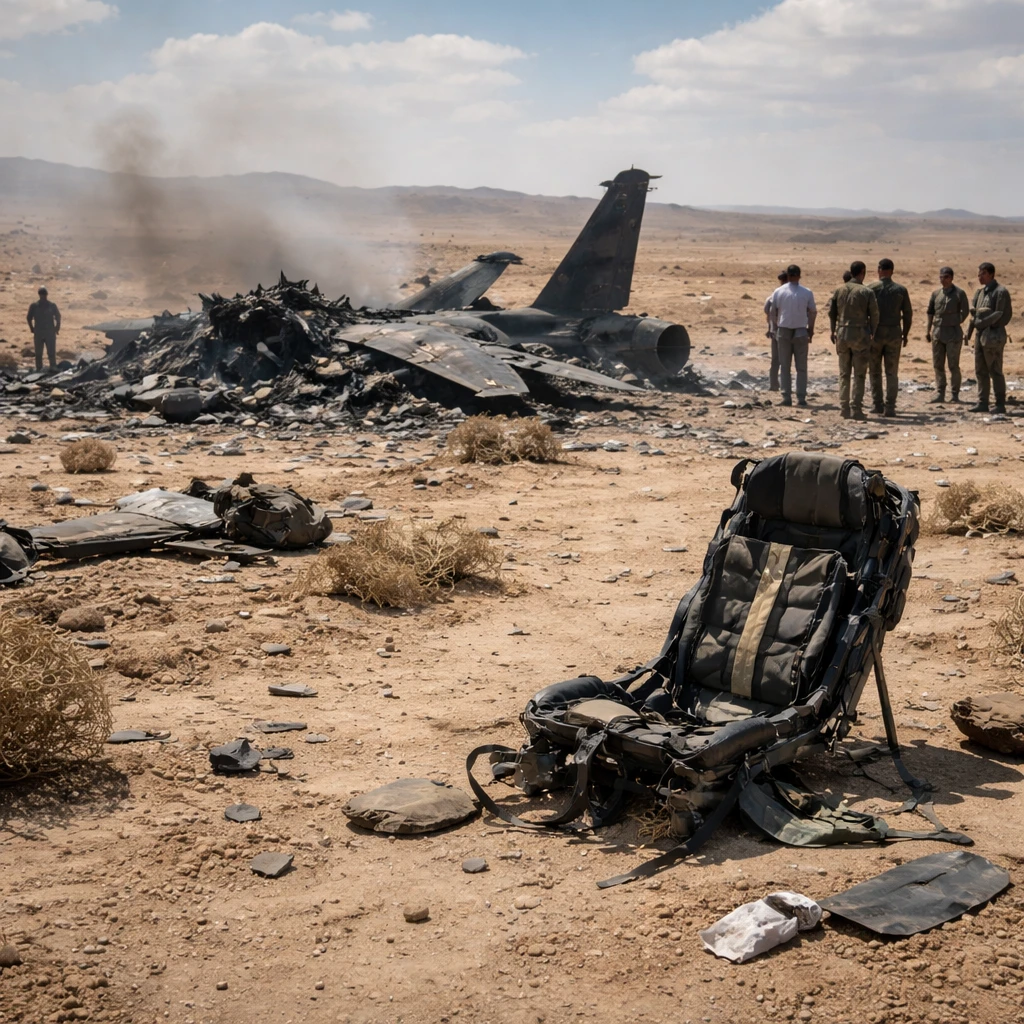
A U.S. F-15 fighter jet has been shot down over central Iran, Iranian state media and U.S. sources reported, in what is described as the first American aircraft lost to enemy fire since the onset of the joint U.S.-Israeli military operation roughly five weeks ago. U.S. forces have launched a search and rescue operation for two crew members, according to U.S. officials.
An unnamed U.S. official who was not authorized to speak publicly confirmed the incident to Axios, saying a search is underway. Iranian state-run outlets published photos and video that they said came from the crash site; those images include debris and an ejection seat and have been interpreted as consistent with an F-15E Strike Eagle.
The Islamic Revolutionary Guard Corps initially asserted that an F-35 had been downed by a newly deployed air defense system. However, visual evidence from the site has been presented by Iranian media as debris belonging to an F-15E Strike Eagle, not an F-35.
The shootdown occurred a day after U.S. Central Command publicly disputed Iranian claims that an "enemy" fighter jet had been shot down, stating that "All U.S. fighter aircraft are accounted for." The conflicting accounts underscore a lack of public agreement between the two sides over the status of U.S. aircraft in the region.
The incident follows a widely publicized address by President Trump on April 1 in which he said he would strike Iran "extremely hard over the next two to three weeks" and described intentions to degrade Iran substantially. That speech came amid competing assertions about ceasefire talks: the president said Iran's president had requested a ceasefire, while Iran's foreign ministry labeled that claim "false and baseless."
The military campaign that preceded this incident began about five weeks ago. Humanitarian organizations cited in public statements report thousands of people killed and tens of thousands wounded since the conflict began, with medical needs increasing sharply.
Markets responded to the heightened tensions. U.S. crude WTI futures rose past $110 per barrel on Thursday in the wake of the escalation. Note that oil trading was closed on the day following the spike in observance of Good Friday ahead of the Easter holiday.
Context and immediate implications
At this stage, official accounts from U.S. and Iranian authorities differ on the type of aircraft and the circumstances of the shootdown. Iranian imagery points to an F-15E, while initial IRGC statements referenced an F-35. U.S. Central Command had recently denied reports of any U.S. aircraft losses before this event came to light via state media and U.S. confirmations to reporters.
Search and rescue operations remain active. Authorities on both sides have offered competing statements about aircraft accountability and ceasefire negotiations, and humanitarian agencies have reported substantial casualties and rising medical needs related to the conflict.
Market reaction
The escalation contributed to a sharp move in oil prices, with WTI futures climbing above $110 per barrel on the day of the reports. The temporary market closure for a holiday following the move means intraday liquidity and trading patterns were affected by the holiday schedule.