
World January 23, 2026

U.S. Defense Policy Leader to Visit South Korea and Japan for Strategic Talks

Elbridge Colby Scheduled to Discuss Alliance Modernization and Defense Spending in East Asia

By Leila Farooq
U.S. Defense Policy Leader to Visit South Korea and Japan for Strategic Talks

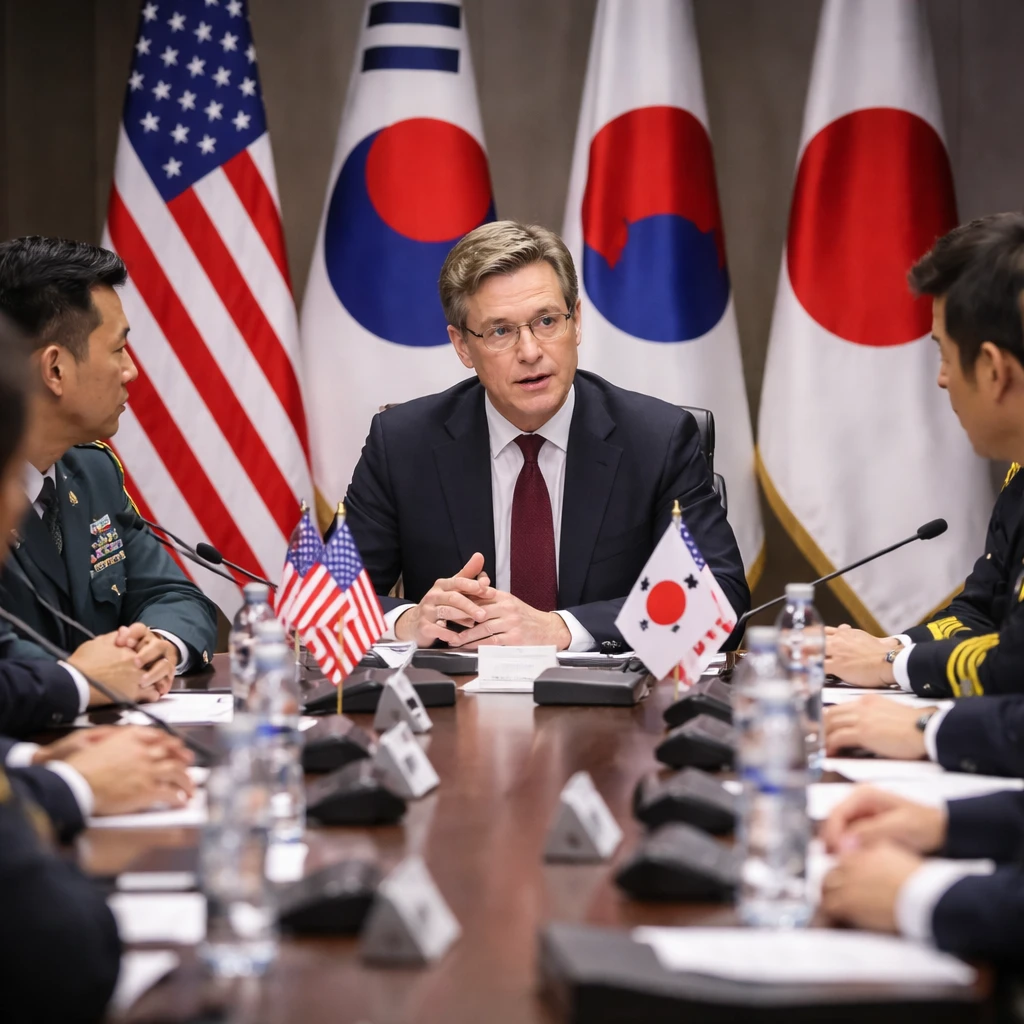
Elbridge Colby, Under Secretary of Defense for Policy, will embark on a visit to South Korea followed by Japan to engage in discussions over defense cooperation, including military spending increases and alliance modernization. The discussions align with broader U.S. strategic efforts to recalibrate its military commitments and encourage allies to increase defense contributions.

Key Points

  • Elbridge Colby, U.S. Under Secretary of Defense for Policy, will visit South Korea and Japan to discuss military alliance and defense spending.
  • South Korea intends to increase its defense budget by 7.5% and focus on modernizing its military cooperation with the U.S.
  • The visit is set against the backdrop of U.S. initiatives for allies to share more defense costs and adjust U.S. military deployments worldwide.

Elbridge Colby, the U.S. Department of Defense's Under Secretary for Policy, is set to visit South Korea beginning Sunday and continuing through Tuesday, before continuing on to Japan, according to South Korea’s Yonhap News Agency. The focus of Colby's meetings with South Korean officials is expected to revolve around advancing the bilateral military alliance, including prospective enhancements in military collaboration and Seoul’s planned increase in defense expenditure.

While the South Korean Defense Ministry has refrained from confirming these visits directly and advised that related inquiries be addressed to U.S. authorities, the visit underscores ongoing dialogues concerning the strategic partnership between the U.S. and its East Asian allies. Colby serves as the principal architect of U.S. defense and foreign policy implementation, overseeing key strategic decisions.

The meetings will likely engage topics such as South Korea's intention to elevate its defense budget and ongoing initiatives to modernize the joint military alliance. These discussions occur amid broader U.S. initiatives spearheaded during the Trump administration, notably advocating for allied nations to assume a greater share of the financial burden for their own defense capabilities.

South Korea currently hosts approximately 28,500 U.S. military personnel, a deployment primarily designed to counterbalance North Korea’s military provocations. In this context, Seoul has increased its defense budget by 7.5% for the current year. Additionally, South Korea is advancing plans for constructing its own nuclear-powered submarines, a maritime development that has received endorsement from former President Trump.

This strategic reorientation and collaborative military development signal continued emphasis on sustaining and upgrading defense postures in the region, responding to evolving security challenges and shifting global military priorities.

Risks

  • South Korea's increased defense spending and nuclear-powered submarine development may heighten regional security tensions affecting defense and maritime sectors.
  • Lack of confirmation from South Korea's Defense Ministry introduces uncertainty regarding the specific agenda and outcomes of the talks, impacting military and diplomatic sectors.
  • The ongoing U.S. push for allied countries to shoulder more defense costs could generate friction or complicate alliance dynamics, with potential economic implications for defense budgets.

More from World

Who Can Compete in Women’s Events at Milano-Cortina? The Olympics and the Patchwork of Transgender Eligibility Rules Feb 2, 2026 U.S. Olympic hospitality site renamed 'Winter House' after protests over ICE shootings Feb 2, 2026 Greenland’s premier says U.S. still aims for control despite ruling out military action Feb 2, 2026 Kremlin says Russia has long offered to process or store Iran’s enriched uranium Feb 2, 2026 Long-Awaited Rafah Reopening Prompts Hope and Anxiety Among Palestinians Stranded Across Border Feb 2, 2026