
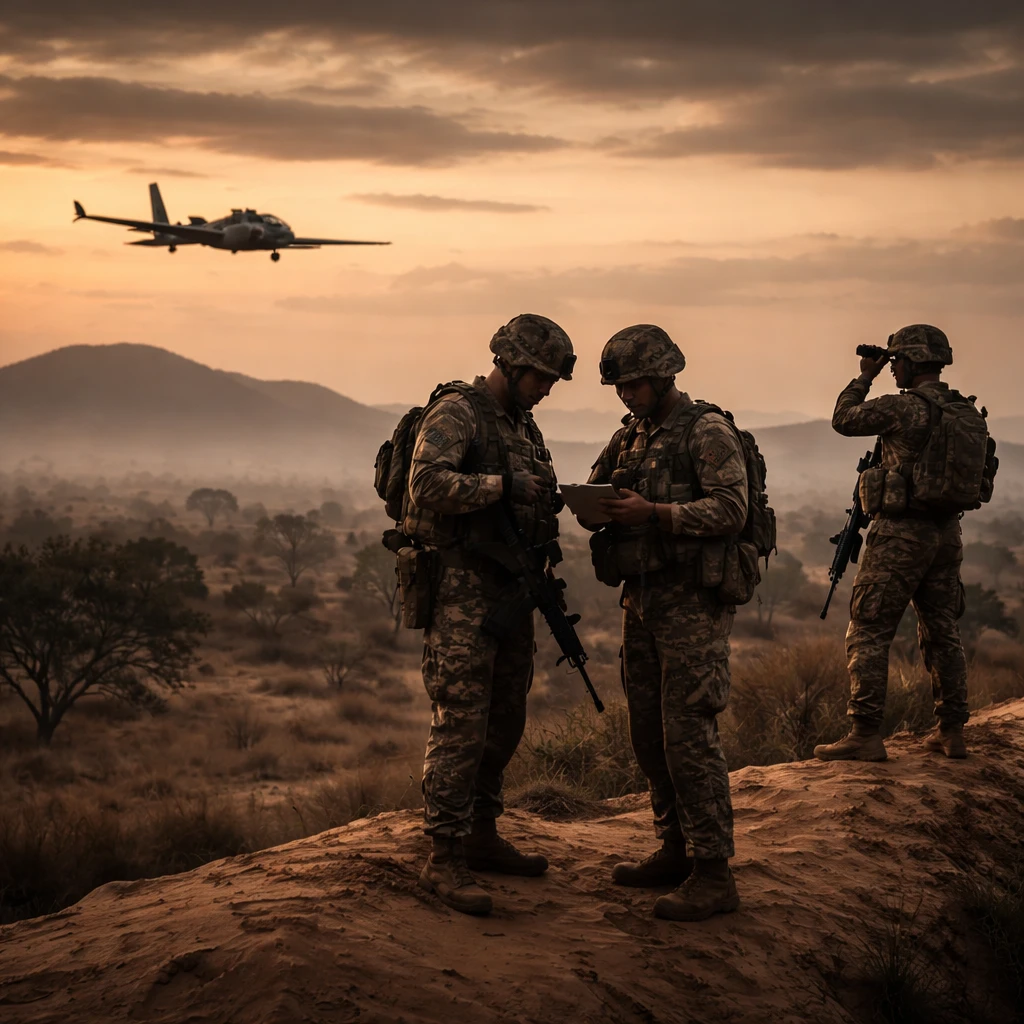
DAKAR - The commander of U.S. Africa Command confirmed on Tuesday that a small contingent of American military personnel has been placed in Nigeria, marking the first public acknowledgment of U.S. forces on the ground there since Washington conducted airstrikes on Christmas Day. The deployment, described by the commander as limited and focused on unique capabilities, followed discussions between the two governments about strengthening the response to Islamist militant threats in West Africa.
General Dagvin R.M. Anderson, who leads AFRICOM, told journalists that the presence of the U.S. team reflected increased collaboration after both countries agreed additional measures were needed to confront terrorist-affiliated groups operating in the region. He characterized the unit as "small" and said it brings distinct capabilities from the United States, but he did not provide specific numbers or delineate the precise scope of its activities.
Defense Minister Christopher Musa of Nigeria confirmed that a foreign team was operating in the country, while likewise withholding detailed information on mission size and mandate. A former U.S. official, speaking about the reported role of the team, indicated it appeared heavily engaged in intelligence collection and in enabling Nigerian forces to target militant groups.
The deployment comes after the United States carried out an airstrike in Sokoto state in coordination with Nigerian authorities that U.S. military officials said killed multiple Islamic State-affiliated militants. U.S. surveillance flights over Nigeria, launched from bases in neighboring Ghana, have been in operation since at least late November, according to previously reported information.
President Donald Trump ordered airstrikes in December on what he described as Islamic State targets in Nigeria and has signaled there could be additional U.S. military action in the country. In late October he publicly warned that Christianity in Nigeria faced an "existential threat" and said he might intervene militarily if the Nigerian government failed to prevent violence against Christian communities. The Nigerian government has rejected allegations of systematic persecution of Christians, saying its operations target Islamist fighters and other armed groups who attack both Christian and Muslim civilians.
Militant activity by Boko Haram and the Islamic State West Africa Province, or ISWAP, has escalated in recent months, with fighters intensifying attacks on military convoys and civilian populations. The northwest of Nigeria is described by officials as the epicenter of a long-running Islamist insurgency that has persisted for 17 years.
Key aspects of the current U.S. involvement remain undefined publicly. General Anderson did not disclose further detail about the mission's mandate, duration, or rules of engagement, and Nigerian officials likewise provided limited commentary. Those gaps in publicly available information leave open questions about the long-term U.S. role in supporting Nigerian operations on the ground.
What is clear from statements by U.S. and Nigerian authorities is that the two capitals have increased their collaboration in response to the deteriorating security situation, and that U.S. military assets - including surveillance flights and a small specialized team - are now part of the operational picture in Nigeria.