
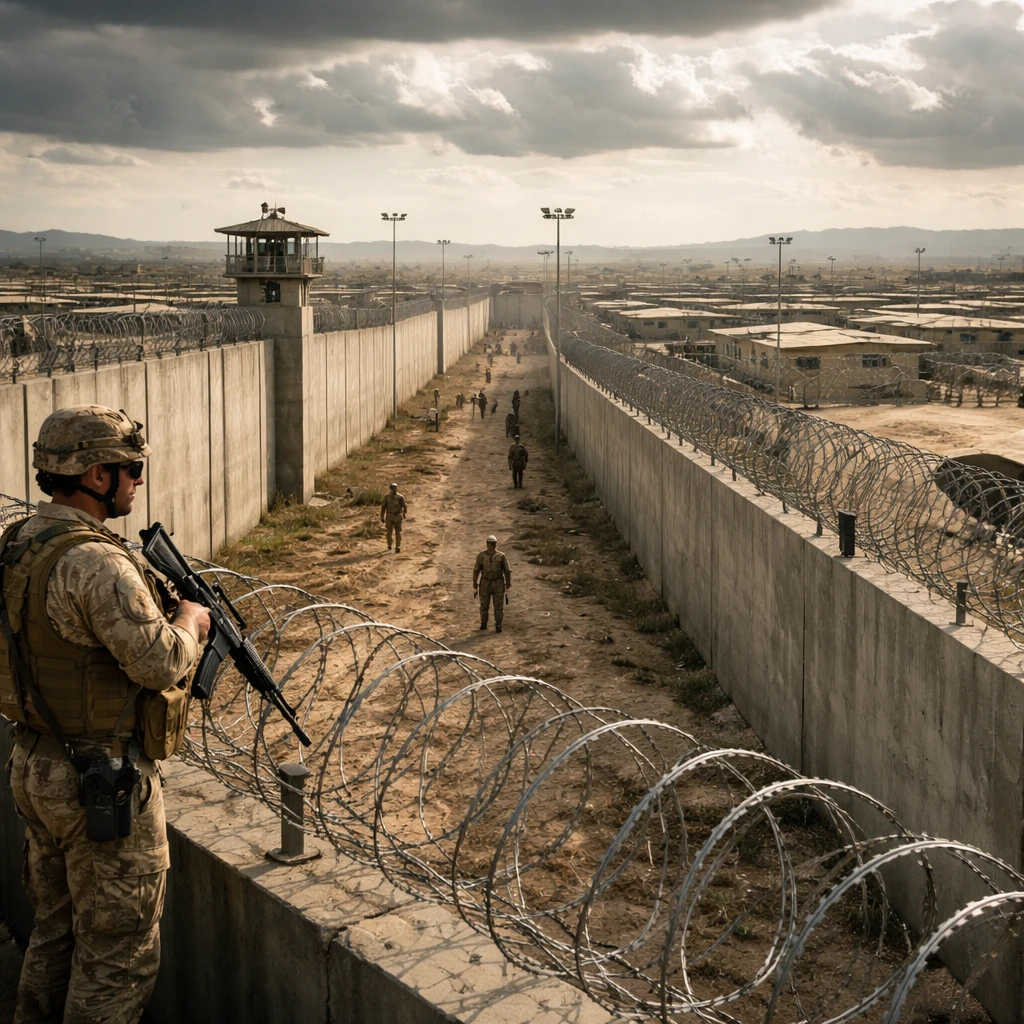
On Thursday, U.S. Secretary of State Marco Rubio affirmed the United States’ backing of Iraq’s current approach to securely detain Islamic State (ISIS) militants within Iraqi facilities. This statement comes in the wake of recent instability in northeast Syria, where the U.S. military has executed the transfer of 150 suspected ISIS fighters from Syrian territories to Iraq.
Rubio highlighted that while ISIS militants from outside Iraq are being held temporarily in these facilities, the U.S. calls upon their respective home countries to take accountability by repatriating these individuals to stand trial under their justice systems. "The United States welcomes the Government of Iraq’s initiative to detain ISIS terrorists in secure facilities in Iraq," Rubio stated. "Non-Iraqi terrorists will be in Iraq temporarily; the United States urges countries to take responsibility and repatriate their citizens in these facilities to face justice."
In parallel, Iraq's Supreme Judicial Council announced the commencement of legal actions against Islamic State detainees moved from Syria. This judicial progression follows the U.S. military’s transfer operations, which may eventually relocate up to 7,000 detainees from Syria to Iraq.
The United Nations has assumed management responsibilities for large camps in Syria accommodating tens of thousands of women and children affiliated with ISIS. These camps were formerly protected by Kurdish-led Syrian Democratic Forces (SDF), who have recently withdrawn following confrontations with Syrian government troops.
The rapid Kurdish retreat has catalyzed a shift in detention and humanitarian circumstances in northeast Syria, underscoring security concerns regarding prisons and the welfare of camp populations.
Iraq has actively begun accepting detainees from Syrian facilities amid these developments and has appealed to other countries to assist in the repatriation efforts. Rubio framed these measures as essential components of a long-term strategy aimed at curbing a resurgence of ISIS by promoting equitable burden sharing among coalition partners.
More than 10,000 individuals affiliated with the Islamic State, including militants, as well as tens of thousands of associated women and children, have been held for years across a network of approximately a dozen prisons and detention camps. These were previously under the custody of the Kurdish-led SDF in Syria’s northeast. The recent changes in regional control have heightened the urgency for international cooperation on detainee management and repatriation efforts to sustain security and justice.