
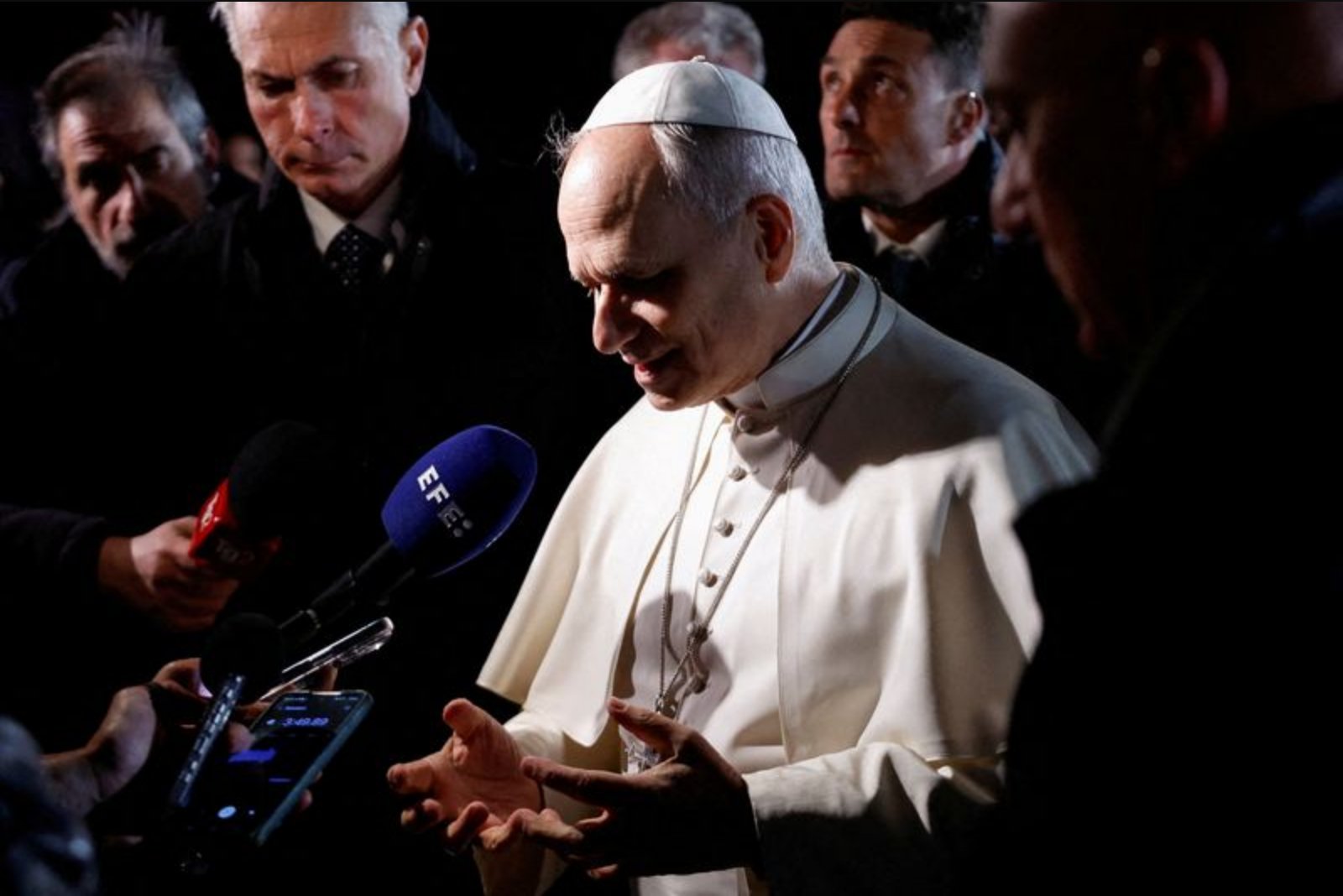
Pope Leo - the first American to serve as pontiff since his election last May - largely steered clear of direct public comment about the United States and never publicly mentioned President Donald Trump during the opening ten months of his papacy. That reticence has given way to a more vocal stance in recent weeks, with the pope now taking explicit aim at the escalating war in Iran and publicly naming the U.S. president in an appeal for de-escalation.
On Tuesday the pope used a direct address to call on President Trump to identify an "off-ramp" from the conflict. Analysts who follow the Vatican said the choice of words and the decision to speak plainly to the American leader appeared calculated - an attempt by the pontiff to act as a balancing moral force on global affairs in response to U.S. policy.
Massimo Faggioli, an Italian academic and Vatican observer, framed the development as a deliberate distancing from any perception that the Vatican would be soft on "Trumpism" because the pope is American. "I don’t think he wants the Vatican to be accused of being soft on Trumpism because he’s an American," Faggioli said. He added that the pope is known for linguistic precision and that the use of the American idiom "off-ramp" was unlikely to be accidental.
Chicago Cardinal Blase Cupich, a close ally of the pope, emphasized continuity with a papal tradition of urging leaders away from warfare while noting a change in the messenger’s voice. "What is different ... is the voice of the messenger, for now Americans and the entire English-speaking world are hearing the message in an idiom familiar to them," the cardinal told Reuters.
Stronger language on war and leadership
Two days before the direct appeal to President Trump, the pope delivered unusually forceful remarks at an event in which he said that God rejects the prayers of leaders who start wars and have "hands full of blood." That denunciation was read by some conservative Catholic commentators as directed at U.S. Defense Secretary Pete Hegseth, who has used Christian language to defend the joint U.S.-Israeli strikes on Iran that initiated the war.
Those remarks prompted one of the Trump administration’s first direct replies to a papal comment. When asked about the pope’s statement, White House spokesperson Karoline Leavitt said: "I don’t think there is anything wrong with our military leaders or with the president calling on the American people to pray for our service members."
Marie Dennis, who formerly led the international Catholic peace movement Pax Christi, described the pope’s recent public appeals as coming from a leader moved by the relentless violence he has witnessed. "He is reaching out to all who are exhausted by this unrelenting violence and are hungry for courageous leadership," she said.
A pattern of growing criticism
This recent assertiveness builds on earlier, less explicit interventions by the pope. He previously criticized the hardline immigration policies of the Trump administration, questioning whether they square with the Church’s pro-life commitments, though in those instances he avoided naming the president or other American officials directly.
In December the pope enacted a notable change in U.S. church leadership: he removed Cardinal Timothy Dolan as archbishop of New York and appointed Archbishop Ronald Hicks, a relatively unknown cleric from Illinois, in his place. Dolan is widely viewed as a leading conservative among U.S. bishops.
Over the past several weeks the pope has intensified his public criticism of the Iran war. On March 13 he said that Christian political leaders who initiate wars should go to confession and consider whether their actions align with the teachings of Jesus. Ten days later, on March 23, he characterized military airstrikes as indiscriminate and called for their prohibition.
Cardinal Michael Czerny, a senior Vatican official, said the pope’s pronouncements should resonate beyond Rome because people perceive him as speaking for the common good and for vulnerable populations. "Pope Leo’s moral voice is credible, and the world wants desperately to believe that peace is possible," the cardinal said.
Vatican calendar and next steps
The pope began a sequence of four days of Vatican events on Thursday that lead up to Easter Sunday, when he will deliver the traditional special blessing and message from the balcony of St. Peter’s Basilica. The Easter address is one of the most closely watched moments on the Vatican calendar and is commonly used by the pope to make a significant international appeal.
Observers will watch whether the pope uses the Easter address to reiterate his recent appeals for de-escalation and for specific audiences to seek alternatives to continued conflict. For now, his more direct engagement with American political language and with President Trump personally marks a clear evolution from the reticence he maintained through the first months of his pontificate.