
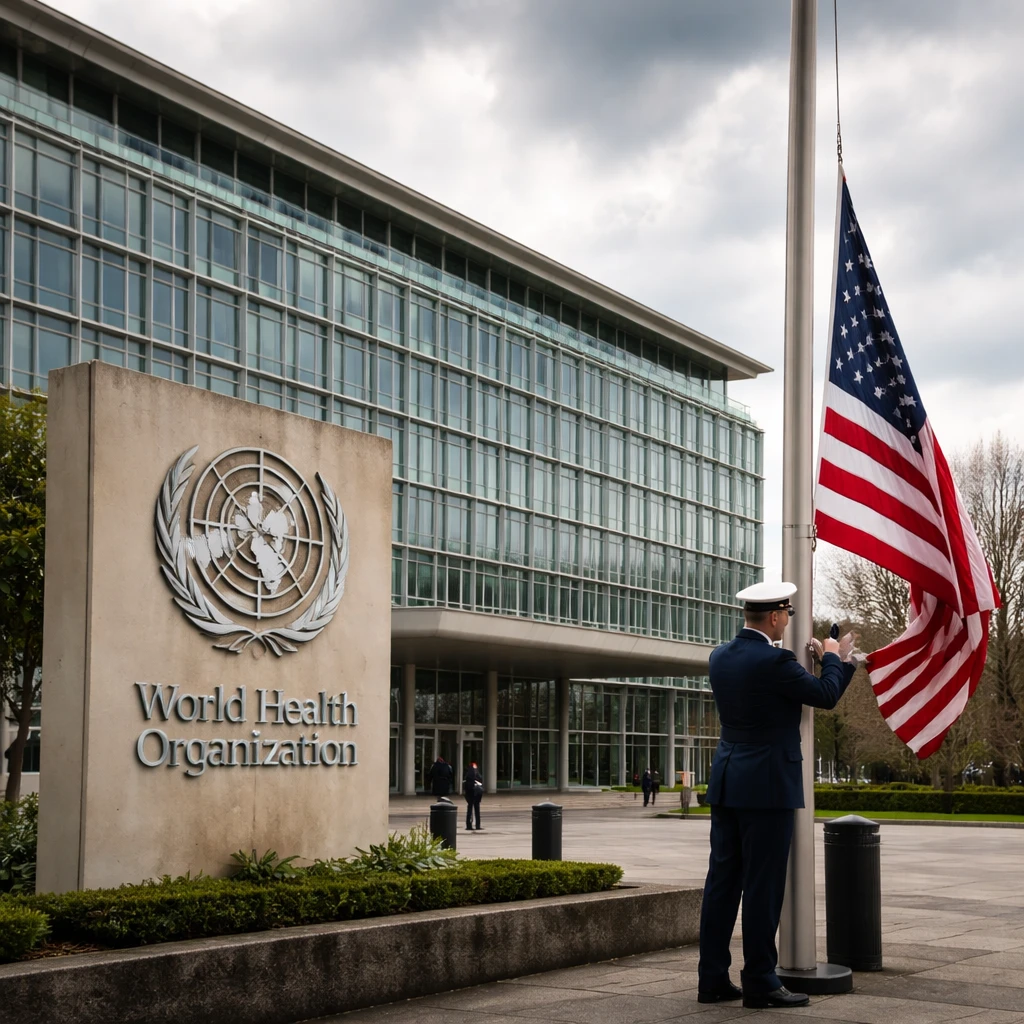
On January 22, 2024, the United States formally concluded its membership with the World Health Organization (WHO), marking the end of a highly publicized and contentious process that lasted over a year. This action, authorized through an executive order by President Donald Trump on the first day of his upcoming term in 2025, reflects Washington's criticism of the WHO's management during the COVID-19 pandemic and signals a significant shift in America's approach to global health collaboration.
According to official statements released by the U.S. Departments of Health and State, the U.S. will now engage with the WHO in only a limited capacity, principally to facilitate the formal withdrawal process. A senior health official from the government clarified that the U.S. has no intention of maintaining observer status or pursuing re-entry into the organization, a complete departure from previous cooperation levels.
The U.S. government has articulated plans to bypass multilateral frameworks like the WHO, choosing instead to collaborate directly with other nations on priorities such as disease surveillance and addressing public health concerns. This redesign of U.S. global health engagement underlines a preference for bilateral arrangements over participation in international entities.
A point of dispute between the U.S. and the WHO concerns outstanding financial contributions. Under American legislation, a one-year notice period and full payment of owed fees—estimated at approximately $260 million—were prerequisites to withdrawal. However, representatives from the U.S. State Department contested that such payments are not explicitly required prior to exit. Earlier the same day, a spokesperson emphasized that the American taxpayer has already contributed substantially to the organization.
Further official documentation from the Department of Health and Human Services confirmed the cessation of U.S. funding contributions to the WHO. A spokesperson highlighted that President Trump exercised his authority to halt future transfers of government resources to the WHO, citing the alleged financial burden on the U.S. economy, estimated in the trillions of dollars over time. Observers at the organization's Geneva headquarters reported the removal of the American flag, symbolizing the formal conclusion of membership.
This withdrawal is part of a broader trend of the U.S. distancing itself from several United Nations agencies. Concerns have been voiced about how such moves, including the establishment of a newly announced Board of Peace, might undermine the cohesion and effectiveness of the UN system as a whole. Proposals circulating among critics of the WHO have suggested not only a replacement agency but also reforms and heightened American leadership within the existing WHO structure; however, last year these ideas were reviewed without clear resolution.
Global health authorities and experts have called for reconsideration of the withdrawal. WHO Director General Tedros Adhanom Ghebreyesus is among those encouraging renewed engagement. The WHO also pointed out that the U.S. has outstanding fee payments for 2024 and 2025. The WHO’s executive board is scheduled to deliberate on the U.S. exit and its implications at their February meeting.
Legal experts, including Lawrence Gostin of Georgetown University’s O'Neill Institute for Global Health Law, regard the withdrawal as in violation of U.S. laws but acknowledge the likelihood of the administration avoiding legal consequences. Philanthropist Bill Gates, chair of the Gates Foundation—a significant contributor to global health and some WHO initiatives—expressed skepticism about any near-term reversal but advocated for U.S. re-engagement, emphasizing the organization's global importance.
The ramifications of America's withdrawal are already manifesting as a financial crisis within the WHO. The agency has responded by halving its management team, scaling back operations, and imposing budget reductions across its programs. Traditionally the largest financial contributor, the U.S. represented nearly 18% of the WHO's total funding prior to its exit. The workforce reduction is projected to amount to approximately 25% by mid-2024.
Throughout the year preceding its exit, the WHO reported ongoing collaboration with U.S. authorities; however, future interaction remains uncertain. Public health experts warn that the removal of the U.S. from the WHO may weaken international mechanisms vital for identifying and controlling health threats, posing risks not only domestically but globally.