
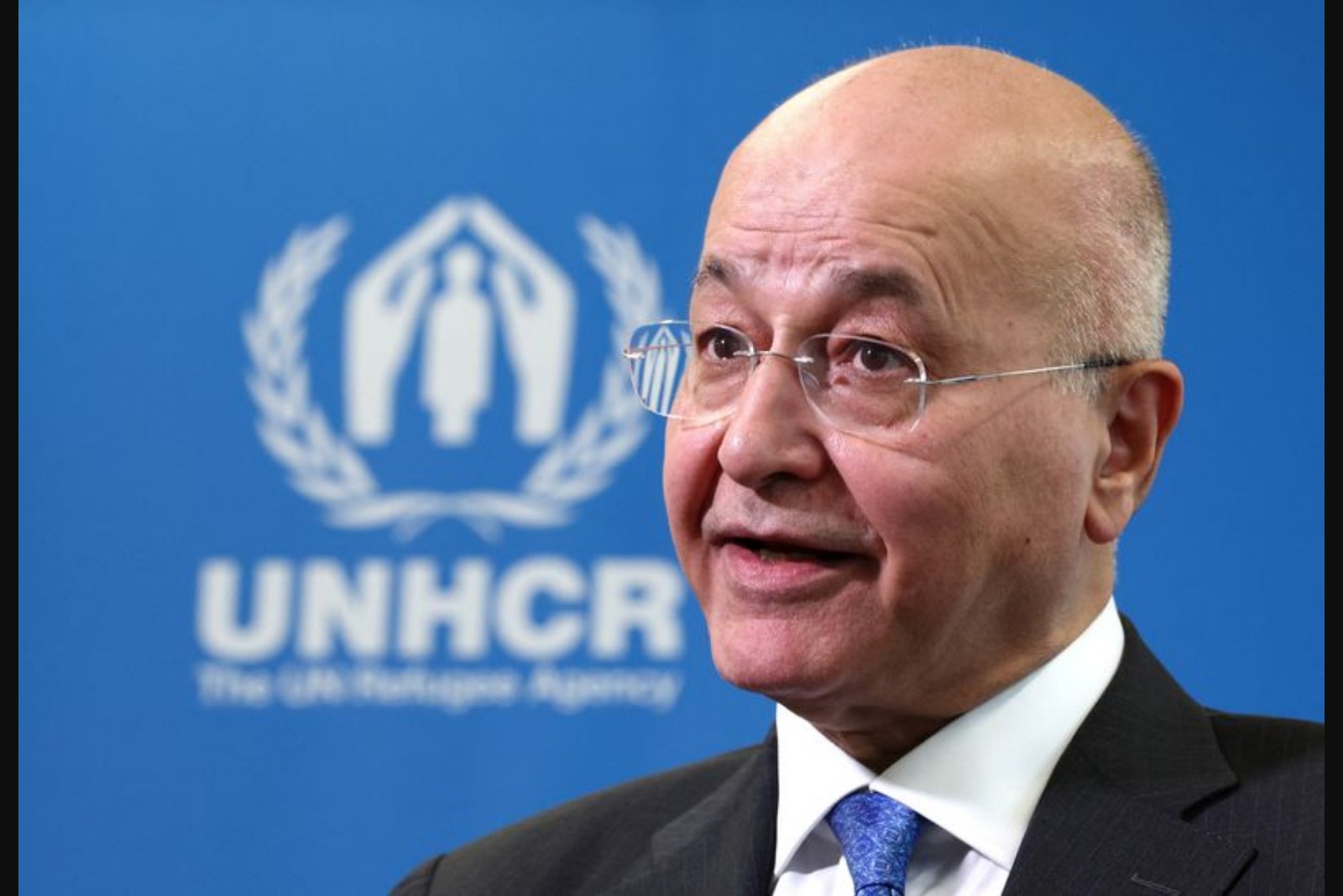
BRUSSELS - The head of the United Nations refugee agency has called on international donors to increase their financial support to tackle an expanding humanitarian crisis across the Middle East, saying the agency has so far received a fraction of the aid it requested.
Barham Salih, the U.N. High Commissioner for Refugees, speaking in Brussels, said the agency had sought $69 million for the region but “We’ve only received less than 10% of that so far.” He described the situation as acute and in urgent need of assistance, adding: “This is a huge, huge crisis, and people need help.”
The conflict has inflicted heavy human costs across the region. Thousands have been killed and large numbers displaced since strikes on Iran on February 28 by the United States and Israel were followed by Iranian retaliatory attacks on Israel, U.S. bases and Gulf states. The recent escalation has pulled Lebanon deeper into the fighting after Iran-backed Hezbollah fired rockets and drones into Israel, prompting intense Israeli bombardment across Lebanon.
Inside Iran, the agency estimates that roughly 3.2 million people have been displaced. In Lebanon more than one million people - approximately 17% of the country’s population - have been forced to leave their homes in a matter of weeks as the humanitarian emergency has intensified.
Salih noted that the global number of displaced people is unprecedented in history at a time when resources for humanitarian assistance have contracted. He pointed to funding reductions from major donors, saying aid agencies have been affected by cuts from leading contributors, including the United States and other Western governments which have reallocated funds toward defence spending amid heightened concerns about Russia.
The unfolding U.S.-Israeli campaign against Iran has also disrupted international supply lines, with closed airspace and the suspension of shipping through the Strait of Hormuz hindering the movement of relief supplies destined for crises beyond the region. Salih highlighted the operational consequences: “We rely heavily on the support we get from our logistics hub situated in the UAE. This is where we fly our material and resources from to Africa and to Asia.”
He added that recent attacks on the UAE have impeded these logistical operations. “Because of these attacks on the UAE, much of these operations have been hampered and delayed. So this has a huge impact on the reality of what we do and on helping vulnerable populations across the world.”
With urgent needs outpacing available funds and critical transport routes compromised, the refugee agency is pressing donors for immediate contributions to sustain relief work for internally displaced people and those uprooted by cross-border insecurity.
Context and next steps
The refugee agency’s appeal underscores a shortfall between mounting humanitarian needs in the Middle East and shrinking global assistance at a time when logistical chokepoints are also constraining the delivery of aid. Donor responses in the near term will determine the agency’s ability to scale up assistance to displaced populations across Iran, Lebanon and beyond.