
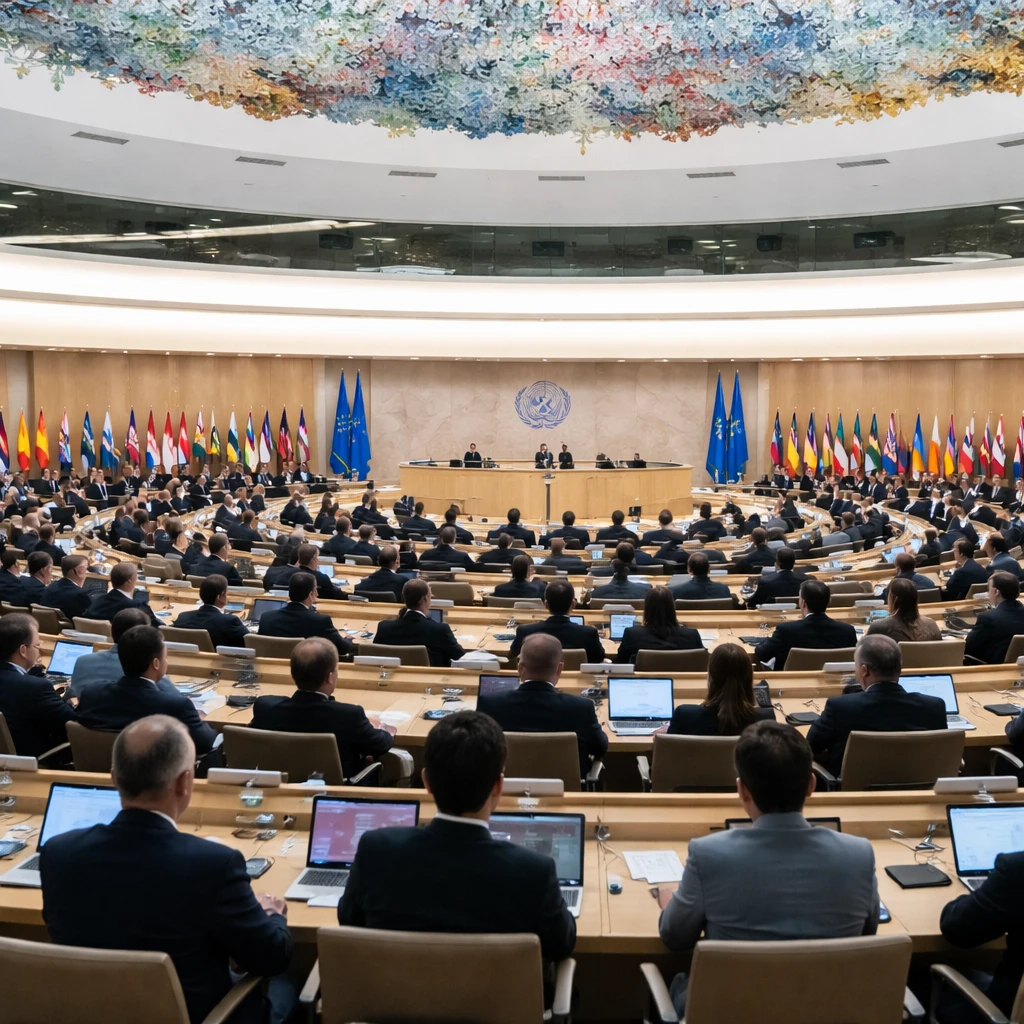
In response to reports of extensive violence against demonstrators in Iran, the United Nations Human Rights Council has scheduled an emergency session for Friday to scrutinize these developments. A coalition of countries is advocating for intensified U.N. fact-finding efforts to meticulously document abuses for potential judicial proceedings in the future.
According to human rights organizations, the protests have resulted in thousands of deaths, including many uninvolved bystanders. These demonstrations denote the most significant challenge facing Iran's clerical authorities since previous unrest in 2022.
The call for an extraordinary Human Rights Council meeting received endorsement from at least 50 member states. The impetus for this session is based on credible allegations of excessive force against protestors as well as breaches of international human rights statutes throughout Iran. This initiative was spearheaded by Iceland through a formal letter to the council.
Payam Akhavan, a former U.N. prosecutor holding Iranian-Canadian nationality, emphasized the unprecedented nature of the alleged crimes and highlighted efforts to establish the framework for transitional justice. Akhavan indicated this could represent a "Nuremberg moment" for Iran, alluding to post-World War II international criminal tribunals, during his planned address at the session.
Iran’s diplomatic representation has not yet issued a response to inquiries regarding the council's forthcoming session.
Iranian authorities attribute the unrest and resulting fatalities to "terrorists and rioters," claiming support from hostile expatriates alongside foreign adversaries, specifically naming the United States and Israel.
The agenda before the Human Rights Council includes a proposal to renew a U.N. investigative mandate by an additional two years. This investigative body was established in 2022 in connection with earlier protests. The resolution also calls for an immediate inquiry focusing on violations and violations of international law connected to the recent protests that began on December 28, to facilitate possible future legal accountability.
However, details remain unclear regarding the financial backing for this expanded probe amid a broader funding shortfall within the U.N., which has previously impeded other human rights investigations.
Advocates for human rights are hopeful that this emergency assembly will exert pressure on Iran’s regime. Azadeh Pourzand, spokesperson for Impact Iran, a coalition comprising 19 non-governmental organizations committed to human rights in Iran, stated that the session sends a strong indication to the Iranian government that their actions are under international scrutiny and that suppression of dissent will not be condoned.