
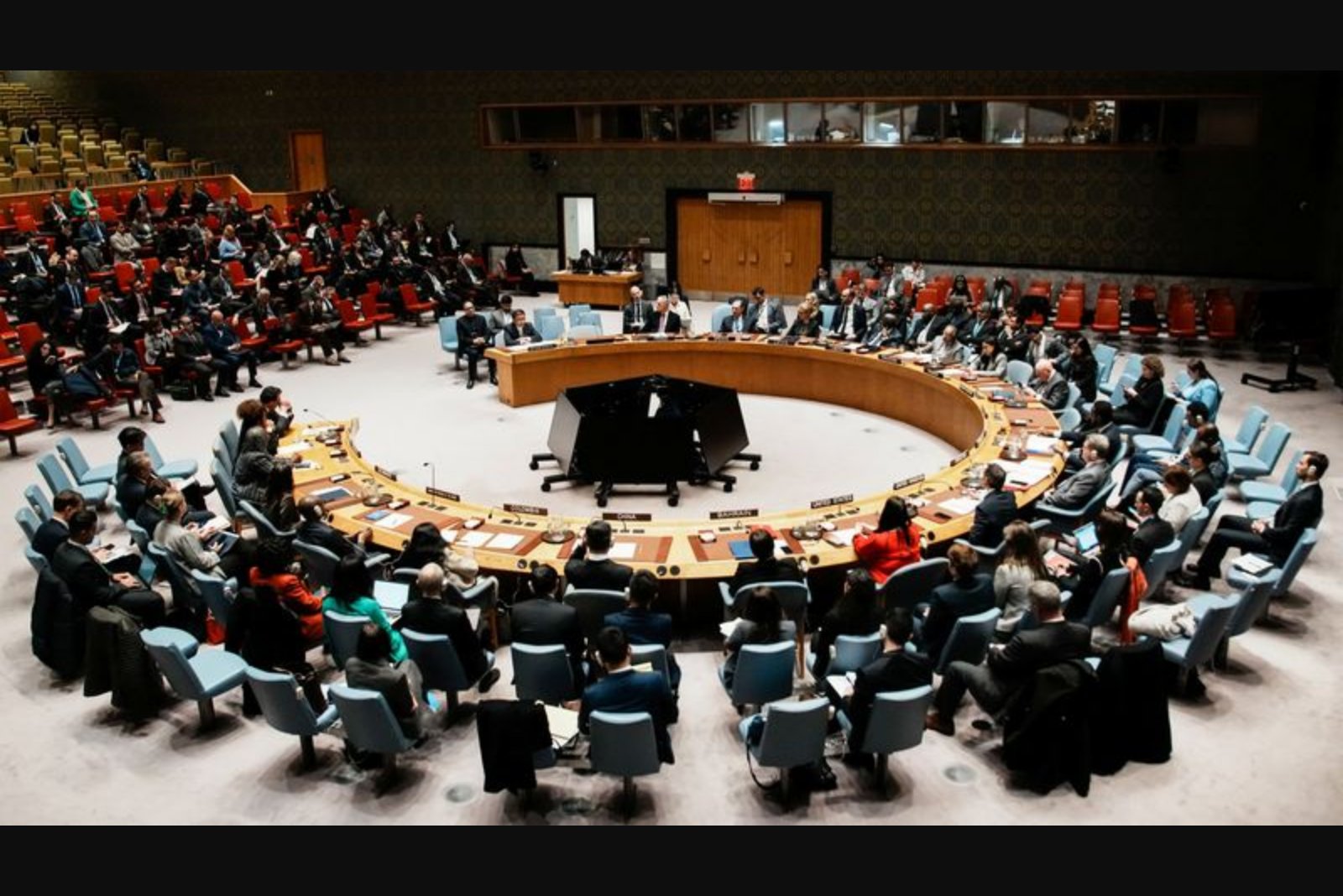
The U.N. Human Rights Council voted on Friday to censure Iran for alleged rights violations and to broaden an ongoing investigation so U.N. investigators can record the most recent wave of unrest for possible future legal action. The move came at an emergency session in Geneva in which U.N. officials and rights experts urged a halt to the government response to anti-government protests.
High Commissioner for Human Rights Volker Turk addressed the council and urged Iranian authorities to "reconsider, to pull back, and to end their brutal repression," stressing concerns about people detained in connection with the protests. The council's motion formally extended an inquiry that was first established in 2022, enabling investigators to document the latest incidents as part of the probe.
Human rights organisations have said that bystanders were among those killed during the crackdown, which rights groups describe as the most severe since clerical rule began in Iran's 1979 revolution. Tehran responded to the allegations by blaming "terrorists and rioters" and accusing exiled opponents and foreign adversaries, specifically the U.S. and Israel, of backing unrest.
Iran's mission to the U.N. dismissed the council's resolution as "politicised" and denounced what it characterized as external interference. In a statement, the mission said Iran had "its own independent and robust accountability mechanisms to investigate the root causes of recent events."
The council vote counted 25 states in favour of the motion, including France, Mexico and South Korea. Seven states, among them China and India, voted against the measure. Fourteen members abstained.
At the session, Payam Akhavan, a former U.N. prosecutor of Iranian-Canadian nationality, described the events as "the worst mass murder in the contemporary history of Iran" and called for what he termed a "Nuremberg moment," invoking the precedent of post-World War Two international criminal trials.
Iran's ambassador to the U.N. in Geneva, Ali Bahreini, told the council the emergency meeting had no validity and communicated Tehran's official tally of roughly 3,000 people killed in the unrest. Separate accounts presented at the session included an Iranian official's statement to investigators that at least 5,000 people had been killed, a figure that reportedly included about 500 members of the security forces.
Independent monitoring groups provided differing totals. The U.S.-based HRANA rights group said it had so far verified 4,519 deaths linked to the unrest and had 9,049 additional deaths under review.
Several delegations - including China, Pakistan, Cuba and Ethiopia - questioned the usefulness of the emergency meeting. China's ambassador Jia Guide characterised the situation in Iran as "a matter of internal affairs."
Delegates also flagged a practical obstacle to the expanded inquiry: amid an ongoing funding crisis that has already stalled other U.N. probes, it was not clear which party or mechanism would provide financing for the extended investigation.
Key points
- The U.N. Human Rights Council voted to extend a 2022 inquiry so investigators can document the most recent unrest in Iran for potential future legal proceedings.
- There are conflicting casualty figures: Tehran reported about 3,000 deaths, one Iranian official cited at least 5,000 including security forces, and independent monitors such as HRANA verified 4,519 deaths with additional cases under review.
- The resolution drew a divided vote: 25 in favour, 7 against, and 14 abstentions; several countries described the matter as internal and criticised the session's utility.
Risks and uncertainties
- Funding uncertainty for the extended U.N. inquiry - the article notes a funding crisis that has already delayed other investigations and leaves unclear who will cover the costs of the expanded probe. This has implications for the effectiveness and timeliness of documentation efforts.
- Political divisions within the council could limit international follow-through - votes against and numerous abstentions, and statements by states calling the matter internal, raise uncertainty about the scope and enforcement of any outcomes from the inquiry. This could affect diplomatic engagement and multilateral responses.
- Conflicting casualty figures and differing official narratives - the range of reported death tolls and competing accounts from Iranian authorities and independent groups create uncertainty around the scale and attribution of violence, which may complicate legal and humanitarian responses.
Tags: Iran, UN, Protests, HumanRights, Geneva