
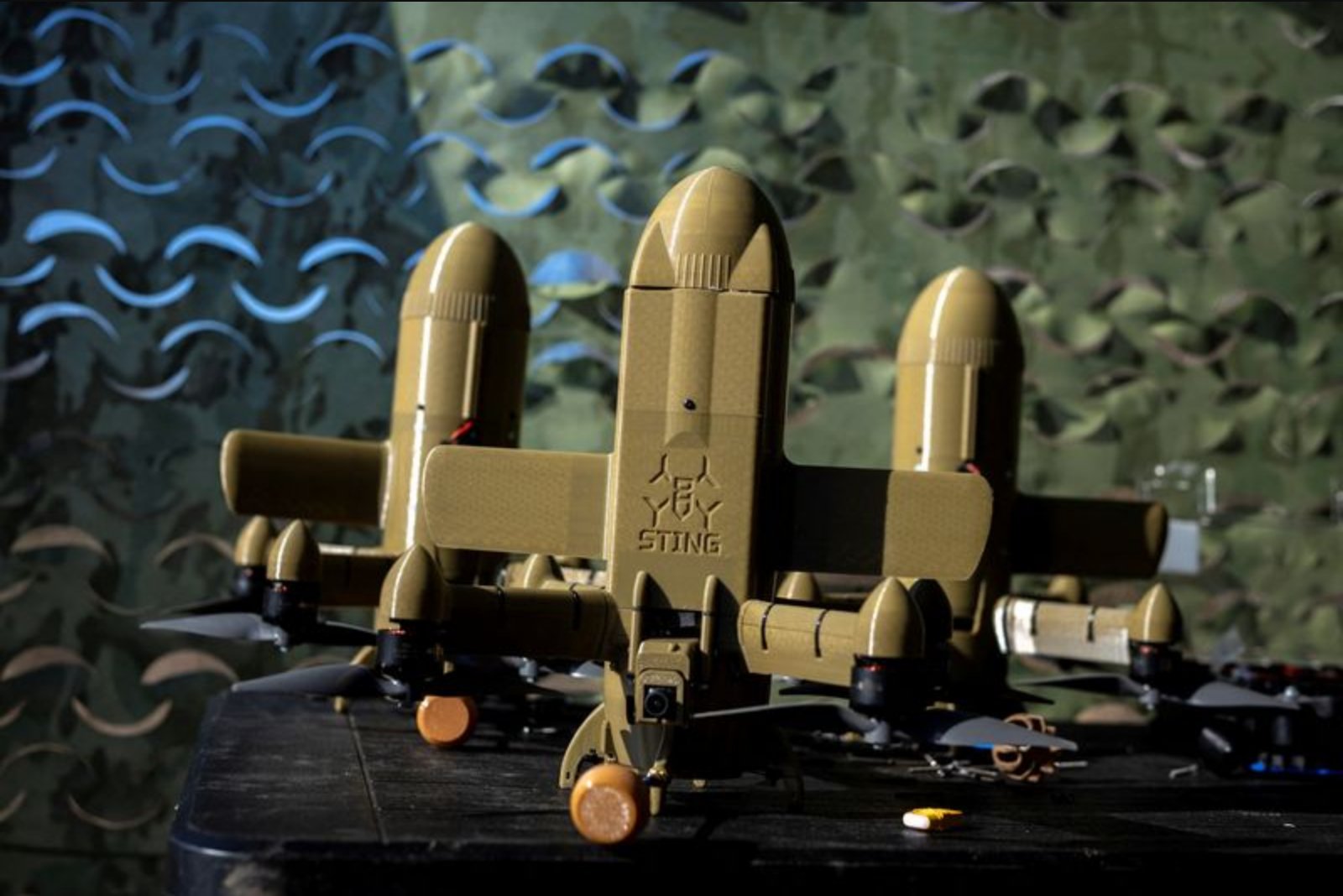
Ukraine has emerged as a global laboratory for counter-drone technology after years of repelling mass unmanned aerial attacks. Officials and industry figures say the recent fighting between the U.S.-Israeli coalition and Iran has created a fresh market opening in the Middle East for Kyiv's interception systems and expertise - an opportunity the government and private sector are racing to seize.
President Volodymyr Zelenskiy has spent recent days in the Gulf negotiating defence cooperation, arguing Ukraine can offer knowledge and integrated systems that are scarce in the region. "Ukraine is sharing expertise that is not available in the Middle East," he told Reuters. He stressed that what Kyiv can export is broader than individual airframes - it is the operational skill set, the tactical approach and the system architecture that enable drones to be employed effectively in defensive roles.
In the last week, Ukraine has signed framework cooperation deals with Saudi Arabia and Qatar, and officials say a similar arrangement with the United Arab Emirates is being prepared. Zelenskiy has repeatedly emphasised that the sale of arms must be coordinated at the state level, cautioning domestic firms against negotiating directly with foreign buyers without government approval.
Ukrainian defence firms are eager to capitalise. Oleg Rogynskyy, chief executive of UForce, a Ukrainian military technology company registered in the United Kingdom, said demand from Gulf customers for his firm's Magura sea drone has been intense. Several other Ukrainian interceptor manufacturers, including Wild Hornets and SkyFall, reported receiving inquiries from Middle Eastern states, but all signalled they would not pursue direct commercial deals prior to receiving formal clearance from Kyiv.
Industry groups say the recent operations involving Iran have underscored how effective attack drones can be and revealed vulnerabilities in countries that have not invested in tailored countermeasures. For Ukraine, the moment is potentially pivotal: establishing export markets for defence technology could underpin industrial growth and help finance reconstruction after the war.
Anastasiia Mishkina, executive director at Tech Force in UA, an association representing nearly 100 Ukrainian defence companies, said some member companies have already applied to the government for export permission and are awaiting decisions. "There is a risk of losing the moment because the international market does not wait," she told Reuters.
How Ukraine developed its niche
Kyiv's expertise has been honed under continuous drone bombardment from Russia, where waves of often-cost-effective drones are launched by the thousands on some nights. That experience has driven both the military and private sector into rapid development cycles for interceptor platforms that aim to neutralise enemy aerial threats before they strike high-value targets.
Those interceptor drones typically cost several thousand dollars apiece, according to industry sources. However, success is not guaranteed: interception attempts sometimes fail, and adversaries continually refine tactics and technologies to defeat countermeasures.
Ihor Fedirko, chief executive of the Ukrainian Council of Defence Industry, estimated that Kyiv could export around $2 billion of weapons this year, not including joint-production programmes with partners. In a best-case projection, he said annual defence exports could expand to as much as $10 billion within five years.
The government reported production of 40,000 interceptor drones in January. Zelenskiy has stated that with sufficient financing Ukraine could increase output to 2,000 interceptor drones per day, while he believes domestic requirements would total about 1,000 per day, leaving room for exports once national needs are met.
Sea drones and layered defences
One of the technologies Ukraine has adapted is the sea drone, originally used to strike and harass Russian naval assets in the Black Sea as an asymmetric weapon against a superior fleet. Manufacturers have refined those systems, and some, like the Magura produced by UForce, can be fitted to carry interceptor drones to protect coastal approaches from aerial threats.
Rogynskyy said Ukrainian forces have deployed Magura sea drones off the southern coastline to intercept Russian drones that approach the port city of Odesa from across the Black Sea during nighttime operations. He suggested installations of Magura units equipped with interceptors could be positioned along Gulf shorelines and controlled through software that reduces personnel requirements.
Those messages have resonated with Gulf militaries facing waves of Iranian-style Shahed drones, which are relatively inexpensive and thus present a persistent hazard. Several Ukrainian companies said they have received interest from the Middle East for both aerial interceptors and integrated coastal-defence solutions.
Obstacles to rapid export growth
Despite the surge in interest, Kyiv and manufacturers face a series of constraints before large-scale exports can proceed. Officials have signalled they will not export equipment essential to national defence, and firms must secure government permission before concluding deals.
Zelenskiy has publicly criticised an unnamed Ukrainian-American firm for selling interceptor drones without the involvement of the state, saying such actions harmed Ukraine's reputation because follow-on support and training by soldiers were not available without official backing.
Parliamentarian Halyna Yanchenko, who is aligned with defence manufacturers, said regulation of weapons exports has moved slowly and that many producers remain undercapitalised. She warned that state policy detailing how exports would operate is still being developed and that the pace could cause Ukraine to miss an export window created by current events.
Even after governments sign agreements, setting up drone-based air-defence networks and training operators could take months. Taras Tymochko, who leads the interceptor drone programme at Come Back Alive - a foundation that has purchased tens of thousands of interceptors for Ukrainian forces - outlined the complexity involved: pilot training, combat experience, safe handling of warheads, technical fault diagnosis, and the hard engineering work of installing and calibrating radar to detect and track incoming drones.
Coordination across units to synchronise detection, targeting and interception is critical, Tymochko said, and that logistical and technical burden means deployment is not simply a matter of delivering equipment.
Learning curves and timelines
Tymochko predicted that Gulf states could progress rapidly once they dedicate resources, suggesting that within months some could form their own interceptor units and show initial operational results. He warned, however, that the compressed timelines of contemporary conflicts leave little room for error. "It is better to learn late than too late," he said.
For Ukraine, moving from battlefield innovation to a sustainable export industry requires both state-level export governance and capital investment to scale manufacturing while preserving national defence priorities. Companies and officials alike said they are watching whether Kyiv can balance those needs quickly enough to capture export opportunities before competitors fill the gap.
As enquiries mount from the Gulf and companies await licences, the sector faces the twin tests of rapid industrial scaling and the transfer of complex operational knowledge. How Ukraine navigates those challenges will shape whether its wartime drone innovations become a lasting export industry or an ephemeral response to a transient crisis.