
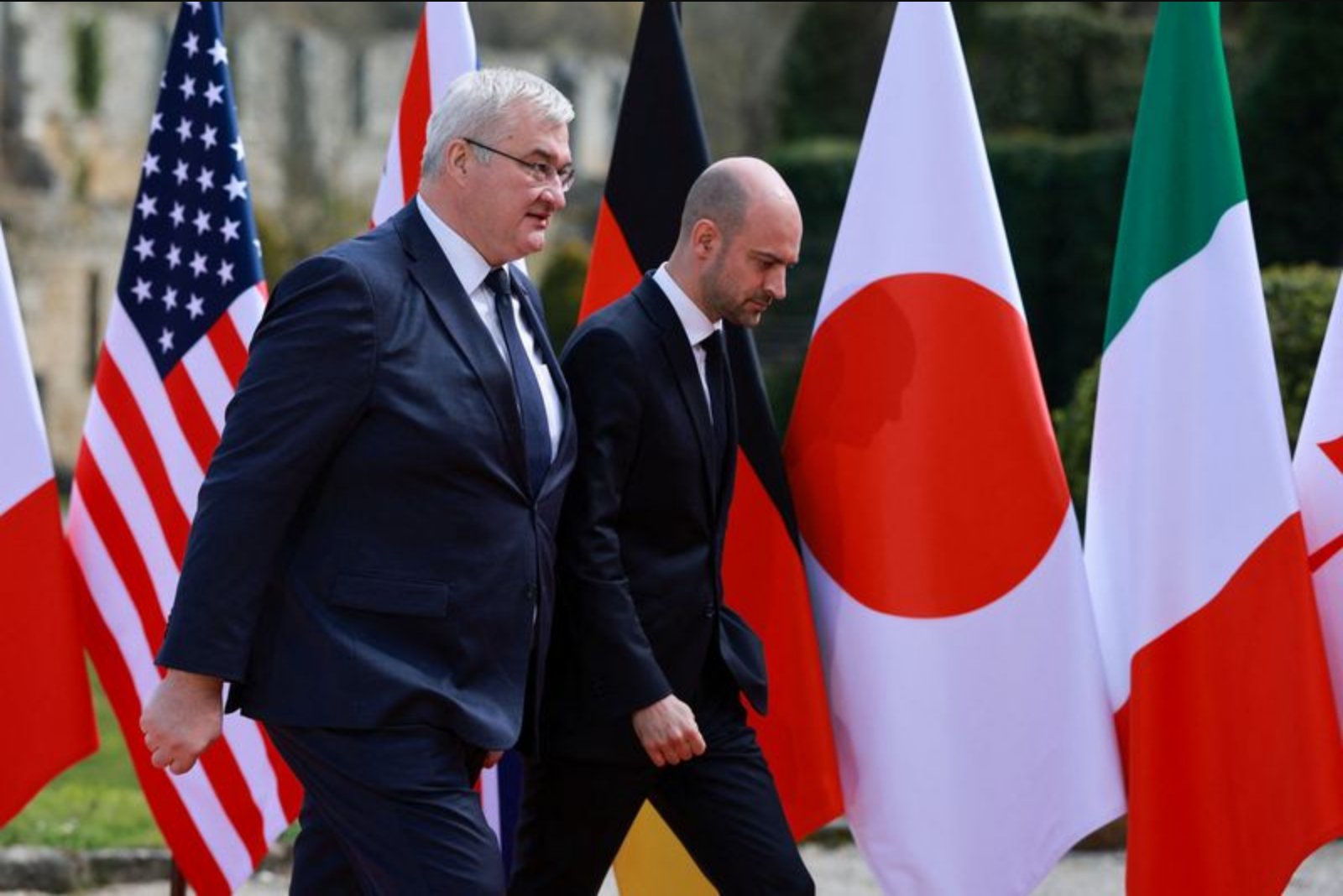
VAUX-DE-CERNAY, France - Ukraine is on the verge of securing multiple security arrangements with Gulf states to help counter Iranian attacks, its foreign minister said on Friday, while also indicating a desire to involve China in renewed peace initiatives aimed at ending the war with Russia.
Andrii Sybiha spoke to reporters on the sidelines of the G7 foreign ministers meeting, stressing that the situation in the Middle East made it essential to maintain global focus on Ukraine. "We have the situation in the Middle East so it is important not to lose the global attention on the Ukrainian case, because everything is interlinked," he said.
Kyiv is pursuing new partnerships as it seeks to shore up international backing for its conflict with Russia, now in its fifth year, amid questions about whether recent US involvement in the Israel-Iran escalation could lead Washington to curb military shipments to Ukraine.
Advanced talks in the Gulf
Sybiha said draft agreements had been prepared with several countries to define possible contributions and mutual cooperation, emphasizing unmanned technologies as a key area of collaboration. "Hopefully during the visit with some countries, these documents will be concluded and finalised," he said.
President Volodymyr Zelenskiy was in the Gulf region at the time. Sybiha said Kyiv had held discussions with Saudi Arabia - with which Zelenskiy earlier on Friday said he had agreed a deal - as well as Kuwait, Jordan and Oman. He added that the most advanced negotiations were with the United Arab Emirates and Qatar, noting those countries had been particularly affected by strikes attributed to Iran.
Gulf Arab states have relied heavily on Patriot missile systems for their defence during the conflict, Sybiha said, noting they had expended more than 800 Patriot interceptors since the war began. As a result, those countries are interested in tapping Ukraine's operational experience in defeating Russian drones and missiles.
Concerns about Russia-Iran cooperation
Sybiha said Kyiv was still attempting to establish precisely what assistance Moscow was providing Tehran, but that Ukraine believed the support likely included intelligence sharing, and probably spare parts and drones, together with combat experience transfer.
Diplomatic outreach to China
While describing the United States' role in mediating peace talks as critical, Sybiha said that, with momentum apparently stalled, Kyiv saw scope for a renewed effort to draw China into negotiations. He said he had met with U.S. Secretary of State Marco Rubio at the G7.
"We will welcome any efforts of Chinese colleagues to end this war, to achieve a ceasefire, and probably they have this potential to influence Russia," Sybiha said. He noted China maintains close economic and security ties with Russia and has declined to join international sanctions on Moscow over its invasion. At the same time, he said China remained Ukraine's top trade partner, even though it had not shown a clear appetite to intervene directly in peace talks.
Sybiha added that he had been invited to visit China and that Ukrainian diplomats were working through channels to fix a date, expressing hope the visit would take place within the next two months.
International concerns over Chinese-Russian links
The foreign minister's remarks came against a backdrop of persistent concern by the United States and European governments about Chinese firms supplying parts to Russian arms manufacturers. Those governments have imposed sanctions on some such companies, while Beijing has denied providing military technology to Russia.
Sybiha's comments indicate Kyiv is seeking both tactical cooperation with Gulf states to harden defences against Iranian-launched weapons and a broader diplomatic push that could include Beijing. The outcome of those parallel tracks may influence the availability and orientation of external military assistance as well as the diplomatic architecture for any future ceasefire discussions.
What happens next
Draft accords remain to be finalised and signatures to be secured during Gulf visits by Ukrainian officials. Kyiv is continuing to investigate the scope of Russia's assistance to Iran while pursuing diplomatic engagement with China in hopes of reinvigorating stalled peace efforts. Details on the final content of any security agreements and the timing of a planned visit to China were not yet confirmed.