
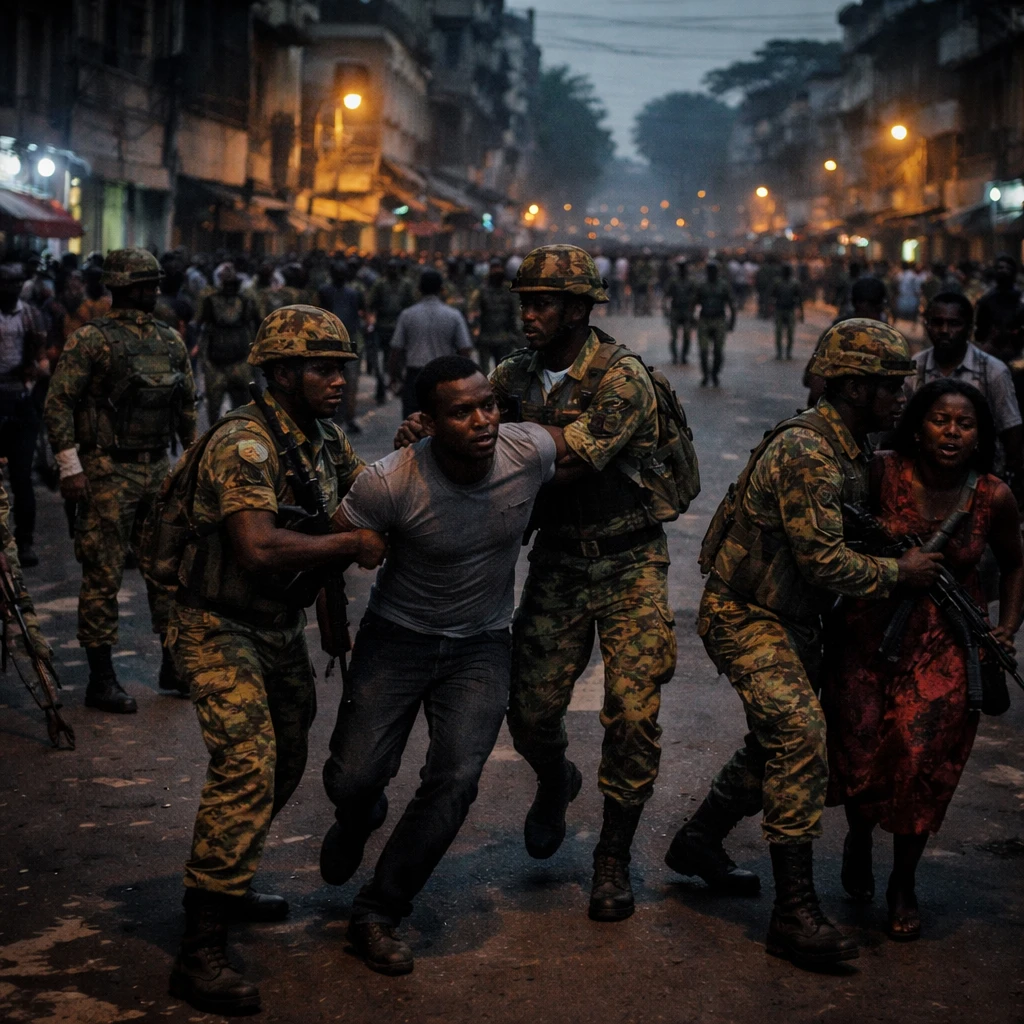
In the wake of Uganda's recent presidential election on January 15, the nation's military leader disclosed that authorities have detained approximately 2,000 individuals supporting the opposition and that 30 have died during ongoing security operations. Efforts remain underway to locate more opposition members following a controversial vote that extended President Yoweri Museveni's rule for a seventh term.
Museveni, 81 years old and in power for nearly four decades, was officially declared the winner against opposition leader Bobi Wine, whose real name is Robert Kyagulanyi. Wine, a former musician and head of the National Unity Platform party, disputed the election outcome, citing extensive irregularities including ballot manipulation. His campaign was conducted under an internet blackout, and after rejecting the results, Wine entered hiding to avoid authorities.
The announcement of detentions and fatalities was made by Military Chief Muhoozi Kainerugaba, Museveni's son, through a series of posts on the social media platform X. He labeled the detained opposition supporters as "terrorists" and "hooligans," although he did not provide detailed circumstances around the reported deaths.
"So far, we have killed 30 NUP terrorists," Kainerugaba stated, adding that most of the opposition's leadership remains in hiding but pledged their imminent capture. The government accused opposition backers of instigating violence during the electoral period, while opposition groups allege that security forces attacked their members. These claims have not been independently verified by Reuters inquiries.
Local police representatives declined to offer additional information, and the military’s public relations office was unavailable for comment. The United Nations Secretary-General, Antonio Guterres, expressed concern over the mass arrests and violence involving opposition parties, urging restraint and adherence to legal and human rights commitments.
Opposition leader Wine has reported numerous instances of his followers being arbitrarily detained in preceding months, describing these measures as politically motivated initiatives meant to instill fear. Human rights activists and opposition figures claim that detainees are frequently held in unofficial locations where some experience torture.
The government crackdown has intensified with the recent arrest of Muwanga Kivumba, a member of parliament and Wine’s deputy within the NUP. Additionally, two prominent opposition figures have been missing for several days. Wine himself fled his home following a security raid shortly after the election results were announced.
Some observers speculate that President Museveni is positioning his son Kainerugaba as a successor, as the military chief has publicly expressed his own presidential ambitions.