
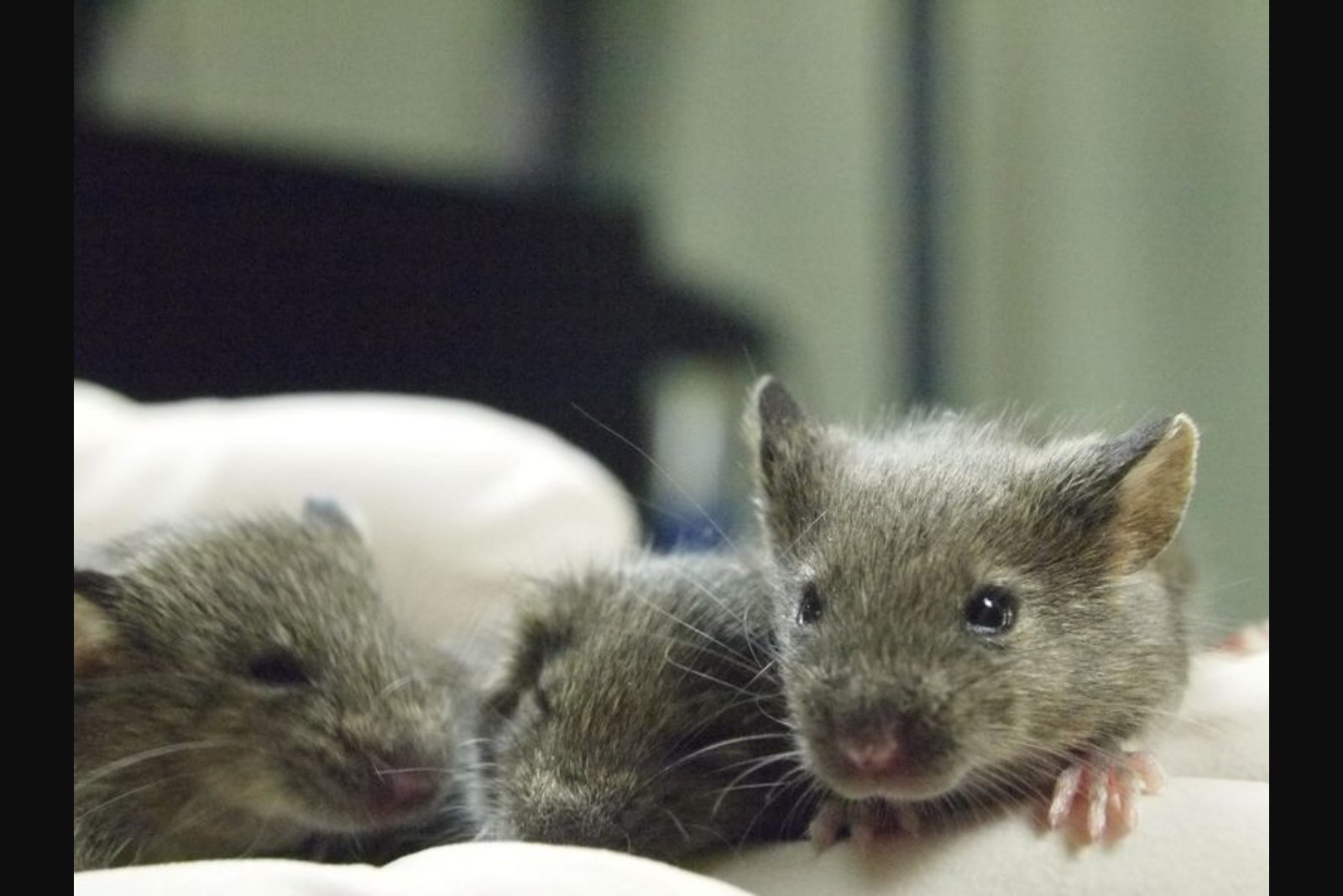
After 20 years of repeated cloning, a team of developmental biologists in Japan has documented that serial duplication of mammals produces a mounting burden of genetic defects that ultimately prove lethal. Over the course of the experiment, the researchers generated 1,206 cloned laboratory mice from a single female donor between 2005 and 2025. Their findings, published on Tuesday in the journal Nature Communications, show that while early generations appeared outwardly healthy, later generations accumulated damaging mutations that led to reduced fertility and, in extreme cases, perinatal death.
The cloning was performed at regular intervals - approximately every three to four months - with each new generation produced from the animal that immediately preceded it. All clones, like the original donor, were female with brown fur. The research team had reported preliminary results in 2013 covering the first 25 generations that observed no apparent adverse effects among the animals. At that time the researchers believed re-cloning might be indefinitely sustainable. However, the continuation of the study through 2025 and the addition of genomic sequencing led the team to reverse that earlier conclusion.
"No one has ever continued re-cloning for this long before. As a result, this is the first time we’ve discovered that repeated re-cloning eventually reaches its limits," said developmental biologist Teruhiko Wakayama of the University of Yamanashi, the senior author on the paper. Sequencing of the genomes of 10 clones sampled from different generations revealed an accelerating accumulation of mutations. Wakayama said the analysis showed a mutation rate three times higher than that observed in offspring produced by natural mating.
The genetic damage did not manifest as obvious physical deformities in many cases. For example, clones in the 58th generation carried substantial mutational load yet displayed no visible abnormalities at birth - but they died within a few days. Fertility remained comparable to ordinary females through the 20th generation, with litters averaging about 10 pups, but later generations produced progressively smaller litters as mutations accumulated.
At the genetic level, the researchers documented a marked increase in large-scale harmful mutations beginning at the 27th generation. These included chromosomal abnormalities such as the loss of one copy of the X chromosome. The study underscores that in mammalian cloning, "all genes are passed on to the next generation, meaning that all defective genes are also passed on," Wakayama said. Such inheritance differs from the genetic reshuffling that occurs with sexual reproduction.
To create the clones, the team used nuclear transfer - the same method employed to produce Dolly the sheep in 1996 and Cumulina, the first successfully cloned mouse, in 1998. In nuclear transfer, the nucleus, which houses the primary repository of genetic information, is transferred from a donor cell into an egg from which the egg's native nucleus has been removed. For the mouse project the donor cell was a cumulus cell - a specialized ovarian cell that surrounds and supports a developing egg.
Members of the research team likened serial cloning to repeatedly photocopying an image. With the first copy, the quality declines slightly; copying that copy causes further degradation, and repeating the process many times produces an image that diverges substantially from the original. The genomic sequencing data provided direct molecular evidence for this analogy, showing that errors introduced during successive rounds of cloning increase in number and size.
The investigators emphasized that their results point to the biological importance of sexual reproduction for mammals. Sexual reproduction enables mechanisms that counteract deleterious mutations, a protection that appears lacking in straight-line cloning where genetic material is passed unchanged down the chain of generations. The study explicitly identifies this as a reason why mammals - unlike plants and some lower animals - cannot maintain their species through cloning alone.
Reflecting on the practical implications, Wakayama said the team had previously believed it was possible to produce an unlimited number of clones, and that the new results were therefore disappointing. "At this point, we have no ideas for overcoming this limitation. I believe we need to develop a new method that fundamentally improves nuclear transfer technology," he said. The researchers made clear that their findings expose a limit to cloning using current techniques, not an incremental technical setback that can be readily resolved with minor adjustments.
The study incorporated both long-term phenotypic observation and targeted genomic investigation. The phenotypic work tracked litter sizes and survival across generations, while genomic sequencing of 10 animals from various generations provided the molecular evidence that mutations were increasing in both frequency and severity as cloning progressed. The convergence of these lines of evidence allowed the team to draw a consistent picture: serial re-cloning produces mutational accumulation that undermines fertility and survival.
In sum, the experiment demonstrates that re-cloning mammals over many generations leads to an accumulation of inherited defects that current nuclear transfer techniques do not correct. The research challenges the assumption that clones are identical replicates of the original donor animal and shows that cloning with present-day methods cannot be sustained indefinitely without serious genetic consequences. The authors conclude that resolving this limitation will require a fundamentally different approach to cloning technology.
Key points
- Researchers produced 1,206 cloned mice from a single donor between 2005 and 2025 and observed that repeated cloning eventually produced fatal genetic defects.
- Genomic sequencing of 10 clones showed mutation rates three times higher than in naturally mated offspring, with large-scale chromosomal abnormalities appearing after the 27th generation.
- Fertility declined after the 20th generation and by the 58th generation affected clones died within days of birth despite no outward physical abnormalities.
Risks and uncertainties
- Current nuclear transfer cloning methods appear unable to prevent accumulation of harmful mutations over many successive generations - a technical and biological limitation that affects cloning-dependent research and applications in biotechnology and animal breeding.
- The study found chromosomal abnormalities including loss of an X chromosome beginning in later generations; the long-term genetic stability of cloned lines remains uncertain under current techniques.
- Researchers currently have no clear method to overcome the re-cloning limit; developing fundamentally different cloning technology is an unresolved challenge that introduces uncertainty for fields relying on serial cloning.
Note: The analysis and conclusions in this article are derived from the results reported by the research team and presented in the journal Nature Communications.