
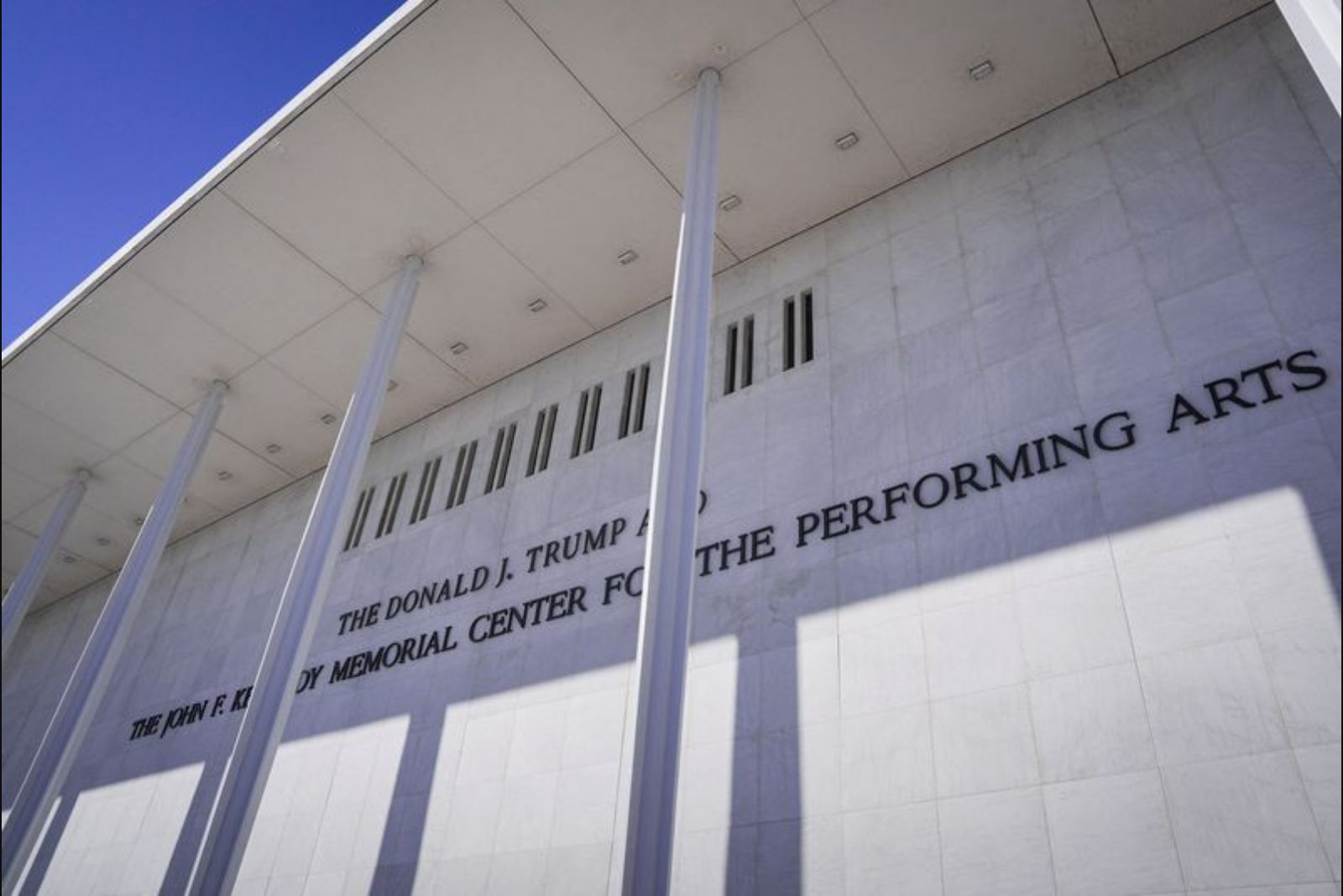
President Donald Trump has announced plans to close and renovate the John F. Kennedy Center for the Performing Arts for two years, a project he describes as a complete rebuilding of the facility. The proposed redevelopment brings the Kennedy Center into a collection of high-profile construction and renovation initiatives in Washington that, if completed as announced, would represent the most extensive reshaping of the capital's built environment in decades.
Trump characterized the center's condition in blunt terms when asked about the venue's extended shutdown, saying: "It’s in very bad shape. It’s run down. It’s dilapidated, sort of dangerous." The president and his appointees frame the closure as a necessary step to carry out what Trump called "Construction, Revitalization, and Complete Rebuilding." In a social media post announcing the shutdown, Trump added: "In other words, if we don’t close, the quality of Construction will not be nearly as good."
The Kennedy Center sits along the Potomac River and carries the name of President John F. Kennedy. A board of directors named by the president has already adopted a new title for the institution, renaming it the Donald J. Trump and the John F. Kennedy Memorial Center for the Performing Arts. The development follows a string of show cancellations by performers in recent months that protested the president's control of the institution, a controversy that coincided with reports of slumping ticket sales.
Richard Grenell, appointed by Trump as the center's president, defended the renovation plan in an interview on NewsNation, saying the decision would save the institution. Grenell said the president had personally inspected parts of the building, including the basement and the sewer system, and found disrepair. "We’re in a unique position to have a president who’s also a builder," Grenell said, recounting Trump's concerns about the state of the facilities.
The Kennedy Center project is one element of a broader building agenda pursued by the president since taking office a year ago. That agenda has already included a number of visible alterations to federal properties and plans for new high-cost installations. Among them is a proposed $400 million ballroom for the White House and a monumental arch planned at the gateway to Arlington National Cemetery that has been discussed at an imposing scale.
Inside the White House, changes overseen by Trump over the past year have been both decorative and structural. Gold accents and statuettes have been installed in the Oval Office in a style favored by the president. The Rose Garden's grass was removed and replaced with white paving stones. The East Wing was demolished to permit construction of a ballroom the administration describes as 90,000 square feet - a space that would vastly exceed the footprint of the old executive mansion. That ballroom plan has prompted a lawsuit from the National Trust for Historic Preservation, a privately funded nonprofit organization.
Other proposals under consideration include a renovation of the West Wing and a redesign of Dulles International Airport, located about 30 miles from downtown Washington. In October, the administration announced a lavish refurbishment of the Lincoln Bedroom bathroom. The administration's construction activities have been funded in part through contributions from wealthy acquaintances and large corporations, according to reporting on the financing of some of the projects.
Trump's interest in monumental architecture extends to a proposed arch on the Virginia side of the Potomac River, directly across Memorial Bridge from the Lincoln Memorial and at the gateway to Arlington National Cemetery. Reporters have noted the project has been dubbed the "Arc de Trump" by media outlets. The president said on Saturday that a committee would be formed to plan the monument and that he had not yet decided on its final height. News accounts have reported that he favors a design reaching 250 feet.
If constructed at that scale, the arch would be taller than several notable monuments. By comparison, the Arc de Triomphe in Paris measures 164 feet, and the Lincoln Memorial stands at about 100 feet. Speaking about the proposed arch, Trump said: "It’ll be substantial. I’d like it to be the biggest one of all. We’re the biggest, most powerful nation. I’d like it to be the biggest one." On Sunday the president posted a rendering of the proposed arch, which showed the structure topped by two eagle statues and a bewinged, crowned angel holding aloft a torch.
Critics and supporters have presented competing interpretations of the motives and effects of the projects. Supporters, including institutional appointees, emphasize preservation through renovation and argue that major investment is required to address physical deterioration. Opponents have pointed to contentious decision-making, performer protests, falling ticket revenues at the Kennedy Center, and legal challenges over alterations to historic federal properties.
Observers also note a political dimension to the flurry of construction. Many Americans, polling and reporting show, are primarily concerned with day-to-day economic issues as the November elections approach, which will determine whether Republicans maintain control of Congress. The prominence and cost of the president's building projects, funded in part by private benefactors and corporate backers, intersect with those public concerns.
Proponents maintain the projects could revitalize institutions and create refreshed public spaces. Opponents cite potential harms including litigation and public backlash. The pending Kennedy Center closure and subsequent redevelopment will pause high-profile headlines about canceled performances and ticketing declines, at least temporarily, and shift attention to the scope and execution of the construction itself.
Promotional note included in original reporting: The original reporting included an investment promotion framing questions about the best investment opportunities in 2026 and describing a product called InvestingPro+ as combining institutional-grade data with AI-powered insights, and referenced a tool named WarrenAI. This mention appeared as part of the source text and is carried here as factual description of that referenced product and its purported features.