
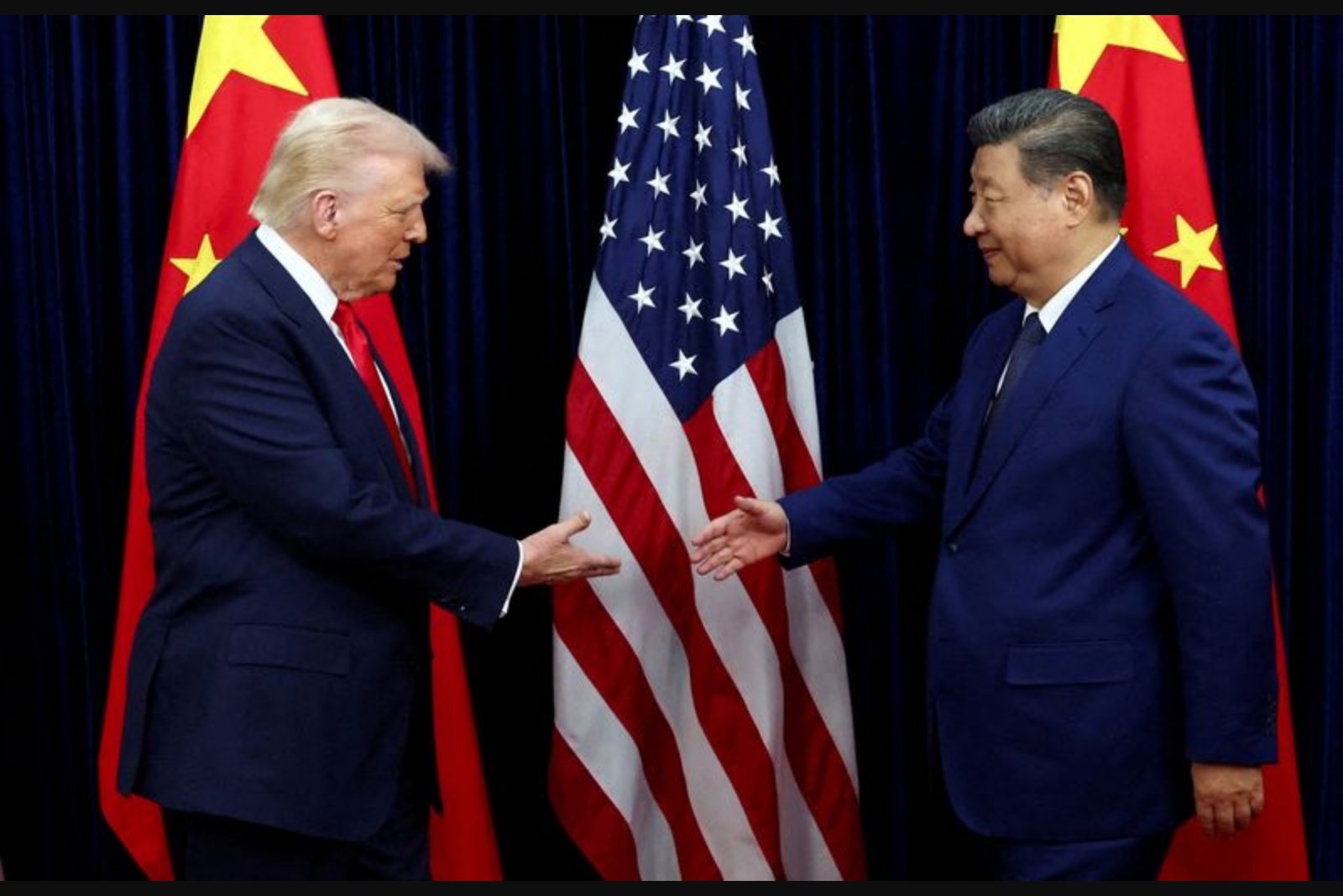
WASHINGTON/BEIJING, May 13 - U.S. President Donald Trump plans to press Chinese President Xi Jinping this week for help in ending the costly and politically damaging conflict with Iran. While Beijing could encourage Tehran to return to negotiations, analysts say China is unlikely to abandon economic support for Iran or to stop supplying certain dual-use goods its military requires.
U.S. officials view China, the largest purchaser of Iranian oil, as one of the few actors who could influence decision-makers in Tehran to finalize a deal with Washington, according to two people briefed on plans for the meeting. Without coercive measures that would force China's hand, U.S. negotiators are aiming to convince Chinese leaders that ending the war aligns with Beijing's interests.
China's strategic and economic interests in the region are layered and sometimes contradictory. One immediate Chinese concern is reopening the Strait of Hormuz - a chokepoint through which about one-fifth of global seaborne oil passes, including significant volumes destined for China. Iran's military actions that have constricted traffic through the strait create a direct energy security concern for Beijing.
But Iran also serves as a strategic partner and a counterbalance to U.S. influence in the Middle East. That relationship, along with the economic ties between Iran and China, argues against Beijing using its considerable sway to extract sweeping concessions from Tehran. Analysts note that while the conflict is economically painful for China, it has the side effect of diverting U.S. diplomatic and military attention away from the Indo-Pacific - a factor that could make Beijing more cautious about applying pressure on Iran.
Henrietta Levin, a senior fellow at the Council for Strategic and International Relations in Washington, said Xi is approaching the summit from a position of "soaring confidence," encouraged by Mr. Trump's retreat from last year's tariff escalations and the observation that the U.S. focus on Iran is redirecting military resources away from China's neighborhood.
White House communications underscored a different posture. "The Iranian regime knows their current reality is not sustainable, and President Trump holds all the cards as negotiators work to make a deal," said White House spokeswoman Olivia Wales. President Trump also told reporters that he did not need China's cooperation to convince Iran, citing the U.S. naval blockade.
China's official response stresses opposition to what it calls "illicit unilateral sanctions." Liu Pengyu, a spokesperson for the Chinese Embassy, said Beijing urges its companies to comply with laws and regulations and emphasized that the immediate priority in the Iran situation is preventing a resurgence of fighting, rather than using the crisis to criticize other countries.
Limited U.S. levers to compel Chinese action
President Trump faces constrained options for pressuring Beijing to take more decisive action on Iran. Potential measures discussed publicly and privately include sanctions, tariffs, and even fees on transits through the Strait of Hormuz - though the administration has since said it prefers the waterway to remain open without tolls.
Sanctions have already been applied to certain China-based entities that Washington says assisted Iran's military operations, though experts say those steps have had limited impact on the underlying trade flows. Brett Erickson, managing principal at Obsidian Risk Advisors, argues Washington has avoided using some of its most potent levers by not targeting Chinese banks that facilitate trade with Iran.
According to a source with direct knowledge of Treasury Department options, U.S. authorities have thousands of potential targets linked to Chinese illicit finance. "It's certainly impossible to enforce the sanctions on Iran without going after Chinese banks," the source said, while also noting that officials have not been directed to pursue major Chinese financial institutions despite earlier warnings to buyers of Iranian oil.
Treasury Secretary Scott Bessent sent warning letters in April to two unidentified Chinese banks over their role in facilitating Iranian oil purchases and indicated the department stood ready to impose penalties. No further sanctions against major Chinese financial institutions have been implemented to date. A source familiar with the plans said Bessent is expected to revisit the issue during Mr. Trump's visit.
Costs and risks of escalating financial pressure
Experts caution that moving against significant Chinese banks carries substantial risks of retaliation. Edward Fishman, director of the Geoeconomics Center at the Council on Foreign Relations, said U.S. action even against a small or midsize Chinese bank could trigger a tit-for-tat escalation leading both countries back to the economic confrontation of high tariffs and trade barriers paused last year.
Such a renewed trade war could have inflationary consequences and political costs for the U.S. administration. Jim Mullinax, a former State Department director of sanctions policy and implementation, observed that sanctioning a major Chinese state-owned bank could inflict economic pain perhaps exceeding that caused by military strikes in a strategically important area like Iran.
In addition to financial countermeasures, China possesses other levers of influence. Beijing effectively controls most of the world's refining and processing capacity for rare earth elements - critical inputs for many modern industries - and previously signaled it could restrict exports during trade tensions, a pressure point that contributed to the uneasy détente that followed the prior escalation.
Beijing voiced its displeasure at recent U.S. actions this week, denouncing Friday's sanctions against three China-based companies Washington accused of facilitating Iran's military activities.
Strategic caution and limited appetite for entanglement
Beyond economic considerations, Chinese policymakers appear wary of becoming deeply entangled in Middle Eastern conflict dynamics. Former Deputy Secretary of State Kurt Campbell said China has watched U.S. experiences in the region and will likely be careful about taking on decisive pressure roles vis-a-vis Iran, noting Beijing's desire to avoid political quicksand.
That strategic caution, coupled with China's economic interests in maintaining trade and energy flows, suggests Beijing may be willing to encourage diplomacy and de-escalation but stop short of actions that would materially degrade its partnership with Tehran or expose Beijing to punitive countermeasures that would harm its economic stability.
Implications for markets and financial sectors
The standoff places particular pressure on energy markets, given Iran's role in global oil flows and China's status as its largest customer. Prolonged conflict and an uncertain outlook for a negotiated settlement have already pushed oil prices higher.
Financially, the U.S. decision on whether to target significant Chinese banks for sanctions represents a central risk for global banking and capital markets. Heavy-handed measures could reignite tariff-based tensions and supply chain disruptions, affecting inflation, borrowing costs, and credit risk across industries closely linked to China.
Finally, China’s control of rare earth processing remains a strategic vulnerability for manufacturers dependent on these materials, particularly if geopolitical tensions prompt export restrictions. Such an outcome would have ripple effects across technology and defense sectors that rely on these inputs.
Conclusion
As the two leaders meet, Washington's objective is straightforward: secure Chinese help to secure a negotiated end to the Iran conflict. Beijing's response, however, is shaped by a blend of energy security concerns, strategic positioning, and economic self-preservation. The result is likely to be cautious engagement rather than decisive coercion, with both sides mindful of the potentially high costs of escalation - whether in sanctions, tariffs, or control of critical commodities.