
U.S. President Donald Trump told reporters at the White House that American forces could conclude their military actions against Iran "within two weeks, maybe two weeks, maybe three," and indicated that Tehran did not have to reach an agreement to see the conflict wind down. His remarks highlighted inconsistencies in public statements from Washington about how the now five-week-long war might be brought to a close.
Asked whether successful diplomacy with Iran was a condition for the United States to scale back what it has called "Operation Epic Fury," Trump replied that it was not. "Iran doesn’t have to make a deal, no," he said. "No, they don’t have to make a deal with me."
Earlier on the same day, U.S. Defense Secretary Pete Hegseth signaled a different but complementary posture, saying the president was willing to reach a deal with Iran to end the conflict that officials say has killed thousands, pulled neighboring states into direct and indirect hostilities, disrupted regional energy flows and posed a threat to the wider global economy. Hegseth described ongoing talks as strengthening while also warning that the United States remained prepared to continue kinetic operations if Iran failed to comply. "We have more and more options, and they have less ... in only one month we set the terms, the upcoming days will be decisive," Hegseth said in Washington.
Iran’s Revolutionary Guards responded with an explicit list of targets. The Guards said they would begin targeting 18 companies associated with the United States in the region starting Wednesday at 8 p.m. Tehran time (1630 GMT). The companies named included major technology and aerospace firms. When asked whether he was worried about such threats to multinational companies, Trump said he was not. "They don’t have much left to threaten," he said of Iran.
On the diplomatic front, Iran’s foreign minister, Abbas Araqchi, told Qatari broadcaster Al Jazeera that he had received direct messages from U.S. special envoy Steve Witkoff but characterized them as not amounting to "negotiations." Araqchi said the exchanges, delivered through intermediaries, included threats and the exchange of views.
Trump also used social media to criticize some U.S. allies for not supporting American military efforts. He singled out Britain among countries he said had not helped, and suggested in a post that those nations facing fuel shortages should either purchase energy from the United States or take assertive action at sea. "Buy energy from the U.S. or find some delayed courage, go to the strait and just TAKE IT," he wrote. Diplomatic frictions with allies were underscored by reports that France and Italy had pushed back against certain U.S.-Israeli military operations.
Fighting on multiple fronts continued. U.S. General Dan Caine, chairman of the Joint Chiefs of Staff, briefed reporters in Washington that U.S. forces were conducting strikes against key Iranian manufacturing and research sites and had taken out more than 150 Iranian naval vessels. With attacks showing no sign of easing, Pakistan moved to mediate; the foreign ministers of China and Pakistan met in Beijing and called for an immediate ceasefire and expedited peace talks.
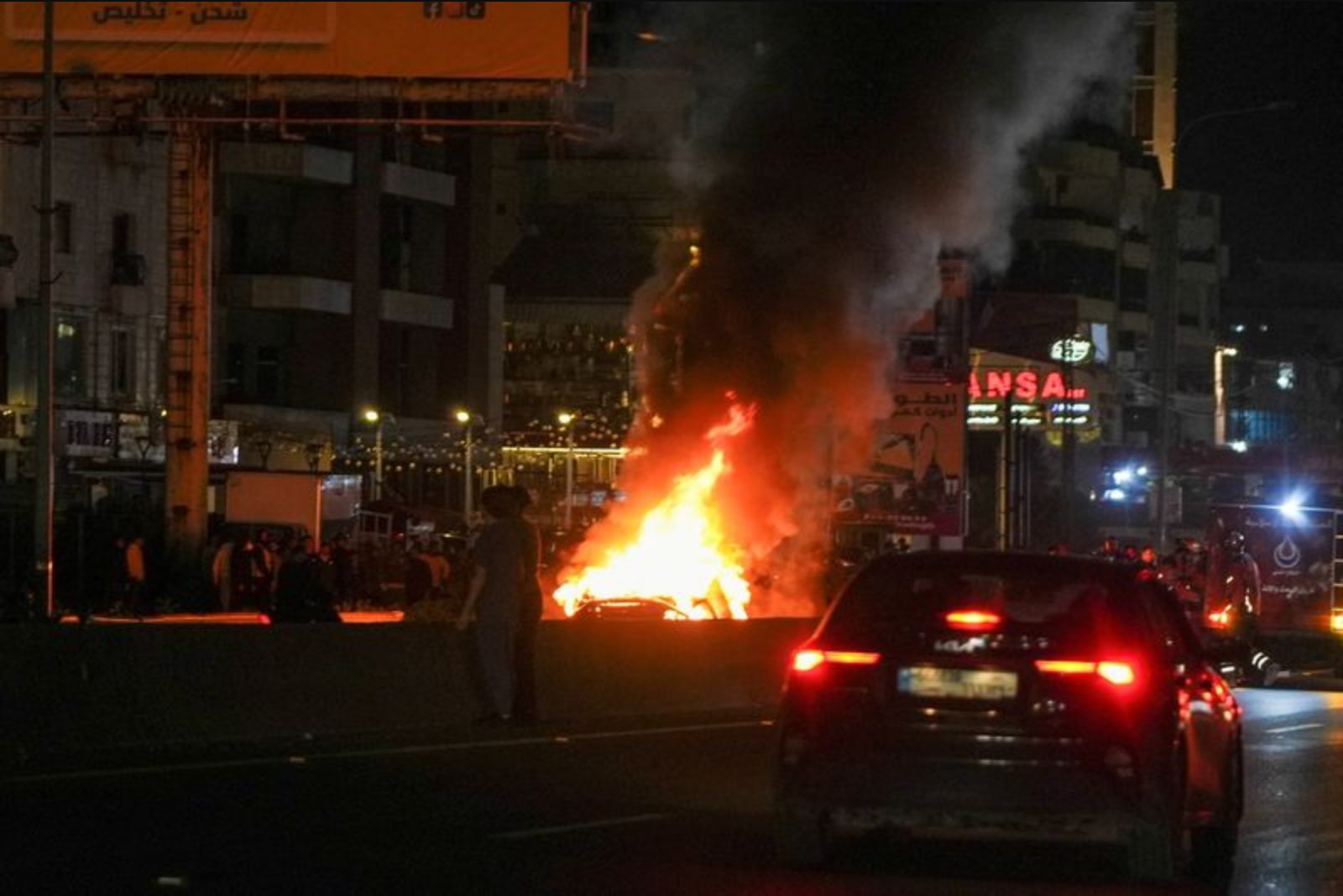
Battlefield and regional reports described heavy strikes in Lebanon’s capital of Beirut, where security sources said Israeli forces struck a senior Hezbollah commander and another senior fighter in separate attacks. Syrian state television reported explosions in Damascus that it attributed to Israeli air defenses intercepting Iranian missiles. In Iran, a regional official quoted by state media said a weather station’s radar and building in the port city of Bushehr were put out of service after being struck twice in U.S.-Israeli attacks.
Industrial and infrastructure sites in Iran were also reported hit. The Mobarakeh steel plant in Isfahan was reportedly attacked for a second time within a week, according to a semi-official news agency, and parts of the Sefiddasht Steel Complex in Borujen were said to have been targeted, according to another regional outlet. Those battlefield reports could not be independently verified.
Economic fallout from the conflict is starting to show. Higher oil and fuel prices have begun to weigh on U.S. household budgets and present a political challenge for the administration ahead of the November midterm elections. Data from a fuel-price tracking service showed the U.S. national average retail price for gasoline crossed $4 a gallon for the first time in over three years on Monday.
Public sentiment also appeared to favor a prompt end to U.S. involvement. A Reuters/Ipsos poll cited by officials found that two-thirds of Americans want the United States to work to end its participation in the Iran war quickly, even if that means not fully achieving the administration’s stated objectives.
Summary
President Trump said U.S. strikes on Iran could end within two to three weeks and stated Iran did not have to negotiate a deal for that to occur. Senior U.S. officials gave mixed messages about diplomacy and military pressure. Iran’s Revolutionary Guards named a group of U.S.-linked companies it said would be targeted, and fighting continued across Lebanon, Syria and Iran with multiple infrastructure and military sites reported hit. Rising fuel prices and public opinion in the United States add political pressure on policymakers.
Key points
- President Trump said U.S. military action could end within two to three weeks and that Iran need not make a deal for that to happen - impacts diplomatic signaling and operational timelines.
- Fighting remains active across the region with reported strikes in Lebanon, Syria and Iran; U.S. military officials say they have hit numerous Iranian naval vessels and research and manufacturing sites - implications for defense and shipping sectors.
- Higher oil and gasoline prices are already affecting U.S. household finances and creating political pressure; energy markets and consumer spending are directly affected.
Risks and uncertainties
- Escalation risk: Continued strikes and counterstrikes, and the identification of corporate targets by Iran’s Revolutionary Guards, raise the risk of broader economic and security impacts - relevant to multinational firms, insurance, shipping and energy sectors.
- Allied cohesion uncertainty: Public disagreements and reported pushback from U.S. allies like France and Italy over certain operations may complicate coalition responses and diplomatic solutions - relevant to defense cooperation and international trade relations.
- Verification limits: Several battlefield damage reports and infrastructure hits were reported by regional sources and could not be independently verified, leaving uncertainty about the extent of damage and operational effects - relevant to commodity supply assessments where regional production or logistics could be affected.
Note: Where reporting referenced battlefield developments and infrastructure damage, those accounts were described by regional officials or state-linked outlets and were not independently confirmed.