
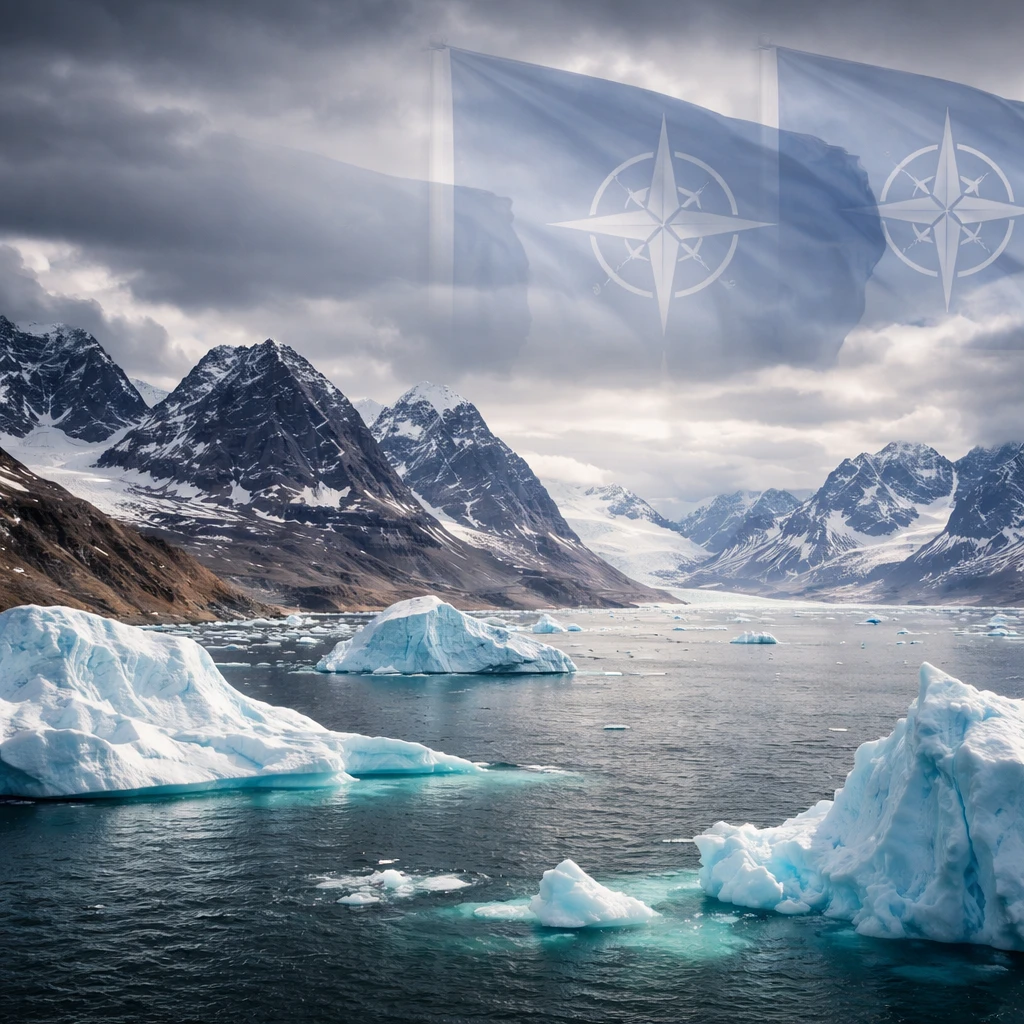
Trump's earlier pursuit to acquire sovereignty over Greenland, a territory under Danish control and a fellow NATO member, had stirred concern over the potential for a profound rupture in the transatlantic alliance foundational to Western security since World War Two. This bid also threatened to escalate into a renewed trade conflict with Europe, reviving fears of economic turbulence and strategic discord.
The meeting between Trump and Rutte centered on crafting a cooperative approach that would meet the U.S. goals for missile defense infrastructure and access to critical minerals on Greenland, while simultaneously countering the strategic ambitions of Russia and China within the Arctic region. Despite these intentions, the exact contours of any forthcoming agreement remain ambiguous. Rutte clarified afterward that sovereignty over Greenland was not a subject of negotiation at their meeting, emphasizing instead discussions on how NATO could effectively defend the Arctic against external threats.
Focusing on strategic defense priorities, Rutte noted, "One workstream coming out of yesterday ... is to make sure when it comes to Greenland, particularly, that we ensure that the Chinese and the Russians will not gain access to the Greenland economy (or) militarily to Greenland." This statement underlines a shared concern among NATO members about expanding influence from rival powers in the Arctic.
Danish Prime Minister Mette Frederiksen reaffirmed her government's position that ongoing discussions with the U.S. would continue constructively only if the sovereignty of Denmark over Greenland is respected. Supporting this stance, Danish Defence Minister Troels Lund Poulsen declared that Denmark has established a clear red line regarding its territorial sovereignty. Poulsen expressed optimism following the NATO and Trump meeting, highlighting an improved atmosphere compared to the previous day.
Nonetheless, caution persists among European officials. Germany’s Vice Chancellor Lars Klingbeil urged prudence, warning against unwarranted optimism about an imminent resolution, emphasizing that ongoing dialogue should be carefully monitored before conclusions are drawn. This sentiment is shared by residents of Nuuk, Greenland’s capital, where inhabitants, such as tour guide Ivi Luna Olsen, expressed relief and hope but remained wary, acknowledging the unpredictable nature of prior statements from President Trump.
On the international front, Russian President Vladimir Putin publicly stated that Greenland’s sovereignty was not a matter of concern for Russia, while China dismissed claims of threatening Greenland with a statement refuting the so-called China threat as unfounded. These reactions contribute to the geopolitical context surrounding the discussions and emphasize a focus on U.S. and NATO strategies.
The initial threat to Greenland's sovereignty from the U.S. had alarmed markets by raising the possibility of reigniting trade tensions with Europe, which experienced significant volatility last year. The recent calming of rhetoric has been welcomed by investors, with the pan-European STOXX 600 gaining 1% early Thursday, recovering some of the losses incurred during the week amid prior trade war jitters.
Concerns also extend to NATO cohesion, particularly at a time when unity is deemed crucial to support Ukraine amidst ongoing conflict and energy crises exacerbated by Russian airstrikes on Ukrainian infrastructure. Ukrainian President Volodymyr Zelenskiy is scheduled to meet with President Trump in Davos, underscoring the strategic importance of maintaining strong transatlantic ties.
German Chancellor Friedrich Merz, speaking in Davos, underscored the value of preserving NATO despite recent tensions and frustrations. He urged countries not to abandon the transatlantic partnership, recognizing its vital role in global security and stability.