
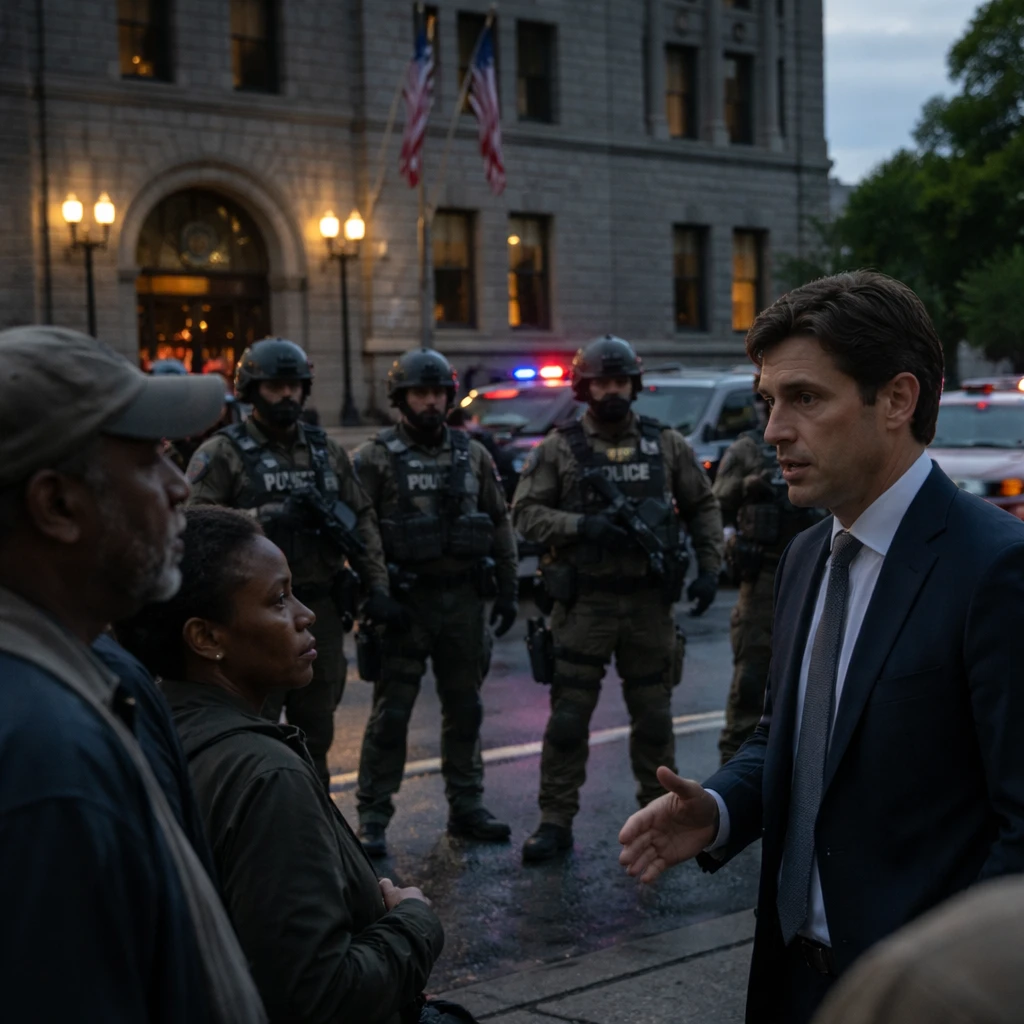
President Donald Trump issued a public rebuke of Minneapolis Mayor Jacob Frey on Wednesday after Frey refused to change municipal immigration enforcement to secure the withdrawal of federal personnel from the city.
In a social media post, the president wrote: "Could somebody in his inner sanctum please explain that this statement is a very serious violation of the Law, and that he is PLAYING WITH FIRE!" The comment followed a direct exchange between city leadership and a senior federal official dispatched to Minneapolis.
Mayor Frey told Tom Homan, the federal official assigned to the city, that "Minneapolis does not and will not enforce federal immigration laws." Frey also informed Homan of "the serious negative impacts this operation has had on Minneapolis and surrounding communities," reflecting municipal concerns about the federal presence.
The interaction has intensified questions about the stability of relations between local and federal authorities in Minneapolis, where tensions have risen around recent enforcement actions. The federal deployment has been the subject of debate within the city, with officials and residents expressing concern about its effects.
Tom Homan was sent to Minneapolis as part of a leadership reorganization intended by federal authorities to ease friction. Despite that stated aim, the deployment proved contentious and has been associated with an escalation in hostilities following an incident in which federal officers killed two U.S. citizens during street protests that occurred in the context of deportation operations.
City leaders have framed their position as a refusal to assume responsibility for enforcing federal immigration statutes, while federal officials have maintained a presence in the area. The public dispute between the president and the city mayor underscores an ongoing friction over jurisdiction and tactics in handling immigration enforcement on local streets.
Key points
- Mayor Jacob Frey declined to change Minneapolis' immigration enforcement policies in exchange for removal of federal agents, asserting the city will not enforce federal immigration laws.
- President Trump publicly criticized Frey, calling the mayor's statement a serious violation of law and warning that he is "playing with fire."
- The federal deployment, led in part by Tom Homan, was intended to reduce tensions but has been controversial and coincided with an escalation after two U.S. citizens were killed by federal officers during protests.
Risks and uncertainties
- Ongoing tension between federal and local authorities creates uncertainty for public-sector governance and law enforcement coordination in Minneapolis.
- The controversial federal presence and related fatalities raise the risk of further civil unrest or confrontations during immigration enforcement actions.