
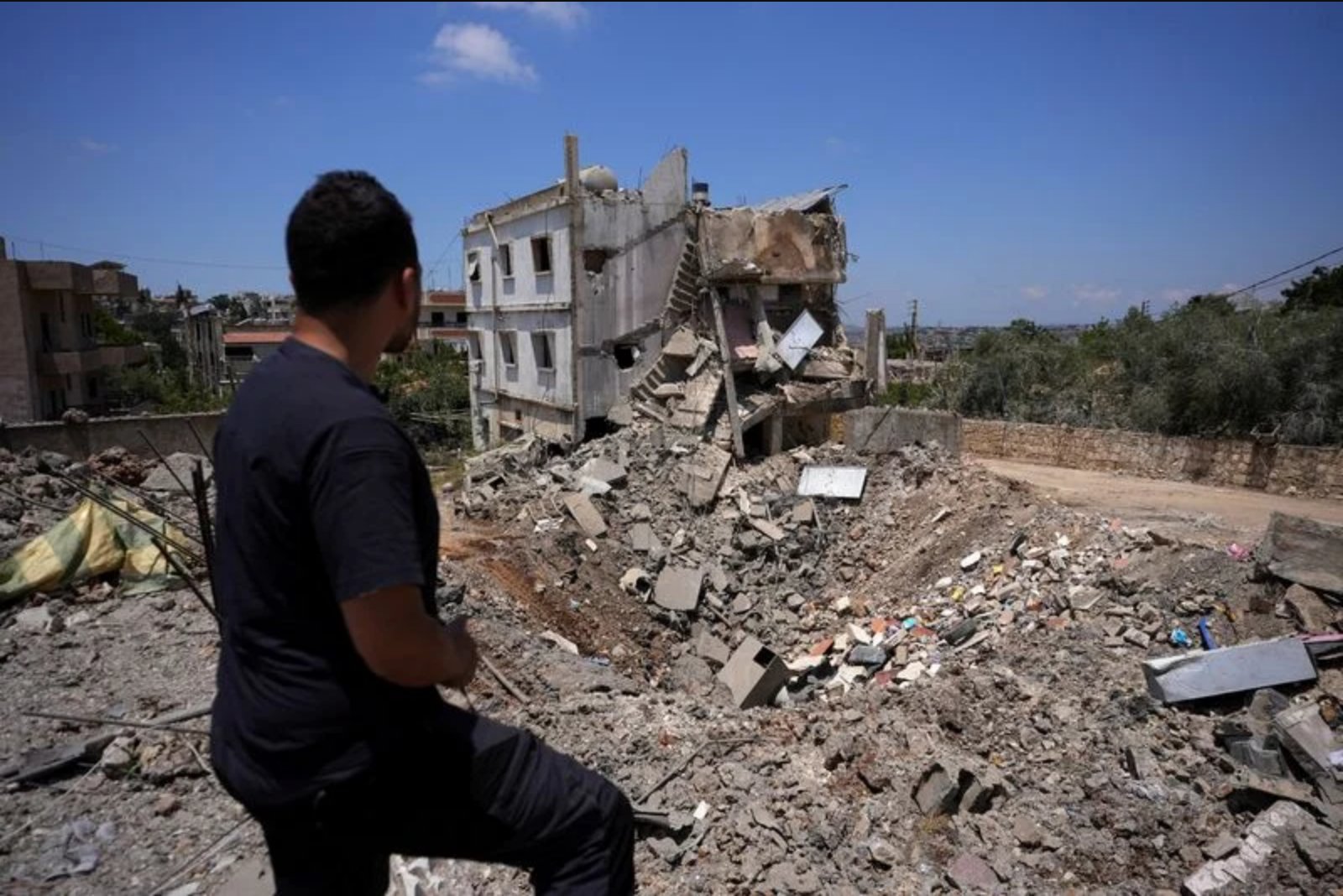
WASHINGTON, June 16 - U.S. President Donald Trump on Tuesday delivered an unusually pointed critique of Israel’s military conduct in Lebanon, arguing that the Israeli campaign targeting Hezbollah militants has been excessive and damaging to civilians.
Speaking at the G7 summit in France, Trump questioned the practice of demolishing entire apartment buildings in the pursuit of suspects, saying such actions needlessly endanger non-combatants. "Too many people have been killed. You don’t have to knock down an apartment house every time you’re looking for somebody, because there are a lot of people in those apartment houses, and they’re not all Hezbollah," he said.
Trump also said Israel has been fighting Hezbollah, the Iran-aligned Lebanese militia, "for 'too long'," and linked his concerns about Israeli tactics to recent strikes in Beirut that he suggested could have jeopardized his efforts to finalize a peace agreement with Iran. The president said he maintains a "great relationship" with Israeli Prime Minister Benjamin Netanyahu but added that Netanyahu should be "more responsible" in his actions toward Lebanon.
The president framed his relationship with Israel in personal terms, asserting: "Without us, without the United States, there would be no Israel. Without me, there would be no Israel, because no other president was willing to do what I did."
Trump’s public admonition arrives amid rising tensions between the two leaders. The president and Netanyahu have a long-standing political alliance that has weathered intermittent disagreements over the years, but recent developments have increased strain. Israeli officials have quietly expressed frustration regarding the Iran deal that the Republican president negotiated, while Trump has become increasingly impatient with Netanyahu over Israeli strikes in Beirut that prompted Iranian retaliation at a delicate moment in U.S.-Iran diplomacy.
Officials in the United States have on several occasions urged Israel to restrain its pursuit of Hezbollah in Lebanon; a halt to hostilities is also a central demand of Iran in the regional negotiations. Public criticism of Israeli military tactics by U.S. presidents is relatively uncommon, making Trump’s comments notable.
Shortly after the president spoke, an official White House social media account that typically highlights his public statements posted a video clip of these particular remarks. The White House did not explain why that clip was shared but emphasized that the president maintains a strong relationship with Netanyahu and described the Israel Defense Forces as "incredible partners."
In a statement, a White House official said: "There has been no greater friend to Israel and a fighter for peace than President Trump...Americans and our allies around the world are already safer for the United States and Israel’s bold actions to deny the Iranian regime the ability to develop a nuclear weapon."
There is no sign that the president’s criticisms will lead to immediate policy changes that force Israel to alter its tactics to provide greater protections for civilians. Israel has itself faced international condemnation for civilian casualties in past campaigns, particularly during an assault on Gaza that the Gaza health ministry says has killed 73,000 people, most of them civilians.
Israel has consistently maintained that it does not target non-combatants and has accused militant organizations, including Palestinian Hamas and Lebanon’s Hezbollah, of using civilians as human shields. When asked about the president’s comments, a spokesperson for the Israeli embassy in Washington did not offer any comment for this story.
The dispute highlights continuing friction in U.S.-Israel relations over the conduct of military operations and the balance between countering militant groups and protecting civilian populations. The president’s public rebuke underscores how tactical decisions on the battlefield can reverberate through diplomatic channels at the highest levels.