
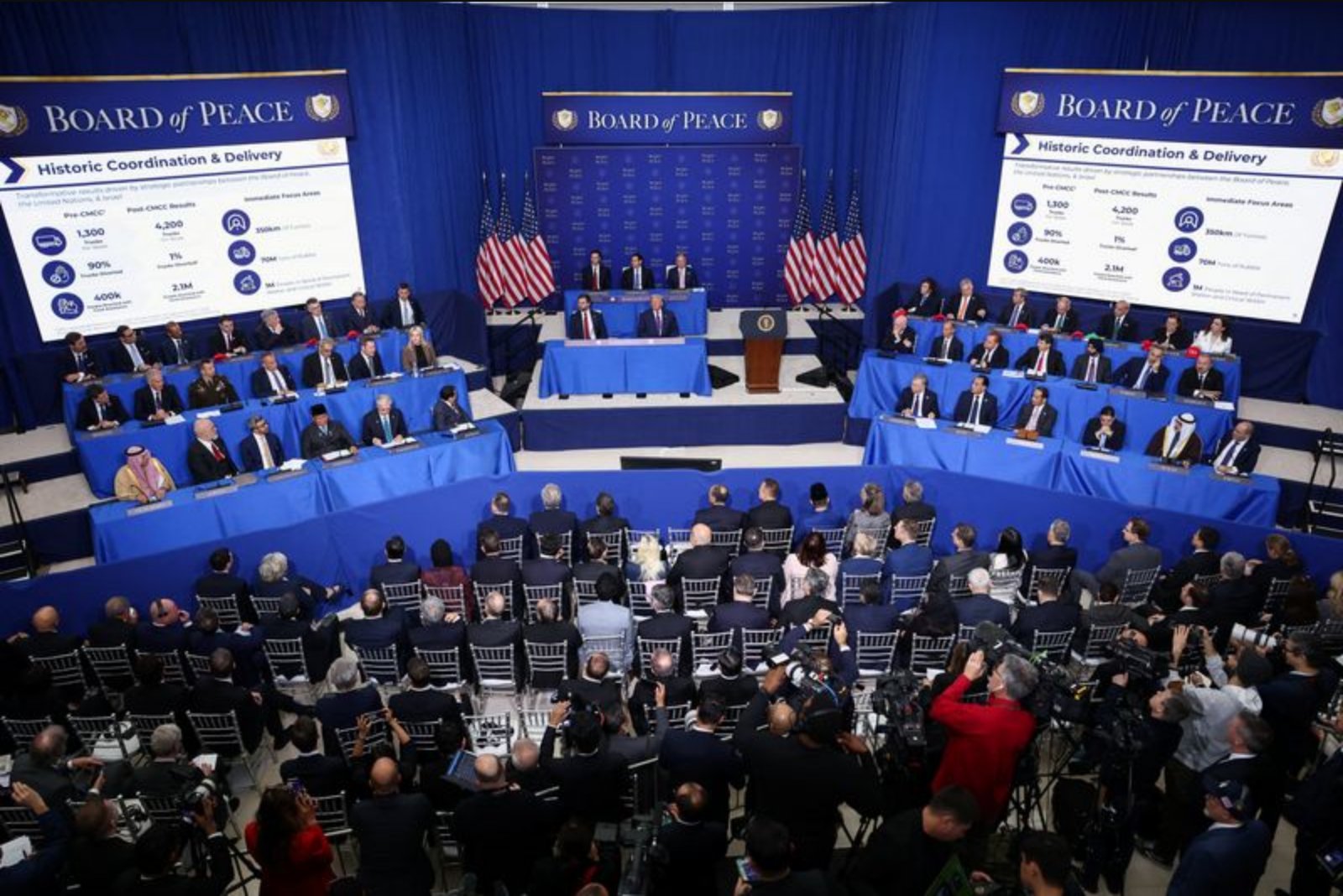
Two sources familiar with recent mediation efforts said a Board of Peace assembled under President Donald Trump presented Hamas with a written proposal this past week outlining how the group could surrender its arms. The document was handed to Hamas during meetings held in Cairo, officials said, in what mediators describe as a step toward implementing a plan for Gaza's future that ties disarmament to reconstruction and Israeli troop withdrawal.
The Cairo talks were attended by Nickolay Mladenov and Aryeh Lightstone, the sources said. Mladenov serves as the Board of Peace envoy to Gaza appointed under the Trump administration. Lightstone is a U.S. aide to Trump’s special envoy, Steve Witkoff.
Under the framework promoted by the Trump plan - an arrangement agreed to in outline by Israel and Hamas in October - Israeli forces would pull back from Gaza and reconstruction activities would begin as Hamas laid down its weapons. Mediators say that sequence is intended to create concurrent security and rebuilding measures, contingent on the complete decommissioning of armed groups.
"It is now on the table. It requires one clear choice: full decommissioning by Hamas and every armed group, with no exceptions and no carve-outs. In this season of hope, may those responsible make the right choice for the Palestinian people," Mladenov wrote on X in a post marking the Muslim holiday Eid al-Fitr.
Representatives of Hamas were not immediately available for comment on Saturday, which was the second day of the Eid al-Fitr holiday. Negotiations on disarmament had previously been suspended at the outset of the U.S.-Israeli war on Iran, which began on February 28, according to sources involved in the talks.
Amnesty and incentives under consideration
U.S. officials involved in the discussions have indicated that Iran-backed Hamas could be offered amnesty as part of a deal in which the group agrees to lay down heavy weaponry and light arms, including rifles. Insiders close to Hamas told mediators they expect the group would be reluctant to surrender rifles, citing fears of attacks by rival militias operating inside Gaza, some of which reportedly receive backing from Israel.
Fighting and deadly confrontations between Hamas and rival groups have continued since the October ceasefire. One of the sources involved in the mediation said much will hinge on what Israel deems acceptable, noting that Israel insists on the group's complete disarmament.
Several prominent Hamas officials have publicly rejected the idea of disarmament in recent months, complicating prospects for a deal that requires buy-in from both the movement's leadership and its rank-and-file fighters. On the ground, Israeli forces still control approximately half of Gaza's territory, while Hamas retains authority over the other half and over the territory's roughly two million residents, many of whom have been made homeless by two years of intense conflict.
The same source said that amnesty guarantees and targeted investment projects in Gaza were being offered as incentives to persuade Hamas to disarm. However, it remained unclear whether the Board of Peace would be able to marshal the funds necessary to underwrite those investments.
In February, the Trump-backed initiative secured some $7 billion in pledges from a range of countries, including several in the Gulf, prior to those countries coming under attack as the regional conflict with Iran widened. According to the mediation source, only a small portion of the pledged funds has actually been delivered so far; the source did not provide specific figures.
Outlook
Negotiators have placed a written disarmament plan in front of Hamas, but multiple political, security and financial uncertainties remain. The parties involved face internal resistance within Gaza, Israeli demands for comprehensive disarmament, interruptions to talks coinciding with escalations in the wider region, and limited immediate delivery of pledged reconstruction funds. How those constraints are resolved will determine whether the framework linking disarmament to withdrawal and rebuilding can advance beyond the current stage of mediation.