
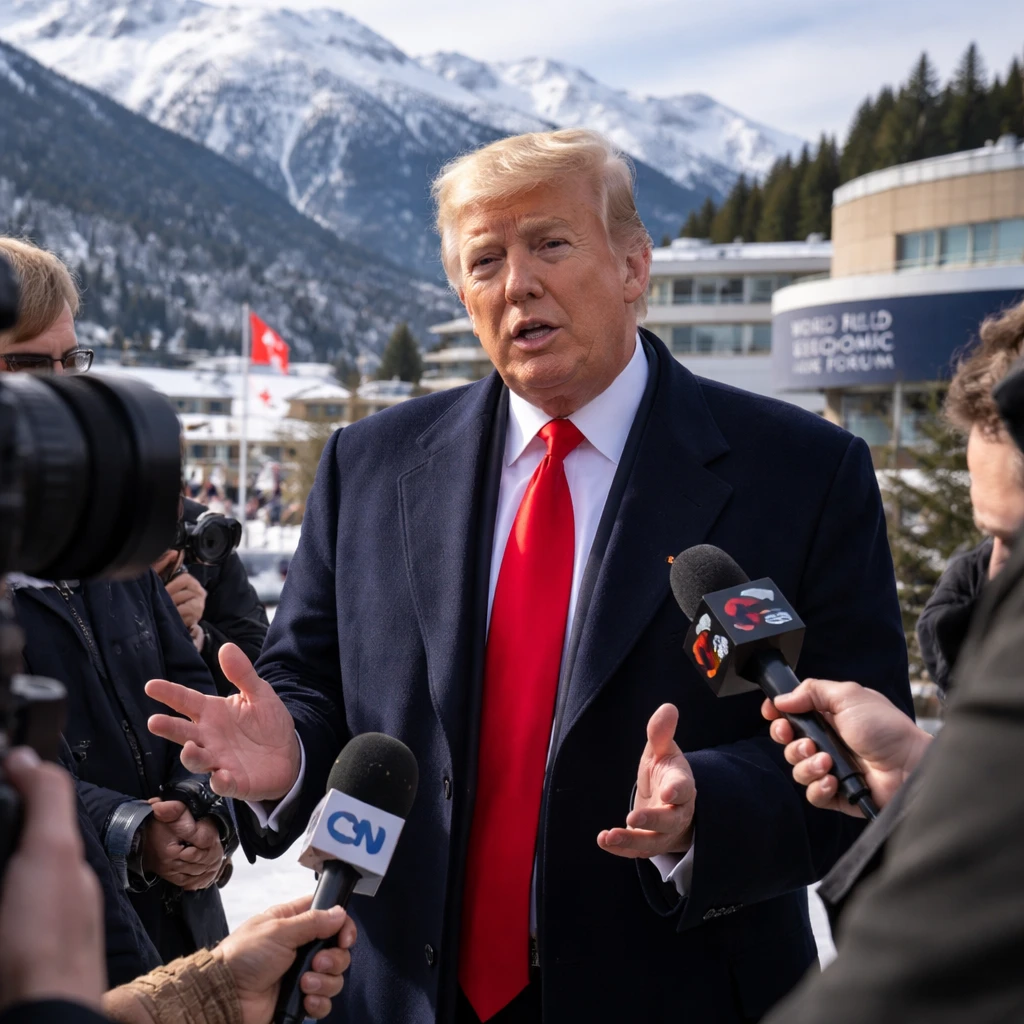
U.S. President Donald Trump conveyed his hope to avoid additional military interventions in Iran during an interview in Davos, Switzerland. However, he maintained a firm stance that the United States would respond decisively if Iran progressed with its nuclear program, referencing prior air strikes carried out against Iranian nuclear infrastructure in 2025.
Key Points
- President Trump hopes to avoid further U.S. military interventions in Iran but remains firm on preventing Iran’s nuclear development.
- The president referenced major U.S. air strikes on Iran’s nuclear sites from June 2025, conveying the willingness to repeat such actions if necessary.
- The stance reflects a dual approach combining diplomatic restraint with readiness for decisive military action, impacting geopolitical stability and defense sectors.
In a recent discussion with CNBC amid the World Economic Forum in Davos, Switzerland, President Donald Trump articulated his wish to see no further U.S. military operations targeting Iran. Nevertheless, he underscored that the United States is prepared to act should Tehran resume its nuclear ambitions.
President Trump clearly stated, "They can’t do the nuclear," emphasizing his administration's position against Iran advancing its nuclear capability. He recalled the significant aerial assaults conducted by the U.S. in June 2025 that targeted key components of Iran’s nuclear infrastructure.
"If they do it, it’s going to happen again," Trump asserted, signaling a readiness to repeat military action in response to any attempts by Iran to develop nuclear weapons. This warning reflects a continued U.S. policy aimed at preventing nuclear proliferation in the Middle East.
This statement comes amid ongoing tensions between the two nations, where the potential for Iranian nuclear development remains a critical security concern. The president’s comments highlight the balance between diplomatic restraint and military readiness that defines current U.S. strategy regarding Iran.
While the president expressed hope to avoid further conflict, his remarks make clear that the United States retains a posture of deterrence and is prepared to enforce it militarily if necessary. The mention of previous air strikes reinforces this stance, reminding observers of the decisive actions taken when diplomatic efforts have not curtailed Tehran’s nuclear activities.
Overall, President Trump's interview reflects the administration's cautious approach in handling Iran-related matters, signaling an openness to peaceful resolution but a firm commitment to act if provocative steps are undertaken by Iran.
Risks
- Risk of renewed military confrontations between the U.S. and Iran if nuclear development resumes, potentially affecting global energy markets and regional security.
- Uncertainty regarding Iran’s intentions with its nuclear program creates ongoing geopolitical tensions influencing defense and international relations sectors.
- Potential destabilization in the Middle East resulting from military actions could disrupt global trade and impact economic markets tied to the region.