
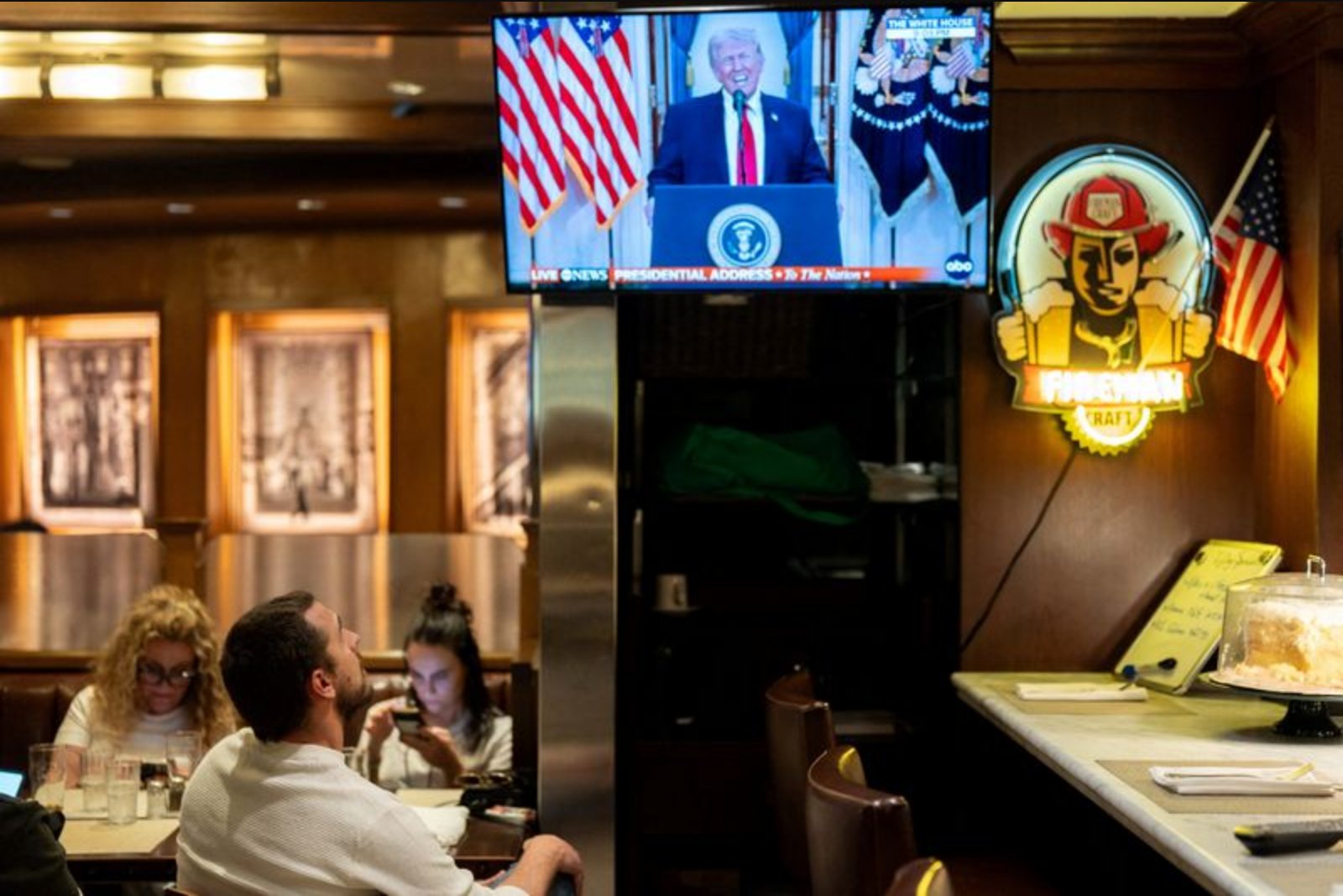
WASHINGTON, April 1 - President Donald Trump used a prime-time address on Wednesday to defend his handling of the month-old U.S.-Israeli war on Iran, saying the U.S. military was nearing completion of its mission while at the same time reiterating threats to bomb the Islamic Republic back to the Stone Age. The 19-minute speech came as global oil prices remained elevated and the president’s approval ratings were weak.
The address contained several clear assertions about battlefield gains, coupled with rhetoric that underscored uncertainty over how and when the conflict will end. Below are the principal themes and outstanding questions arising from the speech.
Looking for an exit - but not quite yet
Trump told viewers that the United States had destroyed Iran’s navy and air force, crippled its ballistic missile and nuclear program, and would keep striking Tehran "extremely hard" over the next two to three weeks. He also said U.S. forces were on track to complete their objectives "very shortly."
Despite those assertions, the president stopped short of providing a firm timeline for an end to hostilities. His mixture of promises of imminent completion and continued punitive action leaves open the possibility of an extended campaign even as he signals an interest in concluding U.S. operations.
That mix of messages - alternating between calls for diplomacy and threats of further bombardment while U.S. forces continue to build up in the region - is likely to offer little comfort to investors and households already jittery about the cost and consequences of the conflict.
The Strait of Hormuz and energy pressures
Trump’s remarks did not clarify whether U.S. military operations would end before Iran reopened the Strait of Hormuz, the chokepoint whose closure has contributed to what the president called the worst global energy shock in history. He instead appealed to other countries reliant on Gulf oil to shoulder the responsibility for reopening and securing the waterway, saying the United States does not need energy supplies from the region.
Western allies, however, have resisted becoming involved in the war that Trump and Israeli Prime Minister Benjamin Netanyahu initiated without consulting them. Analysts warn that if Iran retains effective control over the strait, it will hold significant leverage over global oil and natural gas shipments; the passage accounts for roughly one fifth of the world’s crude oil and natural gas cargoes.
There is also a diplomatic and security concern for Washington’s Gulf partners. A rapid U.S. withdrawal could leave regional allies contending with a damaged but hostile neighbor, fostering resentment and complicating regional stability.
Mission accomplished? Uncertainties about nuclear capability and leadership
Trump framed the conflict as a near-complete success for U.S. and Israeli forces, but major questions linger about the central aim he initially announced: closing off Iran’s path to a nuclear weapon. More than a month into the campaign, Iran still holds a stockpile of highly enriched uranium that could be processed to weapons grade, although the material is believed to be mostly buried underground after U.S.-Israeli bombing in June.
In a change from earlier demands that Iran surrender its enriched uranium, the president said earlier on Wednesday that he no longer cared about the material because it is "so far underground" and that U.S. satellites could monitor the area.
Iran has consistently denied seeking a nuclear bomb. Even as Trump claimed conventional Iranian forces had been largely neutralized, Tehran has shown it can still employ missiles and drones to strike Israel, U.S. Gulf allies and American military installations located on their territory.
Calls by the president earlier in the conflict for the overthrow of Iran’s theocratic rulers have not come to pass. U.S.-Israeli air strikes killed many of the top leaders, including Supreme Leader Ayatollah Ali Khamenei, but those positions have been filled by successors described as even more hard-line, including Khamenei’s son. U.S. intelligence has assessed that Iran’s government remains largely intact.
Domestic politics and economic repercussions
This was Trump’s first prime-time address since the war began on February 28. It was widely expected to reassure an American public increasingly wary of large-scale military operations, given the president’s campaign rhetoric about keeping the United States out of "stupid" foreign interventions.
Instead, the speech offered only limited acknowledgement of household economic concerns. Trump said many Americans had been troubled by higher gasoline prices and attributed the "short-term increase" entirely to what he described as "the Iranian regime launching deranged terror attacks against commercial oil tankers of neighboring countries that have nothing to do with the conflict." He urged patience, suggesting the economic pain would be transient and ease after the war ended.
While Trump’s core MAGA base has largely backed him, persistent fuel price inflation could erode support if voters perceive the economic burden as long lasting. That poses a political risk as Republicans work to maintain control of Congress in the November midterm elections. The president’s overall approval rating has declined to 36%, the lowest since his return to the White House, according to a poll completed on Monday.
Bottom line
In his address, President Trump presented a narrative of military progress and imminent mission completion while simultaneously leaving major questions open about the timing of a U.S. exit, the security of the Strait of Hormuz, the status of Iran’s nuclear materials and the longer-term stability of Iran’s leadership. The mixed signals in the speech are likely to sustain uncertainty in global energy markets, among U.S. allies in the Gulf, and within the U.S. political arena.
Key takeaways
- Trump claims significant battlefield gains and says U.S. objectives are close to completion, but he provides no definitive end date and promises further strikes over the next two to three weeks.
- The fate of the Strait of Hormuz remains unresolved, increasing the risk of prolonged disruptions to global oil and gas shipments. The president urged Gulf oil importers to take responsibility for reopening and securing the waterway.
- Questions persist about Iran’s remaining stockpile of highly enriched uranium, the resilience of its leadership after air strikes on top figures, and the ability of Iran to continue missile and drone attacks on regional and U.S. targets.
Impacted sectors
- Energy markets - oil and natural gas shipments and prices.
- Defense and military contractors - continued operations and potential sustained demand.
- Financial markets - volatility stemming from geopolitical uncertainty and commodity price swings.