
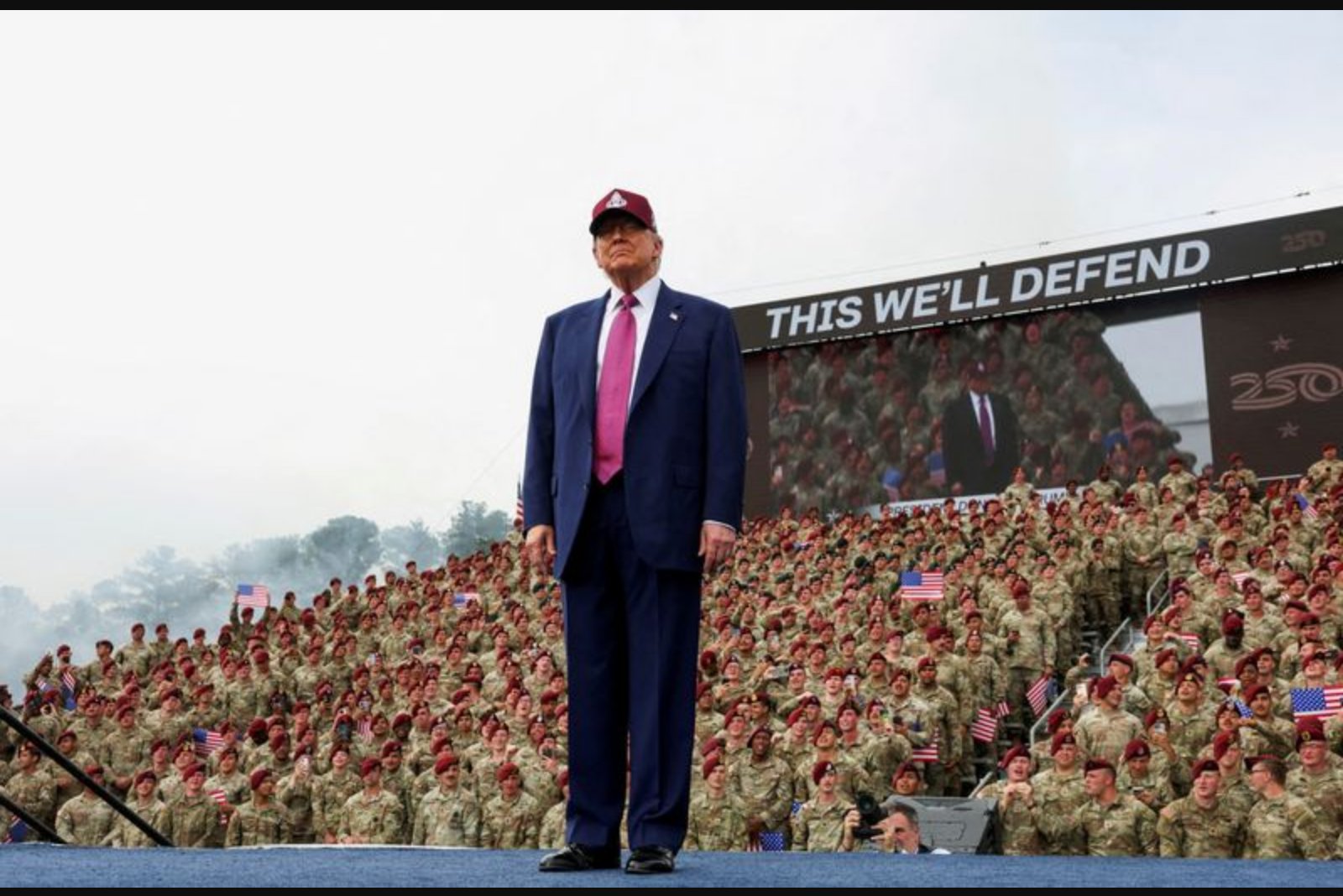
WASHINGTON - President Donald Trump has weighed the option of withdrawing some U.S. troops from Europe, a senior White House official told Reuters, citing frustration with NATO partners over several recent disputes. The official, who spoke on the condition of anonymity to discuss internal deliberations, said no decision has been reached and the Pentagon has not been instructed to draw up concrete plans for a reduction of forces on the continent.
The conversations inside the White House underscore a notable deterioration in relations between Washington and its European NATO allies in recent months. Officials described the exchanges as part of high-level deliberations rather than a firm policy shift at this stage.
Context of the discussions
According to the official, two specific grievances appear to have motivated the president's consideration of troop withdrawals. First, Trump is upset that NATO partners have not assisted in efforts to secure the Strait of Hormuz, a strategic maritime corridor whose status has been a focal point since the outbreak of the war with Iran. Second, he remains angry that his plans regarding Greenland did not advance, reviving a dispute that surfaced earlier in the year.
The official did not provide details on which countries might be affected or how many troops could be removed if the president decides to proceed. The United States currently maintains more than 80,000 service members in Europe, with over 30,000 stationed in Germany and significant contingents in Italy, the United Kingdom and Spain. NATO did not immediately respond to a request for comment.
Recent diplomatic interactions
The senior official said the talks also signal that a recent visit to the White House by NATO Secretary-General Mark Rutte did not substantially improve transatlantic relations. The administration's strained rapport with NATO is not new - the president has long criticized European defense spending - but officials describe the past three months as particularly turbulent.
In January, the president escalated tensions by renewing threats to annex Greenland. Since Feb 28, when the war with Iran began, the president has expressed deep dissatisfaction that NATO allies have not offered to help reopen the Strait of Hormuz. Despite a fragile ceasefire announced this week, the strait has remained largely closed, the official said.
Uncertainty around allied missions
NATO diplomats have indicated that the United States has not clearly communicated whether it expects any mission in the Strait of Hormuz to commence during or after the conflict, nor has it specified the particular capabilities it expects from individual NATO members. That ambiguity has complicated allied coordination, diplomats said.
Separately, The Wall Street Journal reported that senior administration officials were discussing relocating troops out of countries whose leaders had been critical of the U.S.-Israeli war in Iran and moving them to European states seen as more supportive. The White House official who spoke to Reuters characterized the president's consideration differently - saying Trump was specifically discussing bringing forces back to the United States, rather than transferring them between foreign bases.
What is known and what remains open
At this point, the deliberations remain exploratory. No formal orders have been issued to the Pentagon, and the scale, timing and destinations - if any - of potential troop movements have not been defined. The official's account highlights a period of strained transatlantic ties and uncertainty about the future footprint of U.S. forces in Europe.
As officials continue to weigh options, the situation illustrates how diplomatic tensions and operational questions about allied commitments can intersect with decisions about force posture and basing. For now, more than 80,000 U.S. troops remain in Europe while debates over allied expectations and responsibilities continue.