
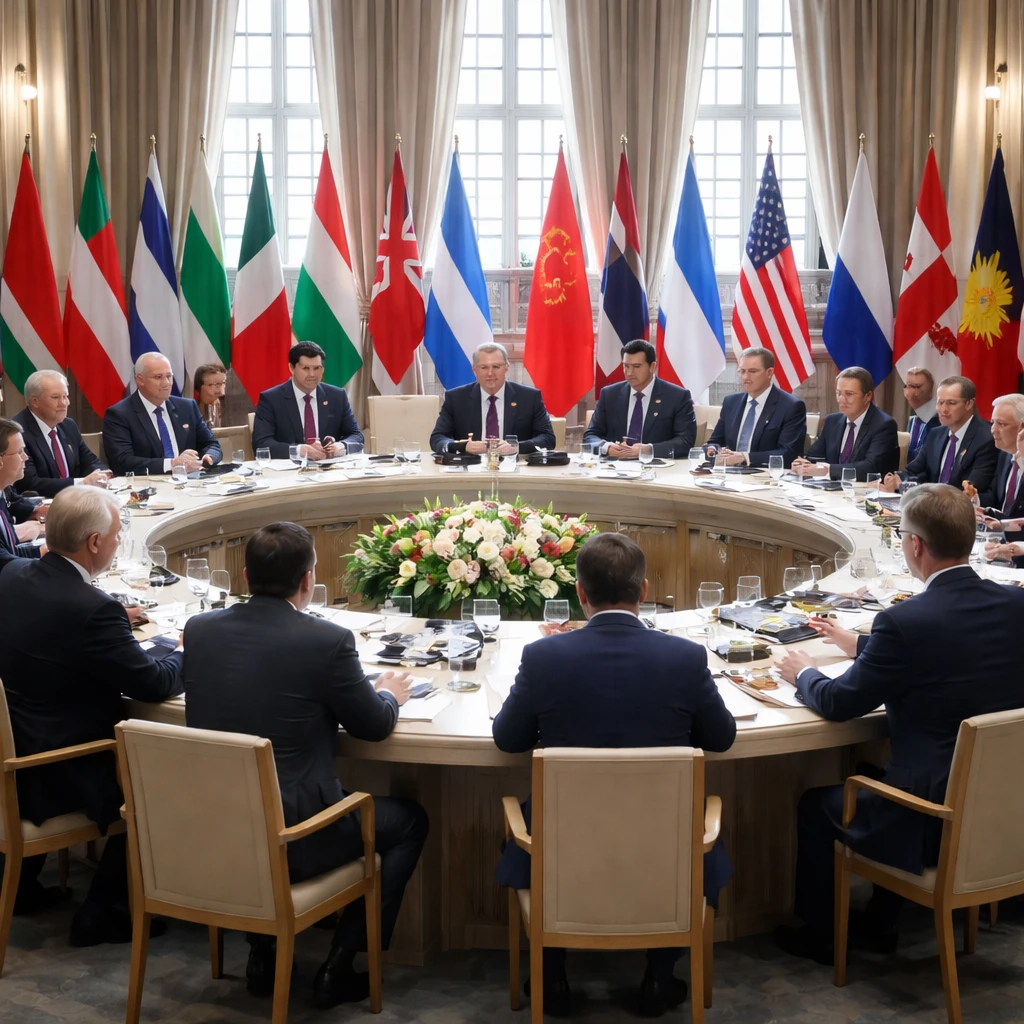
In Davos, Switzerland, on January 22, U.S. President Donald Trump revealed plans to launch his Board of Peace, an international body originally conceived to help conclude the ongoing Gaza war. However, Trump envisions the board should take on wider global responsibilities beyond facilitating the fragile Gaza truce. The initiative, which Trump himself will lead as chairman, invites dozens of global leaders to join the effort. Despite assurances that the board is not intended to supplant the United Nations, some European and other international actors express concern that it could rival or undermine the U.N.’s authority.
Trump has suggested that permanent members of the board should contribute financially, proposing payments of $1 billion each to support its activities. Yet, responses from traditional American allies have been mixed, ranging from cautious acceptance to outright refusal of the invitation. To date, none of the other permanent members of the United Nations Security Council — the five nations historically wielding substantial influence over global diplomacy — have committed to join. Russia indicated on Wednesday it was reviewing the proposal, despite Trump’s assertion of its intended participation; France has declined; Britain stated it will not join at the moment; and China has not provided a definitive stance.
The board’s creation was endorsed within the framework of a U.N. Security Council resolution tied to Trump's Gaza peace initiative. U.N. spokesperson Rolando Gomez confirmed that cooperation between the U.N. and the board will be limited to contexts related to the Gaza strategy. Nonetheless, approximately 35 countries have agreed to participate, including Saudi Arabia, the United Arab Emirates, Egypt, Turkey, and Belarus. Notably, many of the committed nations lack strong democratic credentials, although Israel and Hungary, both perceived as close political allies of Trump, have also indicated their intention to join.
The formal signing for membership in the board will take place in Davos, coinciding with the World Economic Forum, a prominent gathering of international political and business leaders. The board’s foundational charter assigns it the mission of advancing global peace, and Trump has already nominated senior U.S. officials alongside former British Prime Minister Tony Blair to serve on it.
The ceasefire agreement in Gaza, established in October, remains fragile with intermittent outbreaks of violence claiming the lives of multiple Israeli soldiers and hundreds of Palestinians. Both Israeli and Hamas officials accuse each other of violating the truce, with disputes over the release of a hostage's remains and continued restrictions on aid to Gaza contributing to ongoing tensions. Each faction rejects the other's allegations.
Israeli Prime Minister Benjamin Netanyahu has accepted President Trump’s invitation to join the board, according to the Israeli leader's office. Meanwhile, various Palestinian groups support the board and the creation of a transitional Palestinian committee tasked with overseeing Gaza under the board’s supervision.
Despite setbacks in the first phase of the ceasefire, Trump has publicly described it as a form of "peace in the Middle East." The upcoming second phase of the agreement is anticipated to confront more complex issues such as Hamas disarmament, Gaza's security arrangements, and the eventual withdrawal of Israeli military presence—factors that have historically obstructed peace negotiations.
On Wednesday, during the Davos meetings, President Trump held discussions with Egyptian President Abdel Fattah al-Sisi, whose country has been instrumental in mediating the Gaza ceasefire talks, including deliberations concerning the newly proposed Board of Peace.