
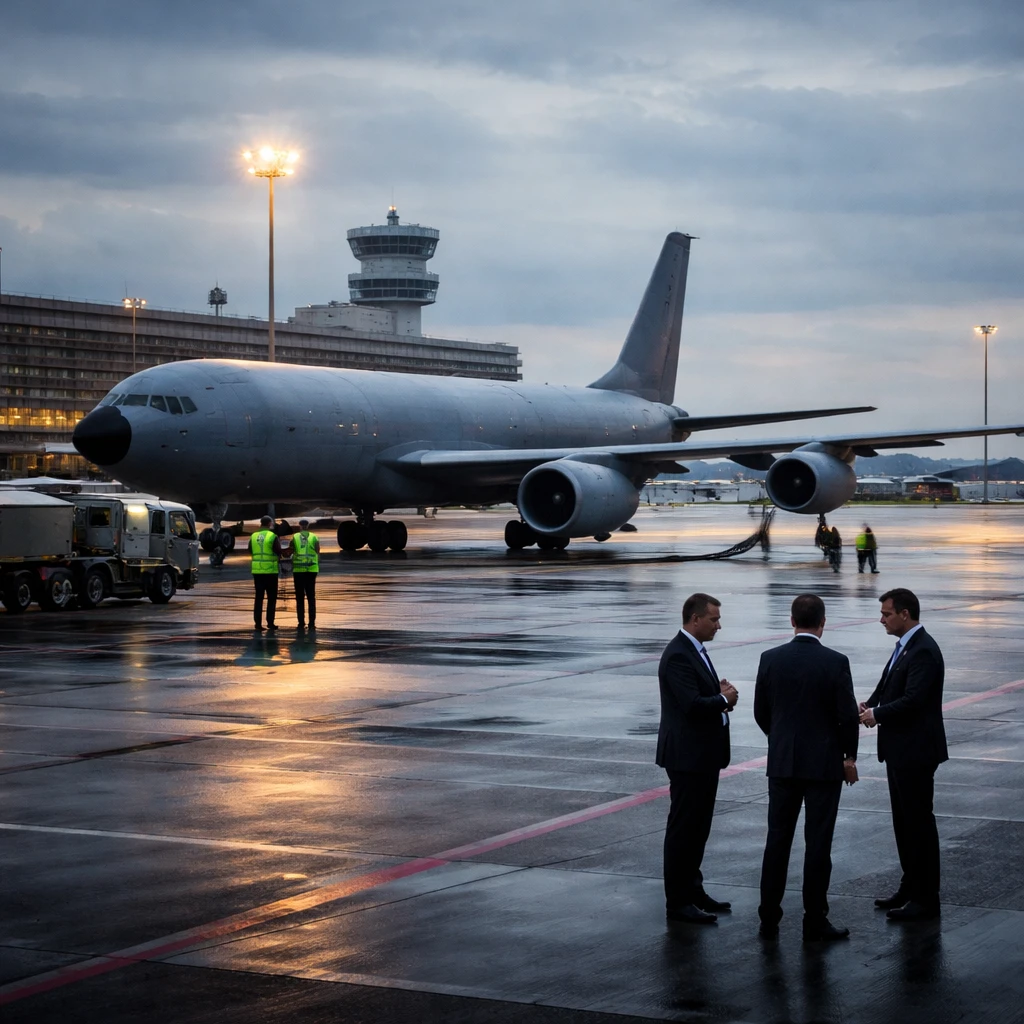
Iranian authorities delivered a formal protest to Bulgaria on March 18, objecting to the presence of U.S. military refuelling aircraft at Sofia's Vasil Levski civilian airport and warning the NATO member not to permit U.S. use of its airports for planes participating in military operations in Iran, the Bulgarian foreign ministry said on Wednesday.
The note shown to the public earlier on Wednesday by Stanislav Balabanov, a deputy from the "There is Such People" party, expressed Tehran's concern about the parked refuelling planes. In the text of the communication, Iran stated that it "reserves the right to take all necessary measures to protect its sovereignty, security and national interests in accordance with international law."
Deputy Foreign Minister Marin Raikov publicly confirmed receipt of the March 18 note and sought to clarify Bulgaria's position in remarks to reporters later the same day. He stated plainly that "Bulgaria is not at war" and that "no combat aircraft are being loaded over Bulgaria to participate in military operations." Raikov added that diplomatic relations with Iran remain intact.
Bulgarian authorities have said the U.S. military planes that media reported as having landed in late February at Sofia's Vasil Levski civilian airport were part of a NATO forward deployment, a characterization Raikov reaffirmed on Wednesday.
On the question of parliamentary oversight, Raikov told reporters that Bulgaria's legislature has not approved measures to back any military actions related to the Strait of Hormuz region, implying that no formal authorization for such operations has been granted by the government in lawmaking channels.
The diplomatic protest from Tehran arrives amid a wider European reaction to U.S. military activities connected to the region. The article noted that several European countries have resisted elements of U.S. operations: Spain closed its airspace and denied base access, Italy rejected a stopover at the Sigonella base, and France blocked overflight for U.S.-Israel weapons flights. These responses reflect decisions by individual governments to limit or condition logistics and basing for certain military movements.
Contextual note - The details above are drawn from the communications and confirmations made public by Bulgarian officials and the contents of the March 18 note disclosed by a parliamentary deputy. The reporting reflects statements and actions described by Bulgarian authorities and referenced European responses; it does not assert outcomes beyond those explicitly stated.