
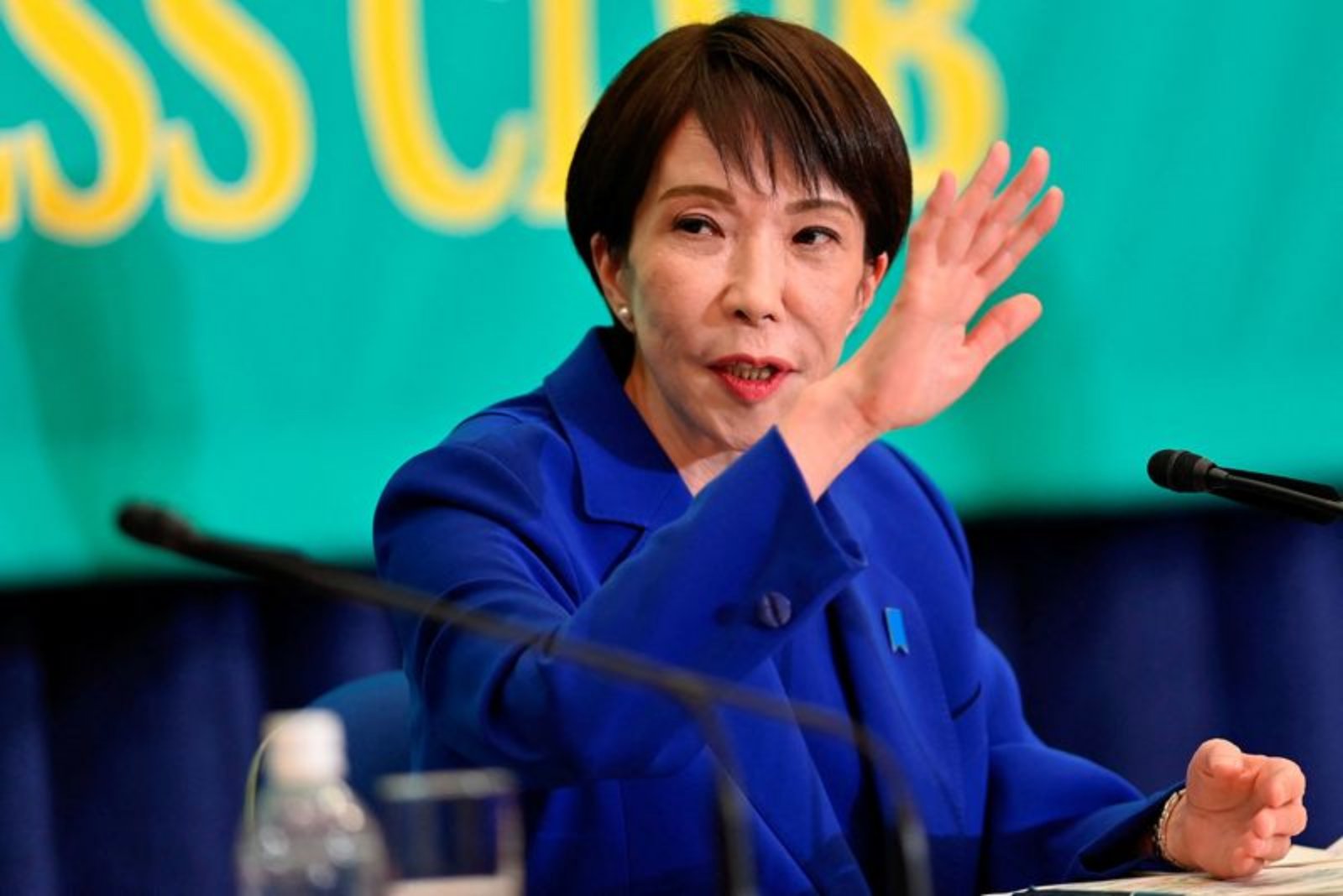
TOKYO, Jan 27 - Prime Minister Sanae Takaichi said on Monday that the Japan-US security relationship would disintegrate if Japan were to turn its back on a conflict involving Taiwan, while distancing herself from previous statements that appeared to suggest Japan might launch military action.
Speaking on a nationally broadcast television programme, Takaichi responded to criticism from opposition figures who have accused her of needlessly heightening tensions with China following remarks she made in parliament in November. Those earlier comments - which said a hypothetical Chinese attack on Taiwan could trigger a Japanese military response - prompted a sharp reaction from Beijing.
"I want to make it absolutely clear that this is not about Japan going out and taking military action if China and the United States come into conflict (over Taiwan)," Takaichi said on the live TV show, referring to her parliamentary remarks in November.
She said Japan would have to act to rescue Japanese and American citizens in Taiwan if "something serious happens there," and that "in that situation, there may be cases where we take joint action." Takaichi added that if U.S. forces acting jointly with Japan came under attack and Japan did nothing, "the Japan-US alliance would collapse."
Emphasising legal limits, she said Japan would "respond strictly within the limits of the law - within the limits of the laws as they currently exist - while making a comprehensive judgment based on what is happening on the ground." She did not provide further detail on what forms such joint action might take.
Since her November remarks, relations between Tokyo and Beijing have deteriorated to their lowest point in years, officials and commentators in Beijing have said. China has pushed back with measures including export curbs, flight cancellations and strongly worded commentary, repeatedly demanding a retraction of Takaichi's earlier statements. China asserts sovereignty over Taiwan, which is governed democratically and independently from the Chinese mainland.
Takaichi has so far declined to formally retract her November comments, saying they align with Japan's long-standing policy and arguing that Beijing's portrayal of her words does not match the facts. She has framed her clarifications in recent days without reversing the underlying stance she articulated in parliament.
Japan's pacifist constitution generally prohibits direct offensive military action, but it permits the exercise of collective self-defence. That legal framework allows Japan to defend the United States or another friendly country that comes under attack in cases where Japan itself faces a "threat to its survival." Takaichi referenced acting "within the limits of the law" in her television remarks.
Takaichi, who took office in October 2025, has maintained strong approval ratings and has called a snap election for February 8. Observers have noted she is seeking to capitalise on her popularity in the run-up to that vote.
Context and implications
Japan's leader framed her comments as a narrow clarification of intent rather than a policy reversal, stressing legal constraints and situational judgment. The exchange underscores heightened regional sensitivities over Taiwan and the strain in Japan-China relations after the November parliamentary remarks and subsequent Chinese countermeasures.
For now, Takaichi's position remains that Japan would act to protect its citizens and allied forces when circumstances demand, but only within Japan's current legal limits. She has resisted calls to apologise or retract, maintaining her original stance as consistent with established policy.
Key points
- Japan's prime minister said the Japan-US alliance would collapse if Japan failed to assist U.S. forces in a Taiwan-related conflict.
- Takaichi clarified she was not advocating Japan initiate military action, stating any response would be judged by the situation and limited by existing laws.
- Diplomatic relations with China have worsened after her November comments, with Beijing imposing export curbs and cancelling flights.
Risks and uncertainties
- Escalation of diplomatic friction between Japan and China, reflected in export controls and flight cancellations, presents risks to trade and aviation sectors.
- Ambiguity in public statements about potential joint action could create uncertainty for defence planning and regional security dynamics.