
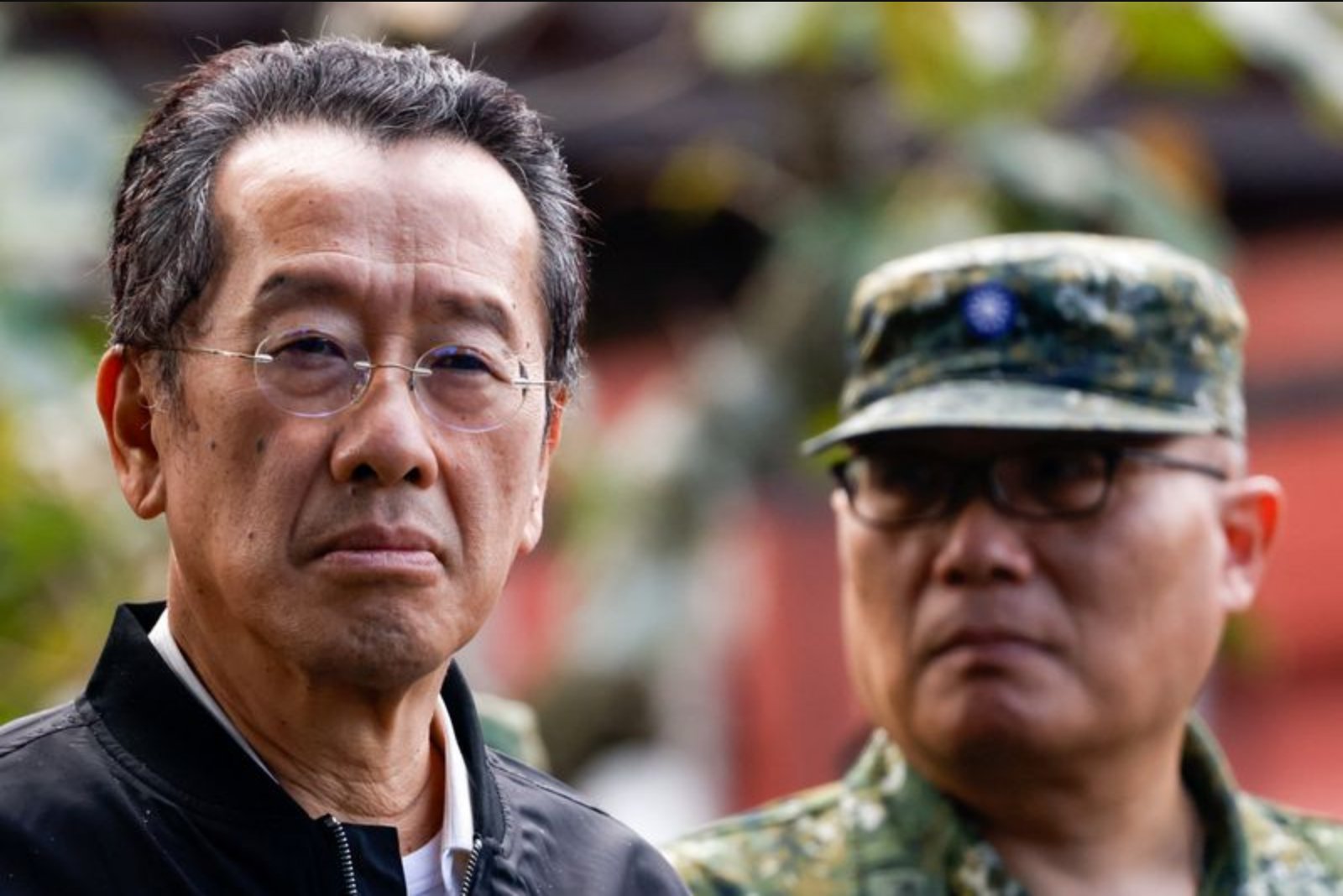
TAIPEI, March 26 - Taiwan's Defence Minister Wellington Koo said on Thursday that the next package of U.S. arms sales to the island appears to be proceeding as expected after Taipei received a letter of guarantee from Washington.
Koo made the remarks at the legislature when asked whether an upcoming meeting between the U.S. and Chinese presidents might affect the timing or content of U.S. weapons transfers. He said the letter signals U.S. willingness to authorise the next deal and that Taipei has been in close contact with the U.S. Department of War’s Defense Security Cooperation Agency regarding guidance on items, amounts and the transaction, without providing further specifics.
Separately, a major U.S. arms package for Taiwan valued at about $14 billion - which reportedly includes advanced interceptor missiles - is said to be ready for the U.S. president's approval and could be signed after his trip to China, according to reporting earlier this month. That trip had been postponed from early April because of the Iran war and is now scheduled for May 14-15.
Chinese leader Xi Jinping raised the issue of arms sales to Taiwan in a recent phone call with the U.S. president, telling him that Washington must "carefully" handle such transfers to the democratically governed island, which Beijing regards as its own territory.
Koo said the proposed package is still subject to internal U.S. review and that Taipei had not been notified of any delays. He reiterated that communications with U.S. agencies, including the Defense Security Cooperation Agency, have covered willingness to provide the package as well as guidance on its contents and transaction details.
The U.S. State Department did not immediately respond to a request for comment.
China has repeatedly called on Washington to halt arms sales to Taipei. The most recent U.S. sale to Taiwan, in December, was valued at $11 billion and was the largest ever for the island.
The United States remains Taiwan's principal international backer and chief supplier of weapons despite the absence of formal diplomatic relations. U.S. law obliges Washington to provide Taiwan with the means to defend itself. Taiwan has experienced increased Chinese military pressure in recent years, including large-scale exercises and war games.
Key points
- Taiwan has received a written guarantee from the U.S. indicating willingness to authorise the next arms sale, and Taipei has been in close communication with the U.S. Department of War’s Defense Security Cooperation Agency on transaction details.
- A separate, larger U.S. arms package worth about $14 billion that reportedly includes advanced interceptor missiles is awaiting presidential approval and could be finalised after a presidential trip to China scheduled for May 14-15.
- The dynamics of U.S.-China diplomacy, including direct conversations between the two leaders, are a clear backdrop to Taipei's defence procurement timetable.
Sectors likely impacted: Defence and aerospace manufacturers, government contracting, and regional security-sensitive industries.
Risks and uncertainties
- Timing risk - The arms package remains under internal U.S. review and could be subject to delays depending on U.S. executive decisions; this uncertainty affects defence contractors and procurement schedules.
- Diplomatic pressure - Chinese objections and bilateral discussions between the U.S. and China create diplomatic uncertainty that could influence the content or timing of arms transfers, affecting geopolitical risk assessments for regional markets.
- Operational secrecy - Taipei has received limited public detail about the guarantee and the items involved, leaving defence planners and market participants without full information on capabilities or procurement timelines.
Note: Where the article cites communications with U.S. agencies or reports about the $14 billion package, those statements reflect the information made public and the comments of Taiwan's defence minister. No additional confirmation from U.S. officials was available at the time of reporting.