
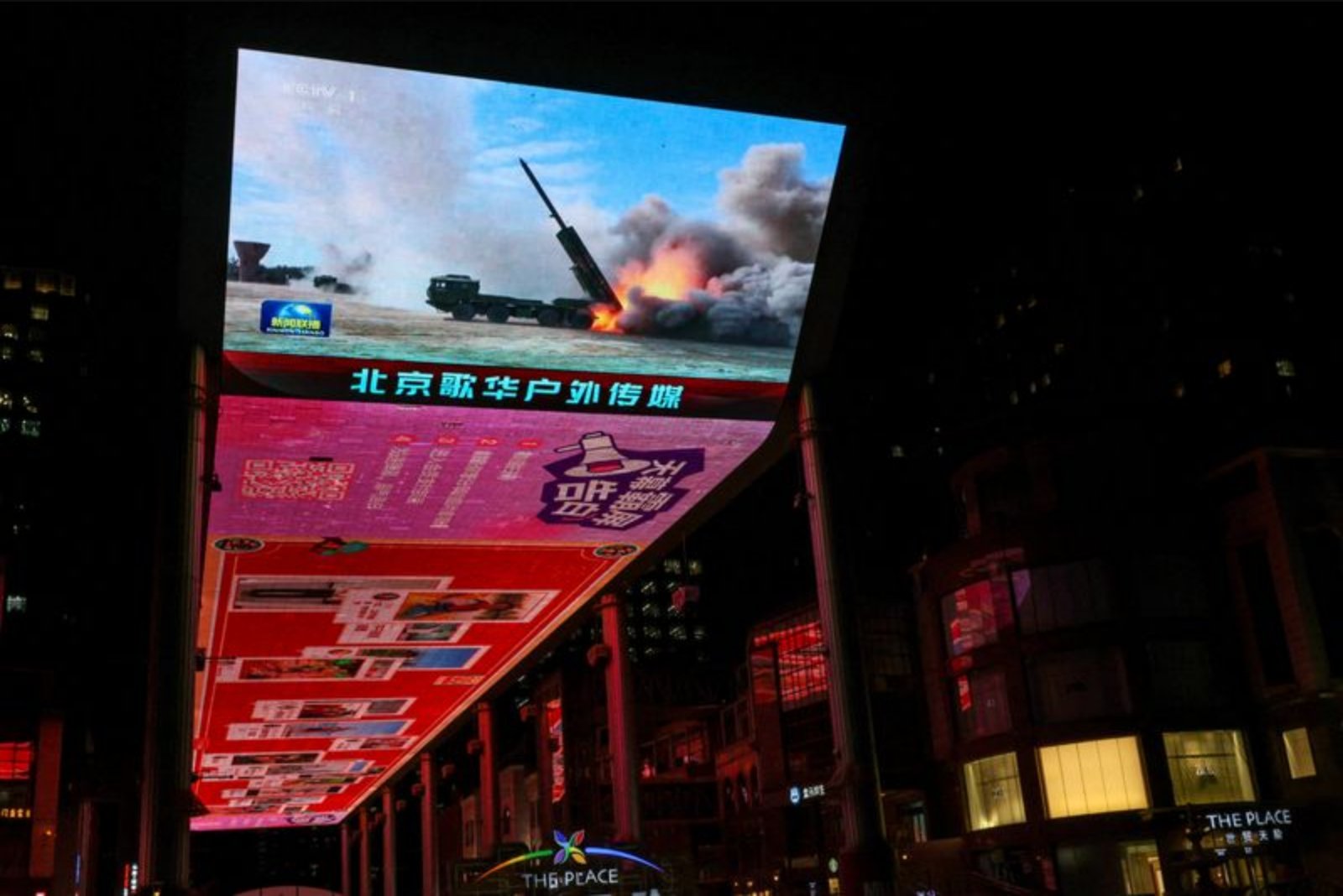
Taiwanese officials have raised alarms over a marked increase in Chinese military activity in the waters and skies near the island, even as Beijing conveys themes of peace and cooperation in meetings with Taiwan's main opposition leader.
Officials described what they view as a worrying acceleration in naval deployments at a moment when internal politics in Taipei have impeded efforts to increase defence spending that Washington has urged. The buildup arrives against a backdrop of U.S. attention on the Middle East and ahead of President Donald Trump’s planned May meeting with China’s Xi Jinping.
Official assessments and numbers
Wellington Koo, Taiwan’s defence minister, told lawmakers that "China is continuously and persistently expanding its military capabilities, and the military threat it poses to us is becoming increasingly severe." He warned that Taiwan must demonstrate its determination to defend itself to the United States and other like-minded partners, adding: "But the most frightening scenario is - if all of our international allies were to question whether we have such resolve, what would we face? I cannot imagine it."
Two Taiwanese security officials said China has deployed nearly 100 naval and coast guard vessels in and around the South and East China Seas this week. One of those officials noted that China typically operates some 50-60 ships in the region, making the recent rise "very rare," especially because this season is not normally busy for Chinese naval drills.
Separate intelligence reports corroborated the increase, showing a rise in Chinese vessels from nearly 70 at the end of March to nearly 100 in the most recent counts. Two additional, non-Taiwanese security sources confirmed the numbers, while describing the pattern as potentially a "new normal" rather than an exceptional anomaly.
Military activity while diplomacy continues
China’s diplomatic outreach to Taiwan’s opposition has continued while military activities persist. Meeting KMT chairwoman Cheng Li-wun in Beijing on Friday, Xi said people on both sides of the Taiwan Strait want peace and cooperation, but also declared that China will "absolutely not tolerate" independence for Taiwan. The KMT has stated there is "no connection whatsoever" between Cheng’s trip and Taiwan government defence spending plans.
Taiwan’s defence ministry reported that in the previous 24 hours there were seven Chinese military aircraft operating around the island as well as seven warships. Kuan Bi-ling, head of Taiwan’s Ocean Affairs Council, which oversees the coast guard, posted the locations and names of Chinese warships in waters around Taiwan on her Facebook account. She explained that "because the leader of the main opposition party is planning to meet with Chinese leadership ... it is necessary to appropriately disclose to the public and the international community the situation of China’s harassment in our waters, so that our people are informed and understand the serious implications."
Airspace declarations and strategic timing
In addition to the maritime movements, China has declared "reserved" airspace off its eastern coast from March 27 to May 5. No explanation was provided for the notice, though authorities have in the past issued similar declarations ahead of military drills to define restricted blocks of airspace. Tsai Ming-yen, head of Taiwan’s National Security Bureau, told reporters in Taipei that he believed China was using the airspace declaration to test how often U.S. aircraft operate in the area. "This may also be politically intended to demonstrate the state of U.S. air activity in the Indo-Pacific region prior to the Trump-Xi meeting," he said.
Political backdrop and defence spending
Taipei’s ruling party has expressed anger at members of the opposition Kuomintang for skipping talks on stalled defence spending. Officials argued the timing of the increased Chinese presence — when the opposition is engaging directly with Beijing and the U.S. is focused on other international issues — is particularly concerning.
Taiwan’s government rejects Beijing’s sovereignty claims and maintains that only the island’s people can decide their future. China regards Taiwan as one of its provinces and has not renounced the use of force to bring it under its control. Defence ministry spokespeople did not respond to requests for comment about the recent deployment figures.
What officials emphasize
- Taiwanese defence leaders stress the need to show resolve to international partners to avoid doubts about their defence posture.
- Authorities have publicly disclosed ship locations to inform both the domestic audience and the international community about Chinese activity around Taiwan.
- Analysts and security sources cite a sharp rise in the number of Chinese vessels operating near Taiwan in recent weeks, though some observers describe the pattern as a potential new normal.
Officials acknowledge uncertainty about whether the pattern represents an extraordinary escalation or an adjustment in routine deployments. They also note the timing - overlapping diplomatic visits, U.S. strategic focus elsewhere, and an impending high-level meeting between the U.S. and Chinese presidents - as factors shaping how the actions are perceived.