
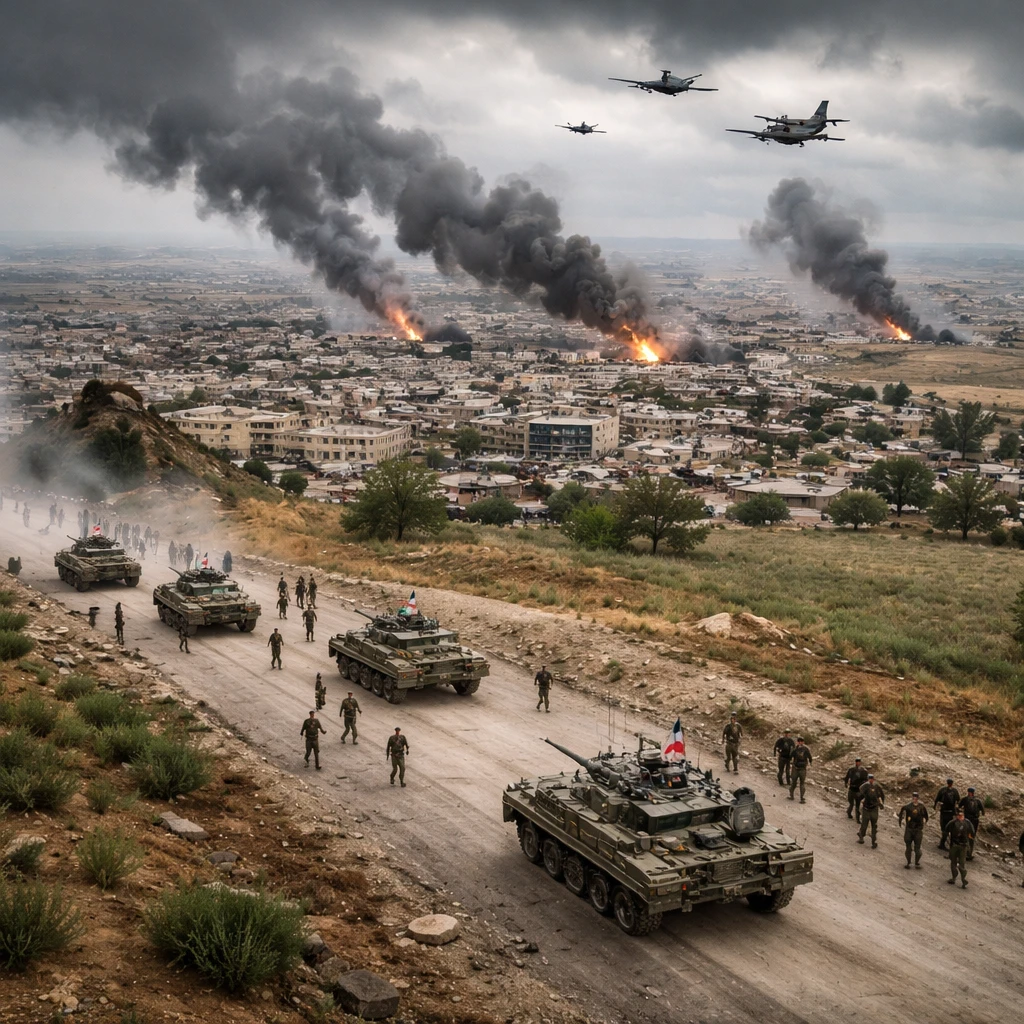
In January, the Syrian government's rapid reclamation of areas long dominated by the Kurdish-led Syrian Democratic Forces (SDF) was the result of a series of covert high-level discussions spanning Damascus, Paris, and Iraq. According to nine confidential sources familiar with these closed-door meetings, the United States did not obstruct this operation, which has significantly transformed the power equilibrium in Syria at the expense of a former ally.
The culmination of these talks facilitated Syrian President Ahmed al-Sharaa’s dual objectives: to fulfill his pledge of unifying Syria under a single leadership and to emerge as the U.S. administration’s preferred Syrian partner under President Donald Trump. Sharaa's offensive dismantled the autonomous Kurdish enclave that the SDF had long sought to preserve in Syria’s northeast. This move also tested the limits of Washington's support for Sharaa, whose background includes past leadership of a local al Qaeda affiliate.
A U.S. source briefed on Washington’s Syria policy remarked, "It seems Sharaa is a master strategist," acknowledging Sharaa's adept maneuvering in this complex political landscape.
U.S. Support and Strategic Negotiations
Since 2015, the U.S. has supported the SDF, initially established to expel the Islamic State (IS) from Syria’s northeast. Subsequently, the SDF developed an autonomous region with distinct civilian and military institutions. However, in late 2024, following the ouster of long-time ruler Bashar al-Assad, Sharaa’s forces committed to bringing all Syrian territories, including those held by the SDF, under his government’s control.
Despite a year-end 2025 deadline for SDF integration into Damascus’s framework, progress stalled after months of dialogue. Momentum for a military offensive thus gained strength. On January 4, a Syrian delegation abruptly terminated a Damascus meeting on integration with the SDF, according to three Kurdish officials.
Subsequently, Syrian representatives traveled to Paris on January 5 for U.S.-brokered discussions with Israeli officials to negotiate a security agreement. Syrian authorities accused Israel of supporting the SDF and pressed Israeli counterparts to discourage Kurdish delays in the integration process, as relayed by two Syrian sources privy to the meeting.
During these talks, Syrian officials proposed a limited military operation to reclaim select SDF-held areas and noted receiving no objections, as detailed by another Syrian source. Attempts to reach officials from Syria's information and foreign ministries, as well as the Israeli prime minister’s office, for comment about the Paris discussions were unsuccessful. The U.S. State Department referenced a statement by envoy Tom Barrack advocating for SDF integration and reiterating no intention to maintain a longstanding military presence in Syria.
Turkey also communicated to the Syrian government, indicating U.S. approval for an operation targeting the SDF conditional upon the protection of Kurdish civilians. Turkey has repeatedly conducted interventions against the SDF, citing its alleged connections with the outlawed Kurdistan Workers’ Party, which has fought an insurgency in Turkey.
As Kurdish political official Hadiya Youssef stated, "The agreement in Paris gave the green light for this war." This sentiment underscores the significance of the international arrangements that preceded the offensive.
Shifting U.S. Stance and Kurdish Discontent
The offensive began within two weeks of the Paris talks, coinciding with U.S. signals that it was withdrawing its long-standing backing of the SDF, as revealed by a U.S. diplomat, a Syrian source, and a Syrian interlocutor. On January 17, Barrack met with SDF commander Mazloum Abdi in the Kurdistan region of Iraq, reportedly informing him that U.S. interests now favored Sharaa over the SDF; this was denied by an SDF official.
Nevertheless, U.S. military and Kurdish officials acknowledged that the U.S. assured protection for the SDF’s civilians and IS detainee facilities if impacted during Sharaa’s campaign. When Syrian forces pushed beyond their initially proposed operational boundaries, the U.S. military urged restraint while coalition aircraft deployed warning flares over critical areas. These responses, however, fell short of Kurdish expectations.
Youssef condemned the coalition's approach, lamenting, "What the coalition forces and American officials are doing is not acceptable. Are you truly lacking in principles? Are you so willing to betray your allies?" The U.S. State Department referred inquiries to Barrack’s remarks advocating for SDF integration.
Ceasefire and Evolving Dynamics
As Syrian troops regained Arab-majority provinces previously controlled by the SDF and continued their advance, by January 19, they surrounded the last Kurdish-held cities in northeastern Syria despite a ceasefire declared the day before. The U.S. administration, displeased with the disregard of the truce and concerned about potential mass violence against Kurdish civilians, expressed serious apprehension.
Two U.S. sources noted that American lawmakers were contemplating reinstating sanctions on Syria should hostilities persist. A White House official conveyed grave concern over the situation, urging all parties to prioritize civilian protection across ethnic minorities.
Facing encirclement of Kurdish strongholds, Sharaa unexpectedly declared a new ceasefire and conditioned further military action on the SDF submitting an integration plan by week’s end. U.S. sources indicated this announcement appeased Washington, effectively reopening Sharaa’s path forward.
Shortly thereafter, Barrack issued a statement observing that the original purpose of the SDF, combatting IS, had "largely expired," and that Kurdish prospects were best served under Sharaa's governance.