
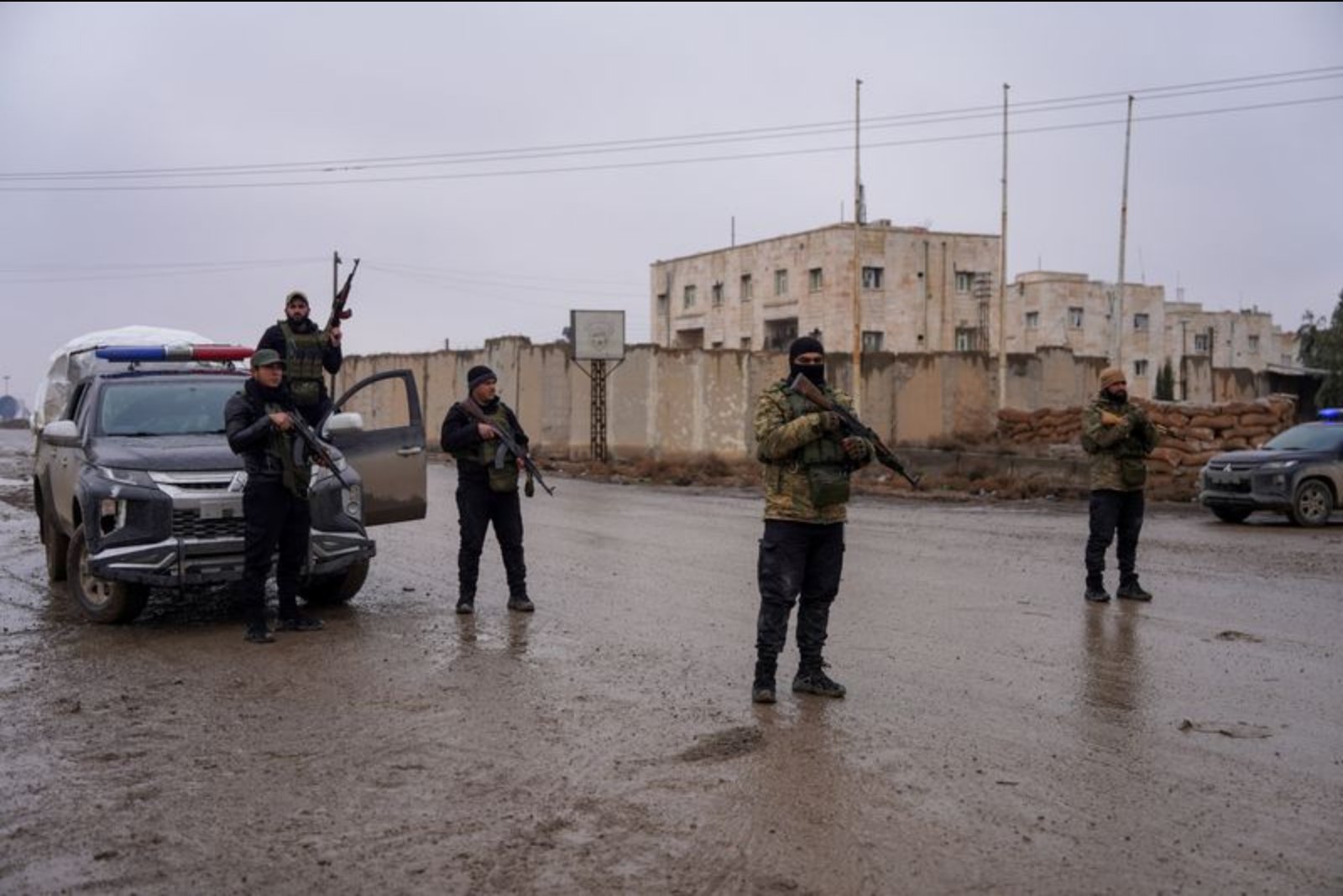
Forces loyal to Syria's central government and Kurdish-led units stood arrayed across opposing front lines in northern Syria on Saturday as an evening deadline neared that could determine whether hostilities resume or a ceasefire holds. Neighbouring Turkey and some Syrian officials said late on Friday that the deadline might be pushed back.
In the two weeks prior, government troops seized extensive stretches of territory in the north and east from the Syrian Democratic Forces, a Kurdish-led grouping. Those gains have bolstered President Ahmed al-Sharaa's authority after a rapid series of advances.
Earlier in the week, Sharaa's forces closed in on a remaining cluster of Kurdish-held cities in the northeast. He then announced an immediate ceasefire and gave the SDF until Saturday night to present a plan for integrating with the national army.
As the deadline loomed, Kurdish security sources reported that SDF units strengthened their defensive positions in Qamishli, Hasakeh and Kobane in preparation for potential renewed combat. Both Syrian officials and SDF sources told Reuters that the Saturday night deadline was likely to be extended for several days, and possibly up to a week.
"Extending the ceasefire for a little longer may come onto the agenda," said Hakan Fidan, Turkey's foreign minister. Turkey is a principal external supporter of Sharaa's government and views the SDF as linked to the outlawed Kurdistan Workers Party, or PKK.
Analysts and participants describe the standoff as the culmination of rising tensions over the past year. Sharaa, whose forces ousted longtime leader Bashar al-Assad in late 2024, has publicly committed to reasserting state control across all of Syria - including territory held by the SDF in the northeast.
For their part, Kurdish authorities who have administered autonomous civilian and military institutions in the northeast for roughly a decade have resisted integrating with Sharaa's Islamist-led government. Following a year-end deadline for a merger that produced little progress, government forces launched an offensive during the current month.
The government's campaign captured two key Arab-majority provinces from the SDF. Those gains brought strategic assets under state control, including major oil fields, hydroelectric dams, and some detention facilities holding Islamic State fighters and affiliated civilians.
Diplomatic efforts have been underway to avoid a return to widespread fighting. The United States has been pursuing shuttle diplomacy to secure a lasting ceasefire and to support an arrangement for the SDF - which was once Washington's principal partner on the ground in Syria - to be absorbed into the state under Sharaa's leadership. France has also been involved in these talks.
Senior officials from the United States and France have cautioned Sharaa against ordering his forces into the remaining Kurdish-held areas, according to diplomatic sources. They have expressed concern that renewed combat could result in mass abuses against Kurdish civilians.
Reports of sectarian violence during the previous year underscore those concerns. Government-affiliated forces killed nearly 1,500 people from the Alawite minority and hundreds of Druze people in sectarian attacks last year, including killings carried out in execution-style.
Meanwhile, the U.S. military has been moving hundreds of detained Islamic State fighters from prisons in northeastern Syria across the border into Iraq. That transfer has raised political and logistical questions for Baghdad.
Iraq's Foreign Minister Fuad Hussein told the EU's foreign policy chief, Kaja Kallas, in a phone call on Saturday that Baghdad should not bear the "security and financial burdens" of the transfer of Islamic State prisoners alone, the Iraqi foreign ministry said in a statement.
Turkey's Hakan Fidan, speaking on broadcaster NTV late on Friday, pointed to these transfers as a factor that could justify extending the Saturday deadline. The movement of detainees into Iraq and concerns about the security implications have added another layer to the negotiations over the SDF's fate and the wider ceasefire talks.
The situation remains fluid. With forces in close proximity along contested front lines, the immediate outcome hinges on whether negotiators agree to prolong the ceasefire and on any plan the SDF proposes for integration with the Syrian armed forces. Officials on multiple sides have signalled an openness to extending the deadline, but the durability of any pause in fighting is uncertain.