
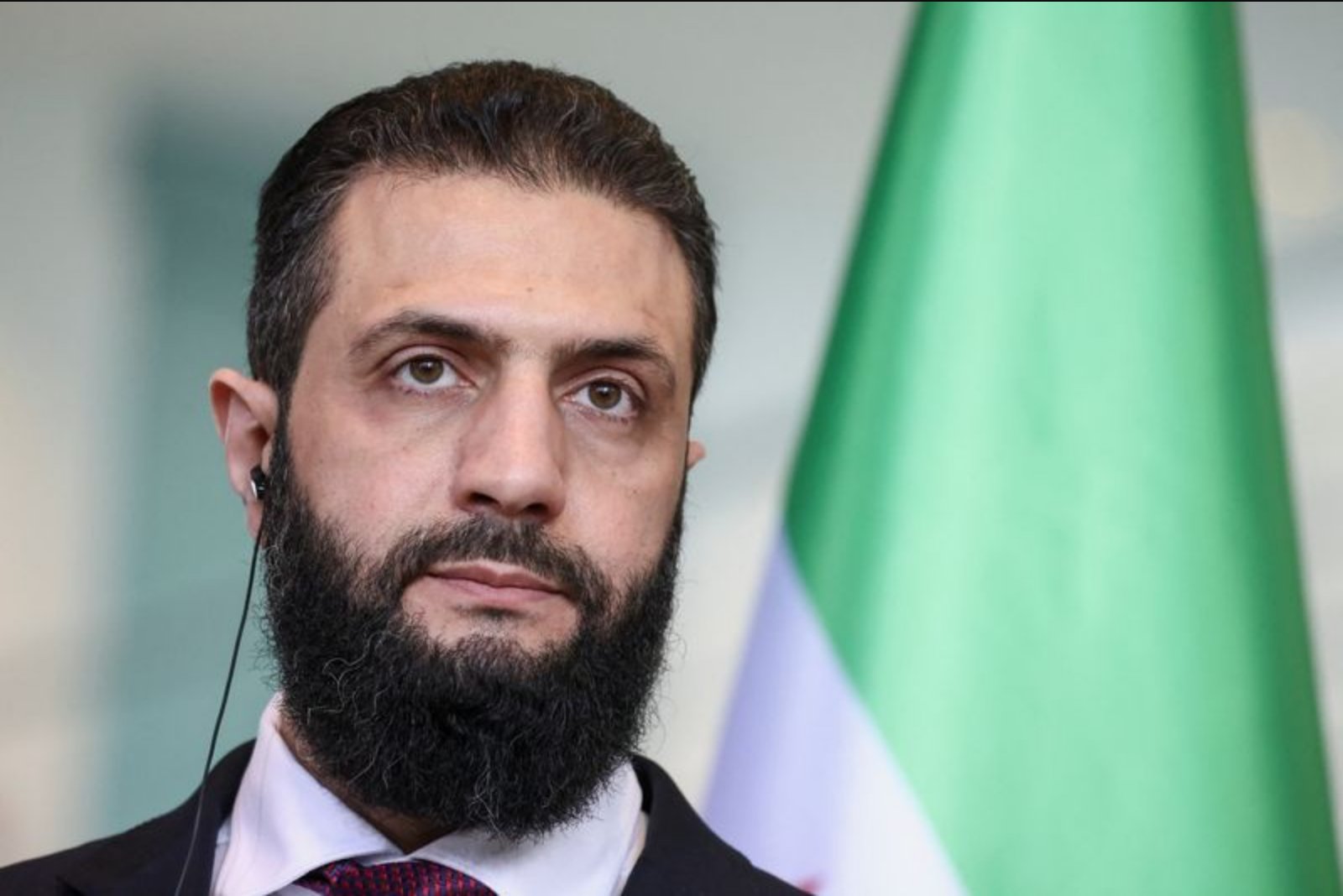
Syria will not enter the U.S.-Israeli war with Iran unless it is itself the target of aggression and has no diplomatic recourse, Syrian President Ahmed al-Sharaa said on Tuesday at an event hosted by Chatham House in London.
“Unless Syria is targeted by any party, Syria will remain outside any conflict,” he said, stressing a desire to keep the country off the list of active battlefields. He added: “We do not want Syria to be an arena of war. But unfortunately, today, things are not governed by wise minds. The situation is volatile and random.”
The conflict, now a month in duration, has extended across the region. The spread of hostilities has killed thousands, disrupted energy supplies and raised concerns it could push the global economy into a severe downturn.
Asked whether Syria would maintain neutrality while the fighting continues, al-Sharaa outlined ambitions for broader regional and international ties. “We want Syria to have ideal relationships with the entire region, with Lebanon, Iraq, Turkey, Saudi Arabia, and world powers like the UK, France, Germany and the U.S. I think that Syria is qualified to start a strategic relationship network,” he said.
Despite the stated preference to stay on the sidelines, the Syrian government has taken defensive measures. Earlier this month, Damascus deployed thousands of troops to its western border with Lebanon and to its eastern border with Iraq. Syria’s defense ministry described the moves as efforts to “protect and control the borders amid the escalating regional conflict.”
Regional dynamics have already drawn in neighbouring states and non-state actors. Lebanon has seen fighting involving the armed group Hezbollah and Israeli ground forces, while Iraq has experienced drone and rocket strikes launched by Iran-aligned factions.
Reflecting on his country’s recent history, al-Sharaa emphasized that Syria is not prepared for renewed widespread conflict. “We had enough war. We paid a large bill. We are not ready for another war experience,” he said.
His statements underscore a stance of conditional non-participation: Syria seeks to avoid entering the conflict but has positioned forces and warned that direct targeting could change its posture. The humanitarian and economic consequences of the wider regional escalation - particularly damage to energy supplies and risks to the global economy - remain central concerns cited during the discussion.
Context note: The comments were made at Chatham House in London during a panel and were limited to the details provided by the Syrian president at the event.