
Legislators in multiple Democratic-led states are pressing proposals aimed at letting residents sue federal immigration agents in state courts for alleged civil rights violations. The effort, gaining momentum amid public outcry over enforcement tactics used by U.S. Immigration and Customs Enforcement, or ICE, has produced a landmark state law in Illinois and similar measures under consideration in California, New York, Virginia, Maryland and Connecticut.
Supporters of the bills say they would close an accountability gap in the U.S. legal framework by allowing people harmed by federal agents to pursue monetary damages and other remedies in state court. Opponents - including the federal government - maintain the measures conflict with constitutional principles that protect federal authority.
Recent events and legislative response
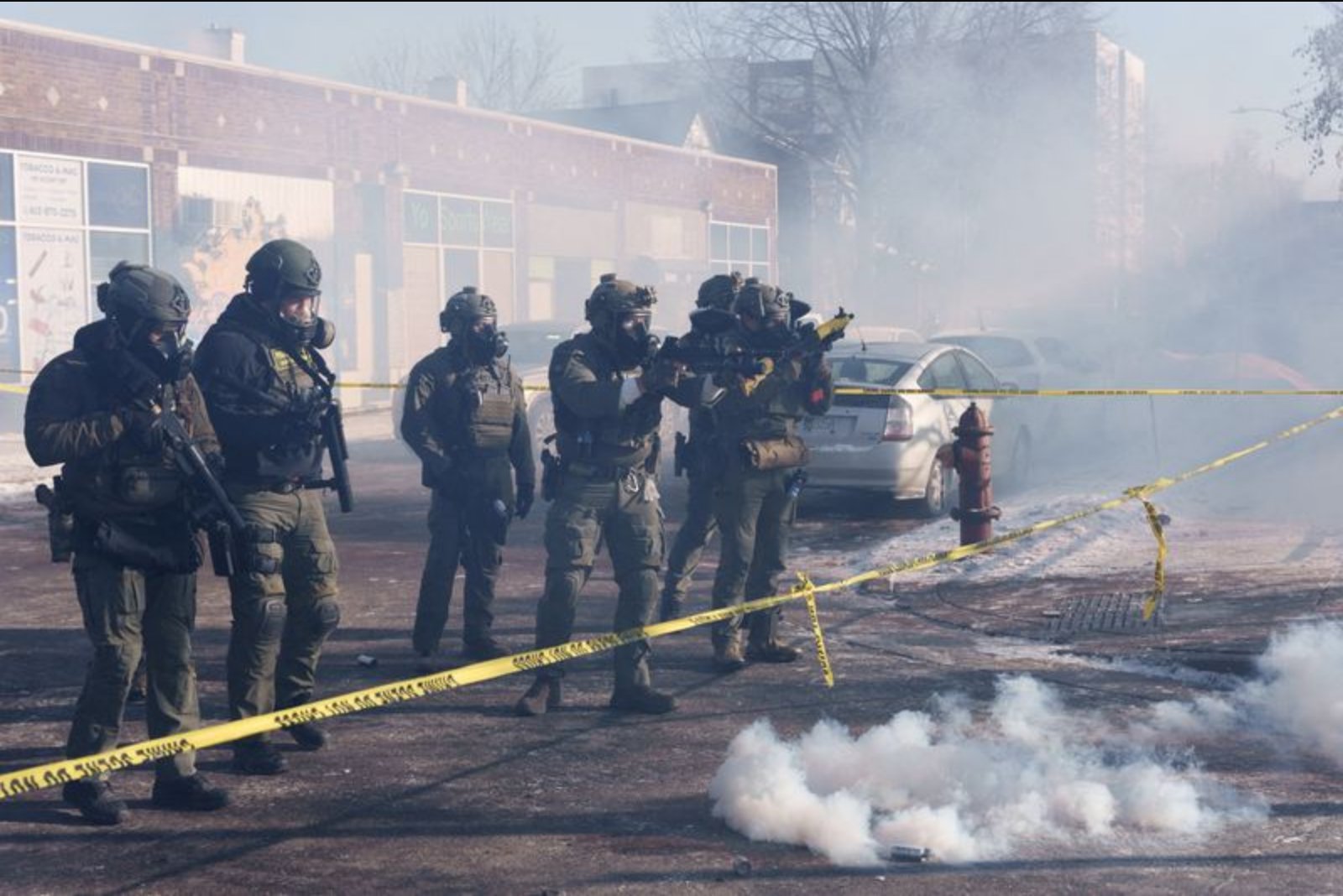
The legislative push intensified following highly publicized enforcement deployments in Minneapolis and elsewhere, where ICE tactics and two killings this month - of Renee Good and Alex Pretti - have focused new attention on whether existing legal tools adequately allow people to seek redress for alleged abuses by federal officers.
New York Governor Kathy Hochul said in a January 13 speech she would "move to allow New Yorkers to hold ICE agents accountable in court when they act outside the scope of their duties." Proposals along those lines are now before state legislatures across several jurisdictions where Democratic lawmakers control the agenda.
What Illinois did and the federal response
Illinois became the first state last month to adopt a law permitting civil lawsuits in state courts against federal agents who knowingly violate constitutional rights while carrying out U.S. immigration law. Under the statute, plaintiffs who claim they were unlawfully searched or detained by ICE officers could bring claims in state court and seek monetary compensation, including punitive damages.
The U.S. Department of Justice promptly filed a lawsuit seeking to block the Illinois law. In its challenge, the Justice Department argues that allowing state-court civil suits against federal agents conflicts with the Constitution's Supremacy Clause, which establishes that federal law takes precedence over conflicting state law. The federal government has also indicated it will challenge similar measures enacted elsewhere.
Federal and state officials trade accusations
Tricia McLaughlin, a Department of Homeland Security spokesperson, criticized Governor Hochul's remarks in a statement, saying Hochul "continues to smear law enforcement who are simply enforcing the rule of law and are putting their lives on the line." McLaughlin added, "DHS law enforcement officers follow the law and the U.S. Constitution."
McLaughlin also described threats she said have been made against DHS personnel and said that despite these "our law enforcement show incredible restraint and professionalism in exhausting all options before any kind of non-lethal force is used."
Legal landscape and comparative statutes
The state measures seek to create a path for civil liability in state court that is analogous in part to existing federal law used to hold state and local officials accountable. Congress passed a civil rights statute in 1871, commonly known as Section 1983, which permits lawsuits in federal court against state and local government officials - including police officers - who violate constitutional rights. That law has been a principal mechanism for victims of state and local misconduct to seek remedies.
By contrast, Congress has not enacted a parallel statute that allows civil suits in federal court against individual federal agents, such as ICE officers, accused of constitutional violations. Previous Democratic efforts to establish such federal remedies have been blocked by Republican opposition, leaving a gap that advocates for the state measures say these bills would address.
Another existing federal statute, the Federal Tort Claims Act of 1946, permits people to seek compensation from the U.S. government for negligent or wrongful acts by federal employees. However, that law does not allow plaintiffs to name federal employees as individual defendants in lawsuits and requires claimants to navigate an administrative process before pursuing judicial relief.
A law firm representing the family of Renee Good said it is exploring whether to bring a claim under the Federal Tort Claims Act but cautioned that the statute imposes what it called "byzantine, time-consuming processes."
Views from civil rights attorneys and scholars
Practitioners and legal scholars are divided over the constitutionality and potential impact of state-level liability for federal agents. Anya Bidwell, an Arlington, Virginia-based civil rights attorney who brings claims against law enforcement, described the state proposals as "a potential sea change" in the American legal system. Bidwell represents a California man who is a U.S. citizen and Army veteran and who contends he was brutalized by ICE agents during an immigration raid.
Two constitutional law scholars, Vikram Amar of the University of California, Davis and Jason Mazzone of the University of Illinois at Urbana-Champaign, called the Illinois law "innovative" but "imperfect" in a recent essay. They said some parts of the statute, including the punitive damages provision, are likely to be unconstitutional under the Supremacy Clause and other legal doctrines. Nonetheless, Amar and Mazzone, along with some other experts, have expressed support for the central idea that states should create civil liability where federal agents violate the Constitution.
Lauren Bonds, director of the National Police Accountability Project advocacy group, said the Supremacy Clause "only prevents states from imposing new legal obligations and restrictions on federal officers." Her remarks reflect a view that carefully designed state laws could avoid creating new duties while still enabling civil claims for constitutional violations.
Potential legal pathway to the nation's highest court
Legal observers say the Justice Department's suit challenging the Illinois law could ultimately be decided by the U.S. Supreme Court. Bidwell warned that the federal government's action against Illinois could set the stage for a protracted national legal fight over whether states can permit private suits against federal officers for constitutional violations.
California's proposal and legislative progress
In California, a proposed measure nicknamed the No Kings Act - referencing the anti-Trump protest movement of the same name - cleared a state Senate committee this month by an 11-2 vote. The bill still must be taken up by the full Senate, approved by the Assembly and signed by Democratic Governor Gavin Newsom to become law. Supporters say the California proposal, which draws on the structure of Section 1983, may be better positioned to survive legal challenges because it resembles an existing federal model and thus would not require courts to invent new doctrinal frameworks.
Bidwell said the California bill's resemblance to Section 1983 makes it "more likely to withstand a legal challenge," adding, "The courts would not need to reinvent the wheel."
Outlook and unresolved questions
At present, the measures in multiple states remain at varying stages of the legislative process. If more states pass similar laws, advocates say they could create new avenues for both citizens and non-citizens to seek monetary relief from individual federal officers accused of violating constitutional rights such as freedom of speech, due process and the prohibition against unreasonable searches and seizures.
Opponents counter that state-level causes of action targeting federal agents raise constitutional issues under the Supremacy Clause and could prompt aggressive federal litigation challenging state authority. The competing legal theories and the Justice Department's active challenge to Illinois ensure the debate will continue in courts and legislatures in the months ahead.
Note on terminology
ICE is an agency within the Department of Homeland Security. The legal debate centers on whether states may provide private civil remedies in their own courts against officers of that federal agency when plaintiffs allege the officers knowingly violated constitutional protections while enforcing federal immigration laws.