
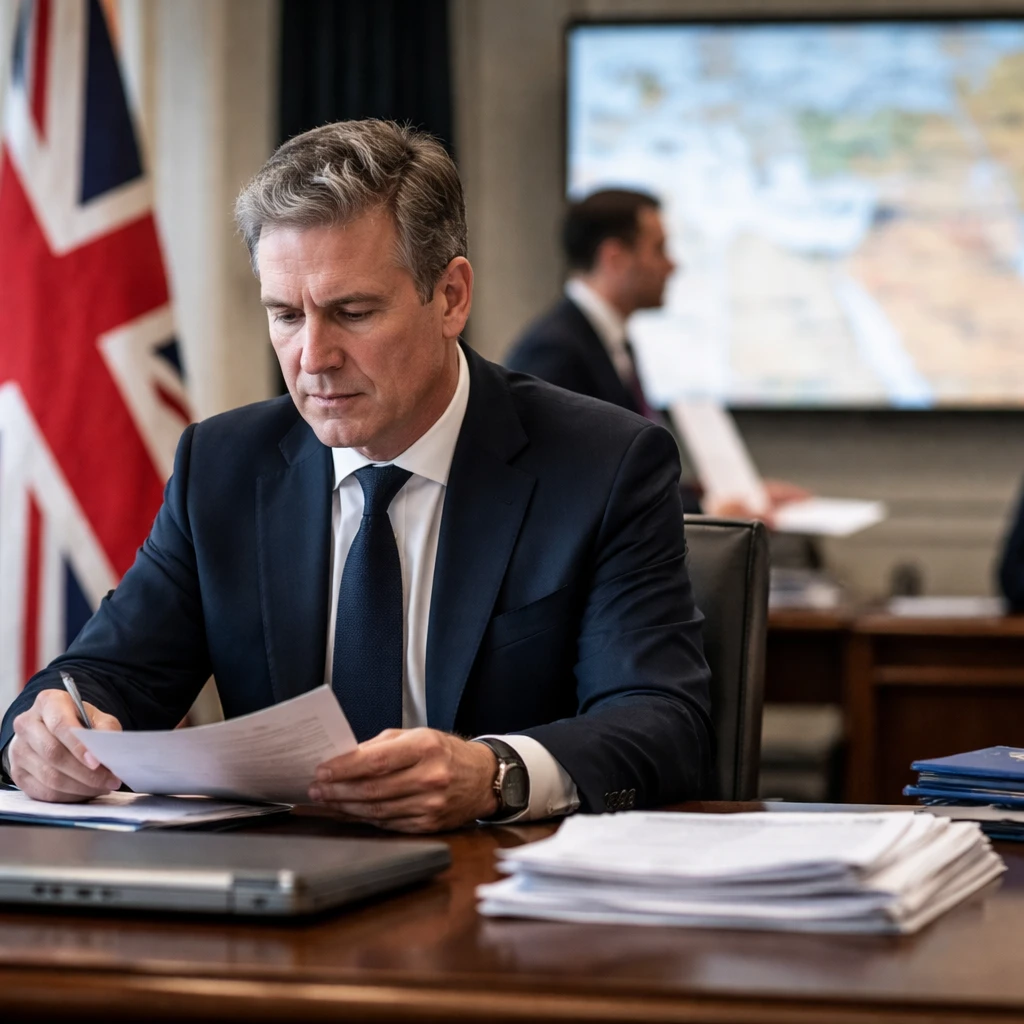
British Prime Minister Keir Starmer said on Monday that his administration is engaged in consultations with international partners to identify ways to reduce the economic strain on households and businesses arising from the crisis involving Iran.
Starmer cautioned that the longer the conflict persists, the greater the likelihood of economic consequences. He framed the work as a combination of ongoing risk assessment and collaborative planning designed to limit harm to people and companies.
The Prime Minister said the UK and the United States are working together every day to monitor the situation and evaluate associated risks. He noted that ministers and officials are assessing the evolving picture to stay ahead of potential shocks to the economy.
According to Starmer, the government has already implemented measures over the past 18 months aimed at strengthening economic resilience. Building on those steps, officials are now engaging with international partners to explore further actions that might mitigate the economic effects of the crisis.
Starmer also pointed to coordination at the domestic level on energy-related exposures. He said Finance Minister Racheal Reeves is in daily discussions with the Bank of England to anticipate and respond to energy price risks that could affect consumers and firms.
The Prime Minister presented the effort as a mix of bilateral cooperation with the US, international discussions with other partners, and internal coordination among UK institutions. He emphasized continuous monitoring and assessment as the situation develops.
Context and next steps
Starmer described the current phase as one in which the government is both tracking risks and seeking additional options with other governments to limit the economic fallout. Beyond earlier resilience measures, this work is intended to identify targeted responses that could be deployed if the crisis intensifies.
How these consultations translate into specific policy actions was not detailed in Starmer's statements; he focused on the existence of active talks and the priority placed on energy-related risk management between the finance ministry and the central bank.