
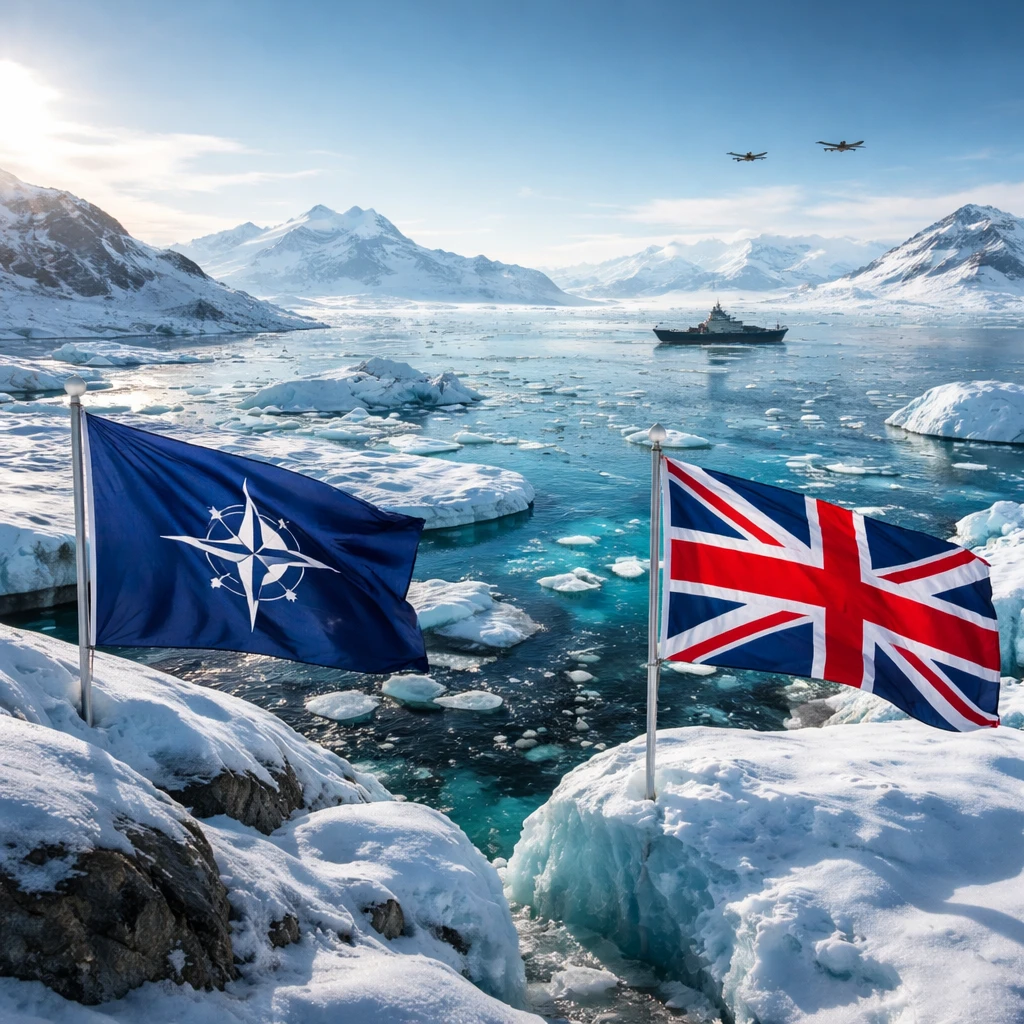
British Prime Minister Keir Starmer has expressed approval following the removal of U.S. tariff threats against the United Kingdom. The decision came after a framework agreement concerning Greenland was established with U.S. President Donald Trump. With trade tensions eased, both nations are now turning their attention toward enhancing security measures in the Arctic region, a topic increasingly prioritized by NATO.
Key Points
- The U.S. has withdrawn threatened tariffs against the UK following a Greenland agreement, improving bilateral trade relations.
- The UK Prime Minister stresses the importance of collaborative efforts to enhance security in the Arctic region.
- NATO allies, according to the Secretary General, will increase their engagement in Arctic security with expected initial results anticipated later in the year.
British Prime Minister Keir Starmer has welcomed the recent U.S. move to lift the threat of tariffs against the United Kingdom, calling the development a "good thing." The Prime Minister's comments came during a statement conveyed by his spokesperson on Thursday, signaling a positive shift in U.S.-UK relations.
The decision to rescind tariff threats followed the establishment of a preliminary agreement between the United Kingdom and the United States regarding Greenland. This framework deal was reached with U.S. President Donald Trump, who had previously shown interest in acquiring the territory, thereby resolving tensions that had sparked the tariff threat.
With trade concerns alleviated, Starmer highlighted the opportunity to focus on pressing matters related to the security of the Arctic region. He emphasized the necessity to undertake the challenging efforts required to develop a coordinated approach to Arctic security.
NATO Secretary General Mark Rutte reinforced the importance of this agreement, stating in a Reuters interview that it obliges NATO member nations to increase their involvement in Arctic security. Rutte added that the alliance expects tangible outcomes from this strengthened commitment by the end of the year.
This renewed focus on Arctic security reflects heightened geopolitical attention in the region among allied nations, sparked in part by evolving security dynamics and the strategic importance of Arctic territories and sea routes.
The agreement and subsequent shift in priorities hold implications for sectors involved in national security, defense, and Arctic resource management. Increased cooperation and commitment among NATO allies signal a collective interest in safeguarding this critical region moving forward.
Risks
- Potential challenges in achieving unified security strategies among NATO allies in the Arctic could affect defense and security sectors.
- Geopolitical uncertainty in the Arctic region remains due to competing interests, impacting sectors dependent on Arctic stability such as shipping and energy.
- The withdrawal of tariffs does not guarantee long-term trade stability between the U.S. and UK, leaving economic sectors potentially exposed to future trade disputes.