
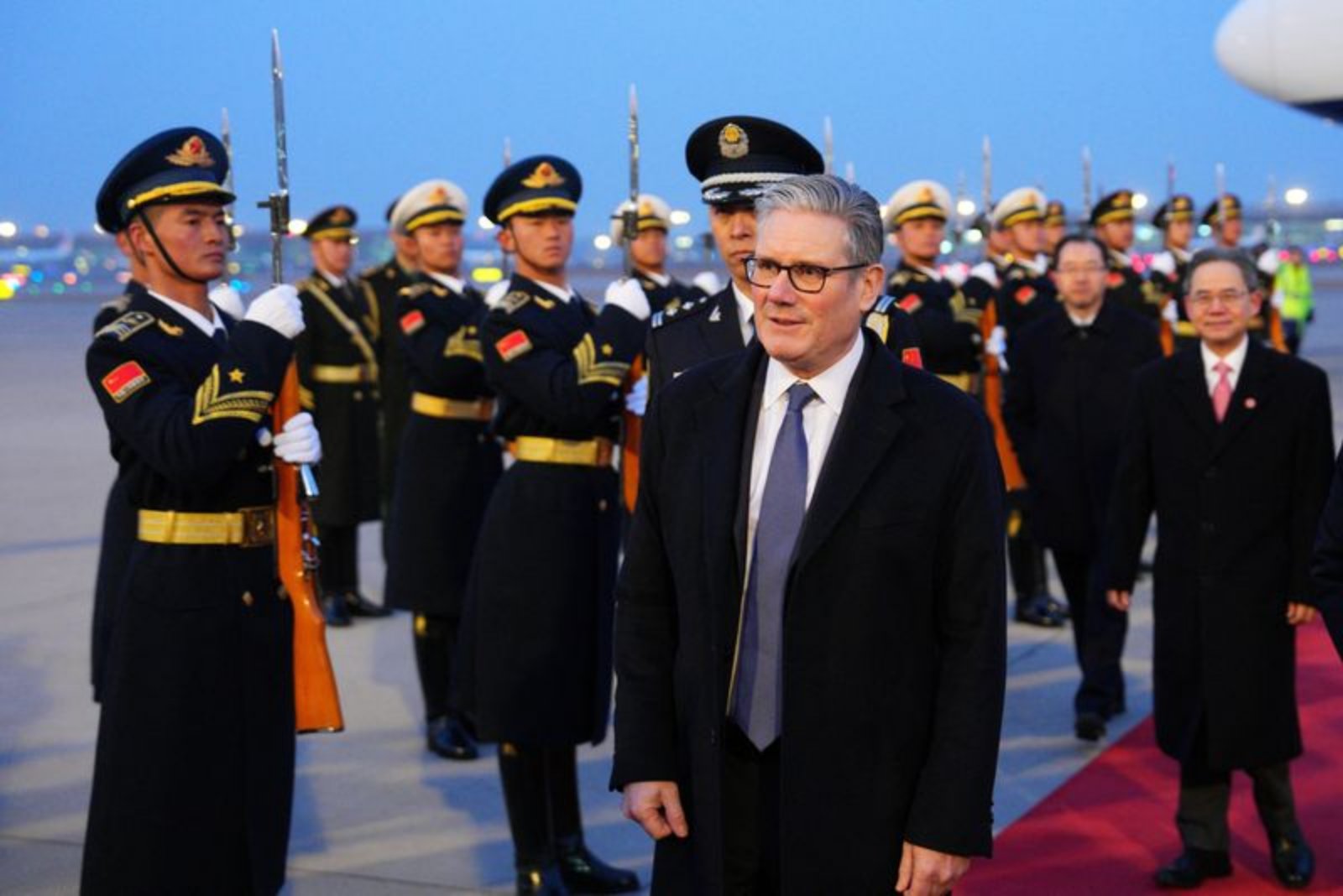
British Prime Minister Keir Starmer is scheduled to meet Chinese President Xi Jinping for a 40-minute discussion on Thursday in the Great Hall of the People, a central moment in a four-day trip aimed at deepening economic engagement between the two countries.
The meeting will be followed by a working lunch. Starmer's programme for the day also includes talks with Premier Li Qiang and Zhao Leji, who is China’s top legislator. The itinerary underlines the political heft of the visit and the emphasis London is placing on re-engaging with China at the highest levels.
Starmer, whose centre-left Labour government has confronted difficulties in delivering on pledges to spur stronger economic growth at home, has identified improving relations with China as a priority in the belief that closer ties can create business opportunities for the UK. The visit is the first by a British prime minister to China since 2018.
On arrival hours earlier, Starmer spoke to a group of business leaders accompanying him and framed the trip in terms of advancing a more "mature" relationship with the world's second-biggest economy. His delegation includes more than 50 business executives, signalling that the trip’s primary objective is economic engagement rather than diplomatic ritual alone.
Downing Street said that one concrete outcome to be announced by Starmer and Xi will be a collaborative effort to tackle organised crime networks that traffic migrants. The agreement is to focus on reducing the use of Chinese-made engines for small boats that have been used to transport people across Europe to claim asylum. As part of the arrangement, British and Chinese officials will share intelligence to identify smugglers’ supply routes and will engage with Chinese manufacturers to prevent legitimate businesses from being exploited by organised crime.
When questioned on the flight to China about whether he would raise human rights issues, Starmer said he would "raise the issues that need to be raised" with Xi. He was asked specifically if he would bring up the case of Jimmy Lai, the former Hong Kong media tycoon and British citizen who was convicted in December of national security crimes; Starmer indicated his intent to address human rights concerns during the talks.
Observers have noted a broader pattern of Western capitals pursuing renewed engagement with Beijing. The UK visit follows a recent trip by Canadian Prime Minister Mark Carney, who is reported to have signed an economic accord with Beijing aimed at removing trade barriers - a move that has prompted criticism from the United States. Analysts say these diplomatic moves reflect a hedging strategy in response to perceived unpredictability from the United States under President Donald Trump, including recent remarks from Trump that have created tensions, such as threats to take control of Greenland.
Kerry Brown, professor of Chinese studies at King’s College London, said he expects a number of commercial announcements to be made as part of the visit to demonstrate a tangible improvement in bilateral ties. "This must look like it's been a success," he said, adding that both sides will likely avoid using the summit to rehearse disagreements.
While the agenda places clear emphasis on trade and business development, Starmer also acknowledged domestic political priorities, telling the business delegation that his actions in China are aimed at delivering benefits for people back home. The mix of high-level meetings, business accompaniment, and targeted security cooperation paints the picture of a trip intended to combine diplomatic optics with concrete economic and enforcement outcomes.
Key context points
- Starmer meets Xi for a 40-minute session and lunch at the Great Hall of the People during a four-day visit to China.
- The UK delegation includes more than 50 business leaders, reflecting a strong focus on economic opportunities and deals.
- Agreements expected to be announced include cooperation on disrupting migrant trafficking networks, with intelligence sharing and engagement with Chinese manufacturers to curb misuse of boat engines.
Sectors likely to be affected: trade, manufacturing, maritime transport, and law enforcement cooperation.
Risks and uncertainties
- Diplomatic friction with the United States - Tensions arising from recent remarks by President Donald Trump, including threats regarding Greenland, have contributed to unpredictability in US foreign policy that may complicate Western coordination.
- Domestic political constraints - Past UK governments tightened restrictions on some Chinese investment over national security concerns; such sensitivities could limit the scope of new economic deals.
- Human rights and political rights issues remain an open area - Starmer plans to raise human rights topics, including the case of Jimmy Lai, introducing potential political tension into otherwise economic-focused discussions.
As the day’s talks unfold, the UK aims to balance tangible outcomes for businesses with the need to address political and security concerns. The presence of senior-level interlocutors from both capitals and a sizeable private-sector delegation reflect an effort to produce visible signs of progress on multiple fronts while managing points of disagreement.