
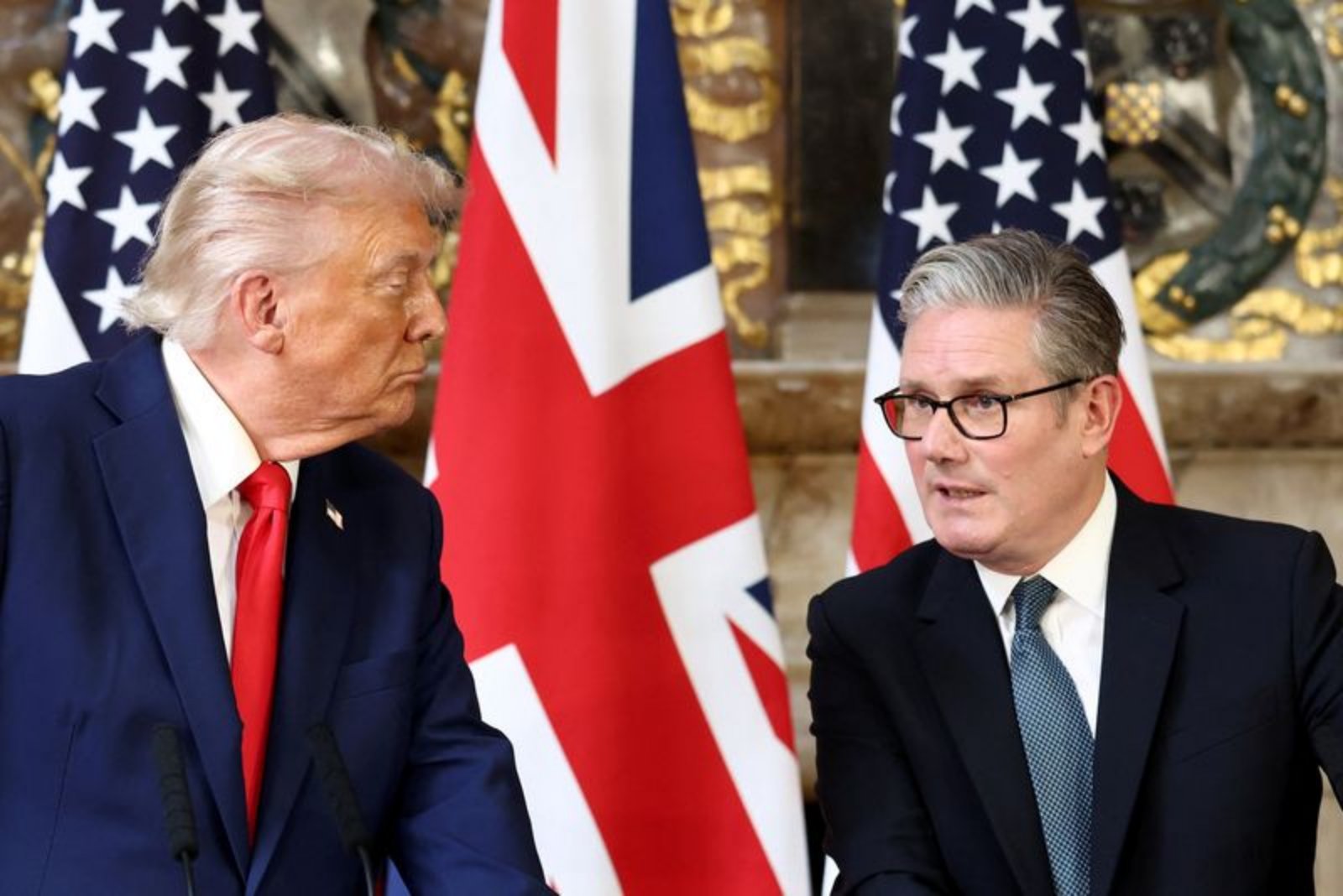
Prime Minister Keir Starmer and U.S. President Donald Trump held a telephone conversation on Sunday to discuss recent developments in the Middle East and the defence relationship between the two countries, according to a statement from Starmer's office.
The discussion, the spokeswoman said, began with an assessment of "the latest situation in the Middle East and the military cooperation between the UK and US through the use of RAF (Royal Air Force) bases in support of the collective self-defence of partners in the region."
The call took place less than 24 hours after President Trump publicly criticised the British leader over what he described as an insufficient level of support for U.S. actions related to Iran. That criticism was made in a post on Truth Social in response to reporting that Britain might send an aircraft carrier to the region; in that post President Trump wrote: "We don't need people that join Wars after we've already won!"
Starmer's office statement also said the Prime Minister "shared his heartfelt condolences with President Trump and the American people following the deaths of six U.S. soldiers." The two leaders "looked forward to speaking again soon," the spokeswoman added.
The official statement makes explicit reference to coordination tied to RAF facilities and frames the conversation around collective self-defence efforts by partners in the region. The spokeswoman's remarks confirm both the substance of the military cooperation element discussed and the exchange of condolences in light of recent U.S. military fatalities.
Details beyond the summary provided by the Prime Minister's office were not set out in the statement. It did not repeat the President's most recent social media comment, although that remark has been reported elsewhere and was made public prior to the call.
This call underscores an ongoing dialogue between the two governments on regional security matters and highlights two specific, reported elements: military cooperation involving RAF bases and the diplomatic exchange following the deaths of U.S. service members. The statement concludes with an expectation of future contact between the leaders, without specifying timing or agenda for any follow-up discussions.
Key takeaways
- The leaders discussed the regional situation in the Middle East and the use of RAF bases to support collective self-defence;
- President Trump's recent public criticism of the British leader occurred shortly before the call and referenced the possibility of British naval deployment to the region, using the line: "We don't need people that join Wars after we've already won!";
- Prime Minister Starmer conveyed condolences to President Trump and the U.S. for the deaths of six U.S. soldiers, and both leaders agreed to speak again soon.
Sectors potentially affected - defence and defence contracting, diplomatic and political relations sectors, and any markets sensitive to geopolitical developments could be attentive to such interactions and public comments.