
S&P Global Ratings has reaffirmed North Macedonia's long-term and short-term foreign and local currency sovereign credit ratings at 'BB-/B,' accompanied by a stable outlook. This decision stems from recent assessments indicating a modest acceleration in the country's economic growth and prudent fiscal policies planned for the coming years.
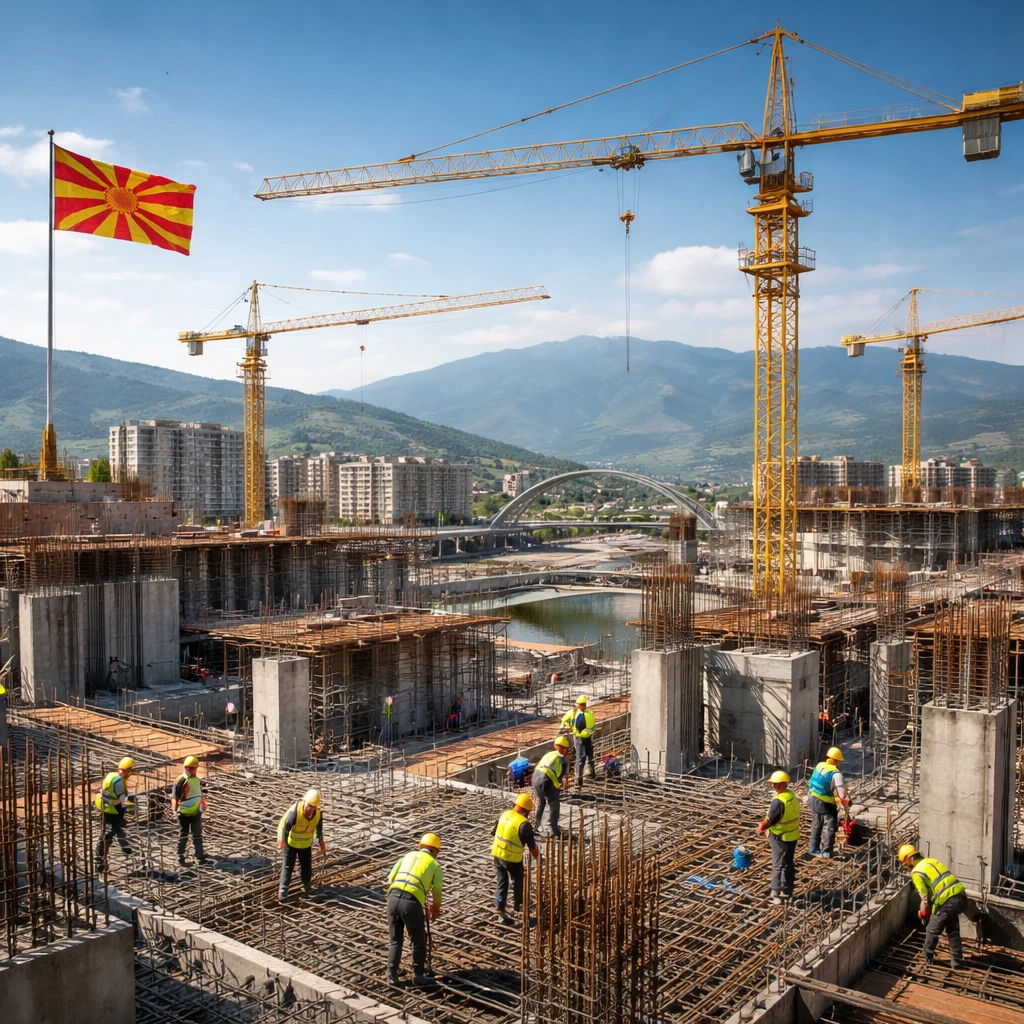
Looking ahead to 2026, S&P projects the nation's gross domestic product (GDP) growth to increase slightly to 3.5%, up from an estimated 3.4% in 2025. This marginal uptick is primarily attributed to enhanced public investments concentrated on significant infrastructure ventures, especially along Corridors VIII and Xd, which are expected to drive economic activity.
The stable rating outlook reflects a balance of factors: while there are downside risks related to slower economic expansion among North Macedonia's key trading partners, these are counterweighed by the country's moderate level of governmental debt and the relatively manageable costs associated with servicing this debt.
In fiscal policy, the government ratified the 2026 budget in December, setting an anticipated fiscal deficit target of 3.5% of GDP. This represents a slight improvement over the 4% deficit projected for 2025. The budget forecasts a 2.5% increase in total expenditures alongside a 3.4% uptick in revenues, the latter supported by expectations of stronger domestic economic performance and improved efficiencies in tax collection.
Within this framework, public-sector wages are planned to rise by 7%, and pensions are scheduled for an increase of 9.7% in 2026. These measures are designed to stimulate domestic demand. Simultaneously, capital expenditure remains a strategic priority, with allocations maintained at approximately 5% to 6% of GDP for the year.
Regarding financing, the government intends to cover its needs through a combination of domestic and international sources. Notably, a €950 million Eurobond issuance is planned for January 2026, primarily to refinance an existing €700 million Eurobond maturing that year.
S&P anticipates that the fiscal deficit will close gradually, averaging around 3.5% of GDP through 2025 to 2028. Under these projections, net general government debt is expected to rise modestly, surpassing 58% of GDP by 2029.
The current account balance is forecasted to remain in deficit, widening to about 4.1% of GDP in 2026. This is driven by reduced remittance inflows and relatively high investment-related import demands linked to ongoing infrastructure development.
Foreign direct investment (FDI) inflows had peaked in 2024 but experienced a significant decline in 2025 amid a slowdown in new greenfield projects and fluctuations in intercompany lending activities. S&P expects a gradual recovery in FDI, though levels are anticipated to stay below 2024 highs in the near term.
Inflation dynamics saw a slight rise to 4.1% year-over-year in December 2025, increasing from 4.0% in November, mainly influenced by rising energy costs. The forecast points to an easing of inflation to approximately 3.3% in 2026.
The National Bank of the Republic of North Macedonia (NBRNM) is expected to continue its cautious monetary policy approach, emphasizing price stability and maintaining the denar's peg to the euro.
Despite challenges, the banking sector remains sound, with nonperforming loans constituting a low 2.3% of total loans and a capital adequacy ratio of 19.5% recorded in the third quarter of 2025, underpinning financial stability.
On the political front, North Macedonia’s progress toward European Union accession negotiations remains stagnated due to an unresolved dispute with Bulgaria. This impasse prevents the initiation of negotiation clusters despite the completion of technical screening processes.