
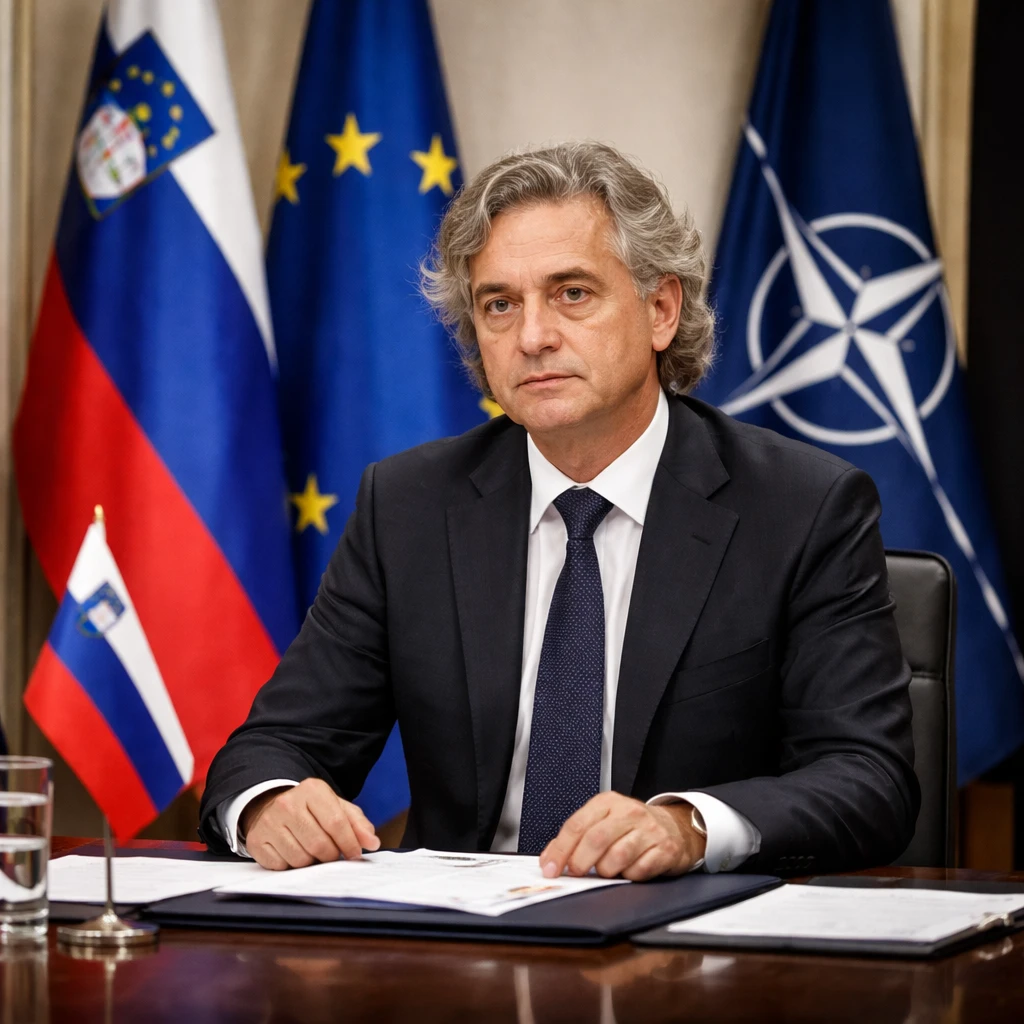
Slovenian Prime Minister Robert Golob announced his country's decision to reject an invitation from U.S. President Donald Trump to join the 'Board of Peace,' citing concerns regarding the potential impact on the international framework led by the United Nations Charter. Although Slovenia recognizes the importance of initiatives aimed at de-escalating conflict, specifically in the Middle East, it maintains that the proposed committee’s mandate is excessively expansive and risks undermining established international norms. Golob confirmed his non-attendance at the initiative's founding charter signing, opting to participate in a concurrent European Council meeting, reflecting Slovenia's commitments as an EU and NATO member.
Key Points
- Slovenian Prime Minister Robert Golob officially rejects U.S. President Donald Trump's proposal to join the 'Board of Peace'.
- Concerns center around the initiative's broad mandate potentially threatening the international system grounded in the United Nations Charter.
- Golob will not attend the initiative’s founding ceremony at the World Economic Forum, opting to attend the European Council meeting instead.
- The decision reflects Slovenia’s adherence to its roles within the EU and NATO, highlighting cautious responses from traditional U.S. allies regarding the initiative.
In a significant diplomatic development, Slovenia’s Prime Minister Robert Golob revealed on Wednesday that the country will not accept U.S. President Donald Trump’s proposal to become part of the so-called 'Board of Peace.' This new U.S.-led initiative, which would be chaired by President Trump, aims initially to resolve conflict in Gaza before expanding its focus to other war zones worldwide. Golob raised explicit concerns about the initiative's broad mandate, which he believes could jeopardize the current international order based on the United Nations Charter. Quoted by the N1 news outlet, Golob emphasized that although any efforts to promote stability in the Middle East are commendable, the invitation from the United States oversteps by risking the broader international system beyond the immediate goal of pacifying Gaza. The reaction from international partners has been mixed; some traditional allies of the United States have responded cautiously and some have outright declined participation over fears the initiative might interfere with the United Nations' essential functions. Conversely, a number of countries, including those with more complex relations with Washington, have accepted the invitation. Regarding upcoming events, Golob stated he will forgo attending the signing ceremony for the founding charter of the 'Board of Peace' at the World Economic Forum scheduled in Davos, Switzerland. Instead, he will prioritize attending the European Council meeting in Brussels. Slovenia holds membership in both the European Union and the North Atlantic Treaty Organization (NATO), reflecting its integration in multinational institutions that influence its foreign policy decisions.
Risks
- The broad scope of the 'Board of Peace' could undermine the established international order based on the UN Charter, leading to geopolitical tensions impacting diplomatic and foreign relations sectors.
- Cautious or negative responses by U.S. allies may complicate international cooperation and coordination efforts, particularly within institutions like the EU and NATO.
- Potential fragmentation of international conflict resolution efforts may risk prolonging instability in conflict regions, affecting political stability and security sectors globally.