
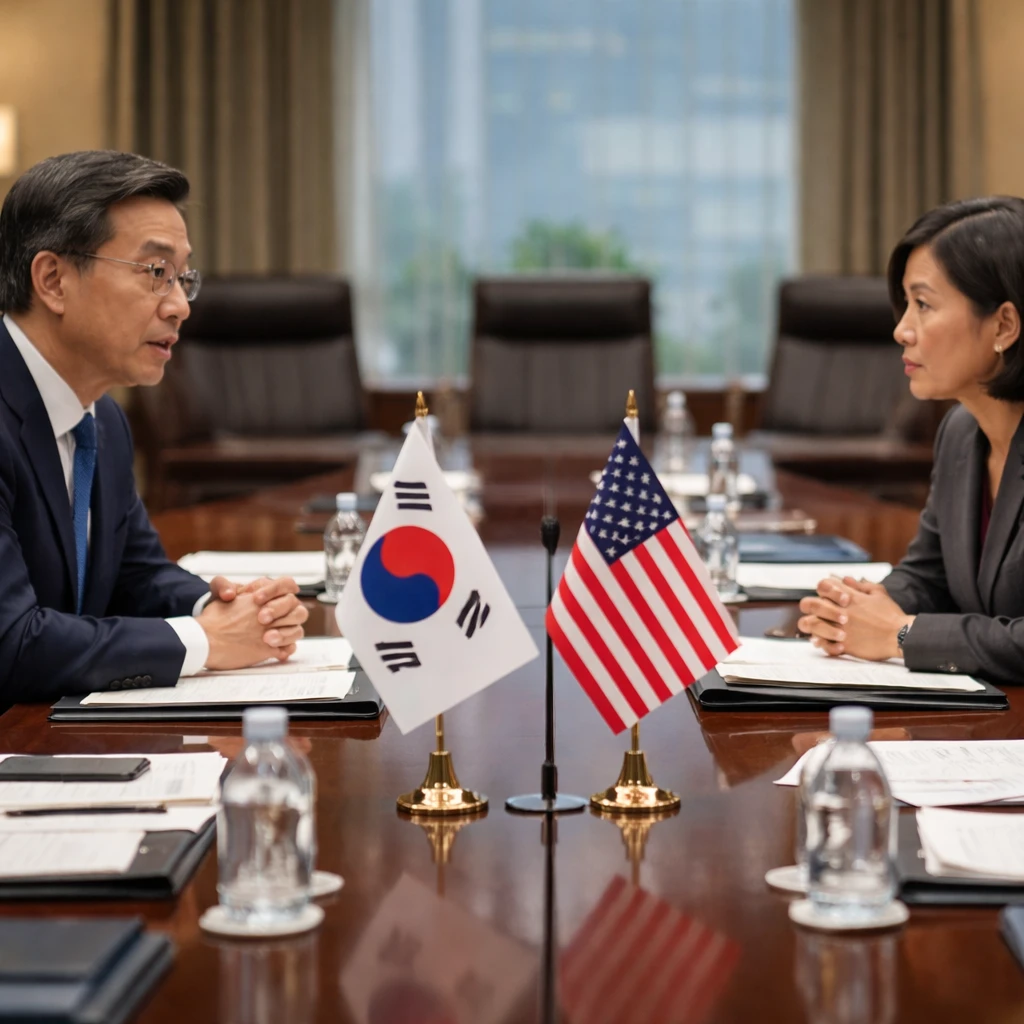
South Korea’s industry minister has called for continued dialogue with the United States over their recent trade agreement, after a series of high-level talks in Washington and public statements by U.S. officials signaling a potential rise in tariffs.
The minister, Kim Jung-kwan, spoke after concluding two days of meetings with his U.S. counterpart that ended on Friday. In a ministry statement issued on Saturday, Kim described the discussions as "an opportunity to improve each other’s understanding on a U.S. intent to raise tariffs and seek a compromise."
While noting that the talks helped clarify positions, Kim stressed that "we still need more discussion with the U.S. side." He underlined Seoul’s interest in ensuring the trade pact is implemented smoothly and said the South Korean government would coordinate with its parliament to expedite passage of a bill on U.S. investment.
According to the ministry statement, both officials concurred that planned investment projects should deliver reciprocal benefits. The meetings were prompted by recent comments from the U.S. president about tariffs: the discussions followed a Tuesday remark that the two countries would work toward a solution, which itself came a day after a separate statement in which he threatened to raise tariffs on South Korean imports, alleging Seoul had not met its obligations under the trade agreement.
The threat to increase tariffs reportedly surprised South Korean officials and set the immediate context for the Washington meetings. Participants used the sessions to seek common ground, but Kim’s comments indicate that negotiations are ongoing and that further conversations will be needed to resolve outstanding issues.
The South Korean statement emphasized cooperation on investment and a mutual interest in ensuring projects benefit both sides. Beyond that shared language, Kim’s insistence on additional talks suggests that important details remain unresolved and will require more negotiation between Seoul and Washington.
Summary
After two days of talks in Washington, South Korea’s industry minister said more discussions are needed with U.S. counterparts following U.S. statements about raising tariffs. Seoul plans to work with its parliament on legislation related to U.S. investment, and both sides agreed investment projects should be mutually beneficial.
Key points
- Two days of meetings between South Korean and U.S. trade officials concluded on Friday, followed by a Saturday ministry statement clarifying outcomes.
- Seoul intends to work with its parliament to quickly pass a bill on U.S. investment; both sides agreed investment projects should be mutually beneficial - sectors impacted include international trade, manufacturing, and foreign direct investment.
- U.S. public comments about raising tariffs prompted the talks and remain a central issue under negotiation, affecting trade-sensitive industries and export markets.
Risks and uncertainties
- Possibility of increased U.S. tariffs remains a risk, creating uncertainty for exporters and trade-exposed sectors.
- Ongoing negotiations mean outcomes are unresolved, which could affect investor and business confidence in trade and investment flows.
- Timing of parliamentary action on the U.S. investment bill is uncertain, which may delay implementation of agreements and affect investment timelines.
Disclosure