
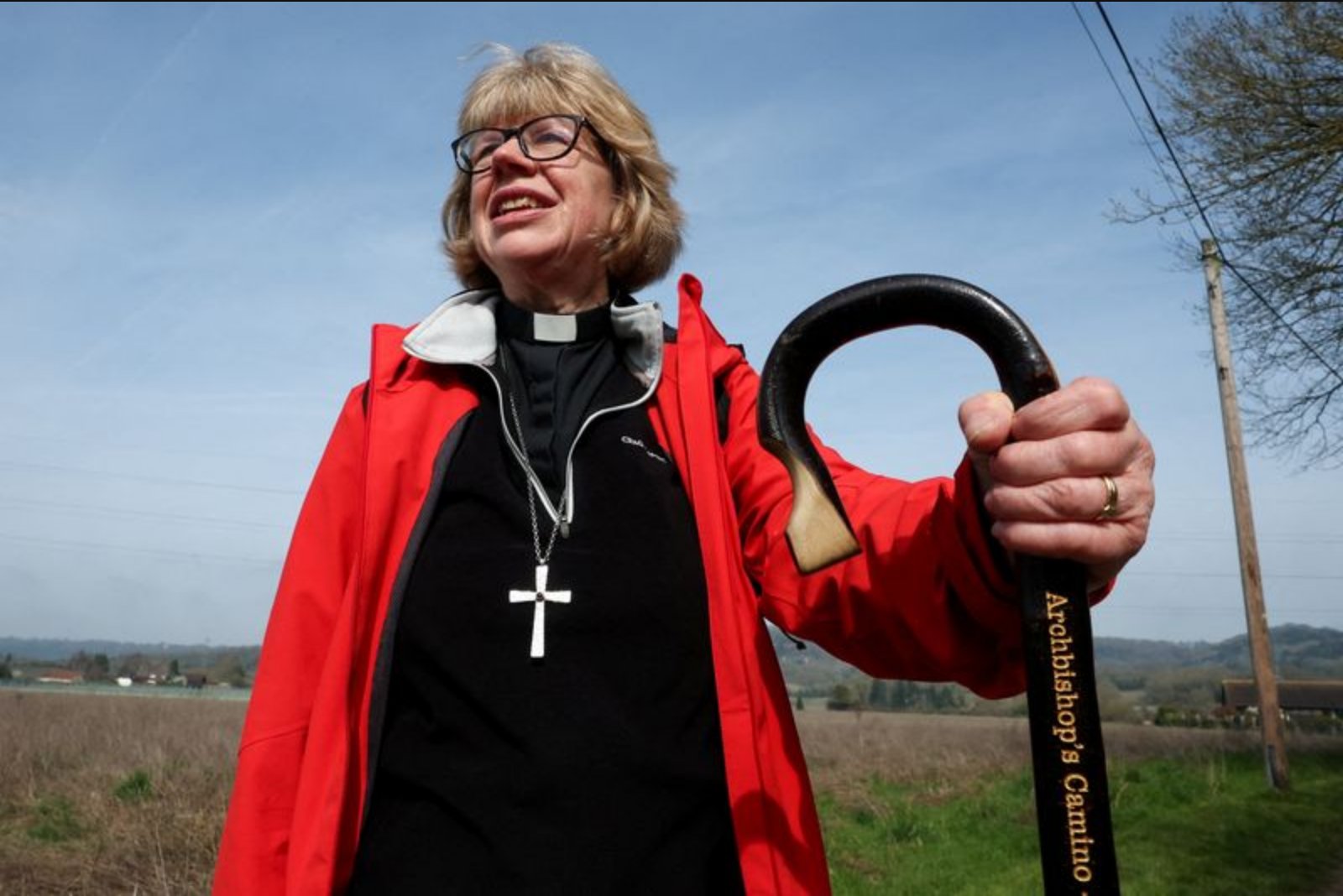
Sarah Mullally will be installed as the Church of England's first female Archbishop of Canterbury in a ceremonial service at Canterbury Cathedral on Wednesday, where she will be seated in the 13th-century Chair of St Augustine as part of the formal start to her public ministry. The role will position her as the spiritual leader of some 85 million Anglicans around the world.
The rite is expected to draw roughly 2,000 guests, among them the heir to the throne, Prince William, and his wife Kate, as well as Prime Minister Keir Starmer and representatives of other religious bodies. Mullally, who previously worked as a nurse and as a civil servant, will perform a traditional admission by knocking on the cathedral's west door, and will be vested in a mitre and a cope held by a clasp modelled on the belt she wore while in the National Health Service. Children will greet her as part of the ceremony.
"It’s a huge moment for the Church... I don’t think any of us thought we’d have a female Archbishop this quickly," Bishop Rachel Treweek, who was consecrated alongside Mullally in 2015 among the Church of England’s first women bishops, said.
The service will also include symbolic exchanges intended to underline ecumenical ties. Mullally will wear a ring that was given to a predecessor, Michael Ramsey, by Pope Paul VI in 1966 - a token cited as a sign of improving relations between Anglicans and Catholics. Prayers and readings will be offered in multiple languages, including Urdu, and African choruses will feature, emphasising the Communion's international composition. The Feast of the Annunciation, which falls on Wednesday this year, will be the major theme of the liturgy.
The archbishop's role in Anglican structures is largely symbolic and depends on persuasion rather than centralised authority. That distinction was noted in comments that framed the office as different from the papacy in Catholicism, where authority is exercised more directly.
Recent occupants of the Canterbury see have faced the challenge of navigating divisions within the global Communion over issues such as LGBTQ+ inclusion and women’s leadership. Those divisions are reflected in the friction between the Church of England - described in the article as more progressive - and more traditionalist provinces elsewhere.
One conservative grouping, known as Gafcon, which represents churches in many African and Asian countries, criticised Mullally's October appointment. However, it has since abandoned earlier plans to name a parallel figurehead to Mullally and instead established a new council. Separately, a representative body within the wider Communion also dropped a prior proposal for a rotating presidency, citing concerns that such a post might create rivalry with the Archbishop of Canterbury.
"Anyone who became Archbishop of Canterbury, there would always be issues with some parts of the wide Anglican Communion ... This isn’t new", Treweek said.
Gafcon had previously rejected the leadership of Justin Welby, Mullally's predecessor, in reaction to a Church of England decision to bless same-sex unions. Mullally herself has spoken about the need to hold together a diverse global family, saying: "We’re a family with a shared root, and with any global church there is great diversity in it."
Bishop Nicholas Baines commented on the moment ahead of the enthronement, saying: "Archbishop Sarah offers the church an opportunity to create a different and more confident conversation. She brings the right gifts and experience for such a time as this."
The ceremony will therefore aim to balance historic English Anglican ritual with broader international representation, using language, music, and symbolic items to signal both continuity and outreach. The inclusion of multilingual readings and African choruses is intended to make the service resonate beyond the national church in England, underscoring the Communion's global composition and the symbolic nature of the archbishop's remit.
As she takes the chair in Canterbury Cathedral, Mullally's enthronement will be watched both for its ceremonial significance and for how the new archbishop seeks to use a role based on moral suasion to manage differences across provinces that hold divergent theological and social positions.