
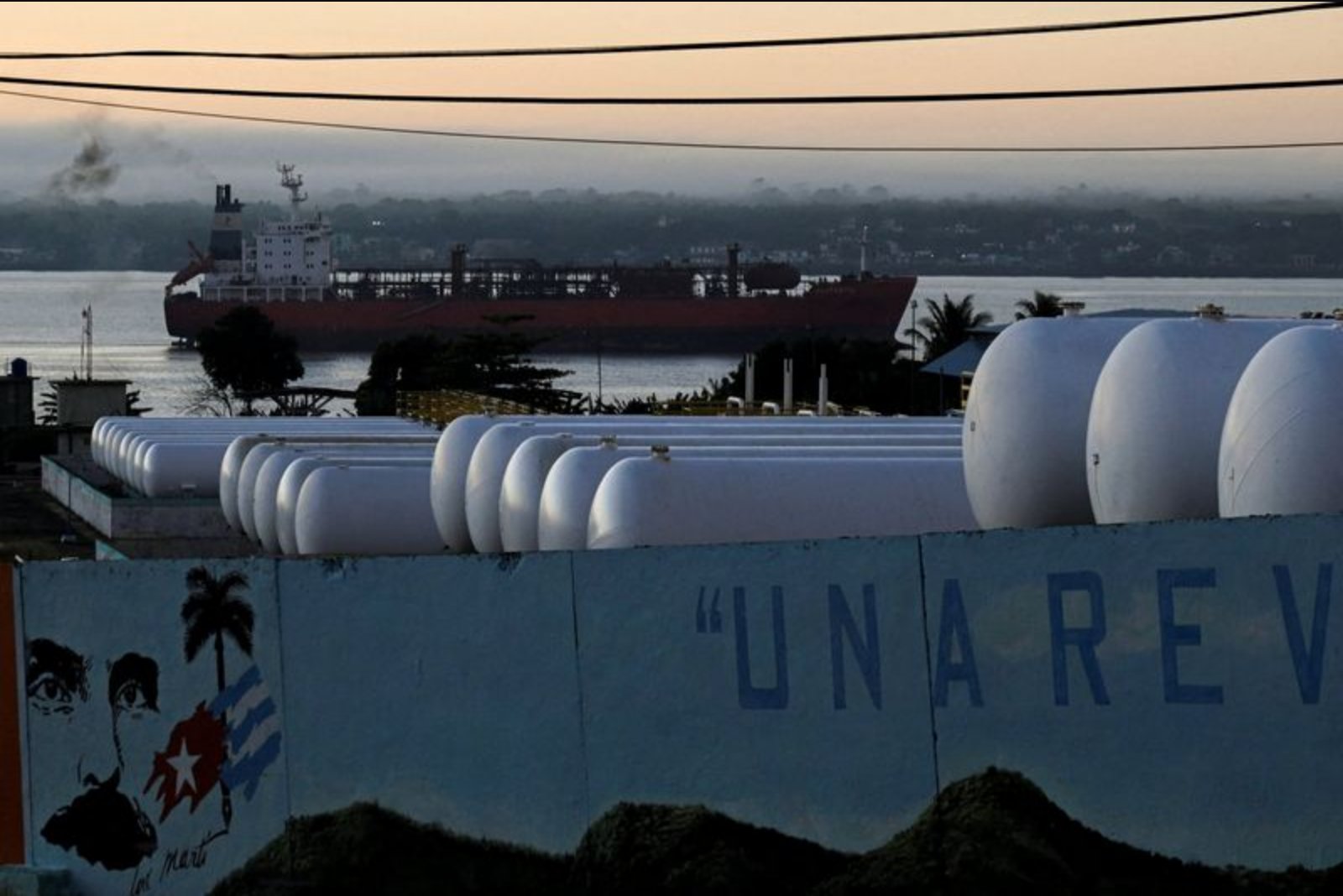
HAVANA/HOUSTON, March 30 - A Russian-flagged oil tanker under U.S. sanctions was closing on the Cuban port of Matanzas on Monday, according to ship tracking data. The Anatoly Kolodkin entered Cuban territorial waters late on Sunday, coming in not far from the U.S. Navy base at Guantánamo Bay, and approached a nation struggling under an effective oil blockade imposed by Washington.
The vessel, which is sanctioned by the United States and is loaded with nearly 700,000 barrels of crude, began making its way toward Matanzas after transiting across the Atlantic. Ship tracking data showed the tanker steaming westward along Cuba's north coast, roughly midway between the port of Nuevitas and Matanzas. Its speed had increased to about 14 knots, and it was expected to arrive between Monday night and Tuesday morning.
Public statements from Washington were mixed in the wake of the ship's approach. U.S. President Donald Trump said shortly after the vessel entered Cuban waters that he had "no problem" with other countries sending crude to Cuba. The White House, however, clarified on Monday that there had been no formal change in U.S. policy. Officials said the Anatoly Kolodkin had been allowed to deliver fuel on humanitarian grounds and that future deliveries would be considered on a case-by-case basis.
Cuba's energy emergency has been acute. President Miguel Diaz-Canel said the island had not received an oil tanker in three months, a gap that has aggravated power shortages and prompted extended blackouts affecting an estimated 10 million people. Those outages have placed hospitals, public transportation and agricultural production under severe strain.
Residents described the situation as dire. "The Americans need to let us live a little, let us breathe," said Havana resident Ismael de la Luz, 67, adding that the civilian population - rather than the government - was bearing the brunt of blackouts and shortages. "We`re in a really bad way," he said.
The Anatoly Kolodkin had attracted attention earlier in March when it loaded at Russia's Primorsk port, according to LSEG ship tracking data. Its trans-Atlantic route toward Cuba surprised observers, particularly after the United States temporarily eased some sanctions on Russia to help global oil flows restricted by the U.S.-Israeli war against Iran. That easing, officials said, did not extend to deliveries to Cuba, which remained banned.
The cargo aboard the Anatoly Kolodkin is Russian Urals crude, a medium sour crude grade that fits the needs of Cuba's aging refineries. Even if the ship discharges at Matanzas, it will take several days for that crude to be processed domestically and converted into motor fuels and other refined products such as diesel and fuel oil used for power generation.
The context for this single delivery includes a broader tightening of oil supplies to Cuba in recent months. The United States cut off Venezuelan oil exports to Cuba after capturing Venezuelan President Nicolas Maduro on January 3, and President Trump threatened punitive tariffs against any country that sent crude to the island. In response to Washington's pressure, Mexico and Venezuela, both significant suppliers to Cuba, halted their shipments.
The Anatoly Kolodkin's approach followed the movements of other tankers that had been linked to Cuba. One vessel, the Sea Horse, which had originally been carrying Russian diesel intended for Cuba, rerouted to Venezuela after being stalled for weeks in the middle of the Atlantic. It remains unclear whether other tankers that had been destined for Cuban ports, including the Sea Horse, will attempt to discharge at Cuban facilities after what officials described as a softening of an effective blockade.
Shipping records indicate that at least one fuel tanker remains loaded and awaiting instructions. Cuba's requirements go beyond crude for its refineries. The island needs imported and domestically produced gasoline, jet fuel and cooking gas for distribution to households and businesses. Historically, Cuba imported about 100,000 barrels per day of crude and fuel to satisfy domestic demand. Since February, U.S. shippers have reportedly sent some 30,000 barrels of fuel to Cuba's private sector as part of a policy intended to undercut state businesses.
Should the Anatoly Kolodkin discharge at Matanzas, it would provide short-term relief for an energy system under severe stress. The logistics of offloading, transporting and refining the crude, however, mean immediate relief for power outages and fuel shortages will be limited until the cargo can be converted into usable products. Officials in Washington said they would evaluate future shipments on an individual basis, leaving uncertainty over whether additional tankers will attempt similar voyages.
Summary
A sanctioned Russian tanker, the Anatoly Kolodkin, entered Cuban waters and approached Matanzas carrying nearly 700,000 barrels of Russian Urals crude. The delivery comes amid an energy crisis that has left Cuba with prolonged blackouts and strained essential services. U.S. statements on the delivery were mixed: President Trump said he "had no problem" with such shipments, while the White House framed the delivery as a humanitarian exception to be judged case-by-case.
- Key Points
- The Anatoly Kolodkin, sanctioned by the U.S., approached Matanzas carrying almost 700,000 barrels of Russian Urals crude; arrival was expected between Monday night and Tuesday morning - sectors impacted: energy, utilities, transport.
- Cuba had not received an oil tanker in three months, worsening nationwide blackouts that have disrupted hospitals, public transit and agriculture - sectors impacted: healthcare, agriculture, public services.
- U.S. policy statements were inconsistent: presidential remarks suggested tolerance for deliveries while the White House said the shipment was permitted for humanitarian reasons and future deliveries will be reviewed case-by-case - sectors impacted: international trade, shipping, energy markets.
- Risks and Uncertainties
- Policy ambiguity from Washington creates uncertainty about whether other tankers will be allowed to deliver fuel to Cuba, affecting maritime operators and suppliers in the energy and shipping sectors.
- Even if discharged, the crude will require several days to be refined into fuels and power-generation products, limiting immediate relief for electricity and transport services - impacting utilities and logistics.
- The status of other tankers originally destined for Cuba, including the Sea Horse, remains uncertain and could affect future fuel availability for both domestic use and critical services.